
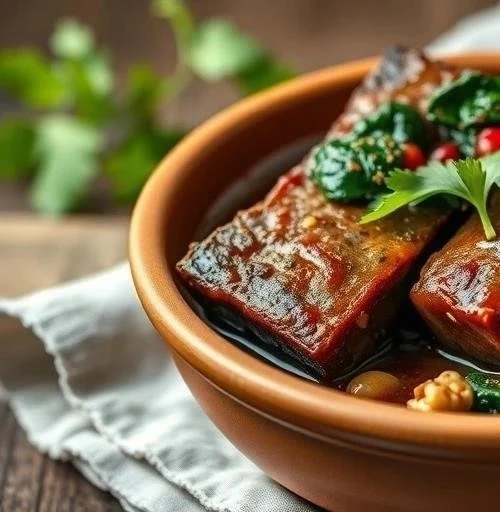
Slow-cooked beef ribs served with warmly seasoned spinach make a substantial dish inspired by the flavors of Georgian cooking. Garlic‚ coriander‚ blue fenugreek‚ fresh herbs‚ walnuts‚ and a little wine vinegar create a savory‚ aromatic profile. The ribs are cooked until tender‚ while the spinach is prepared separately and added near the end to preserve its color and texture. This is a home-style interpretation rather than a claim to one definitive regional recipe.
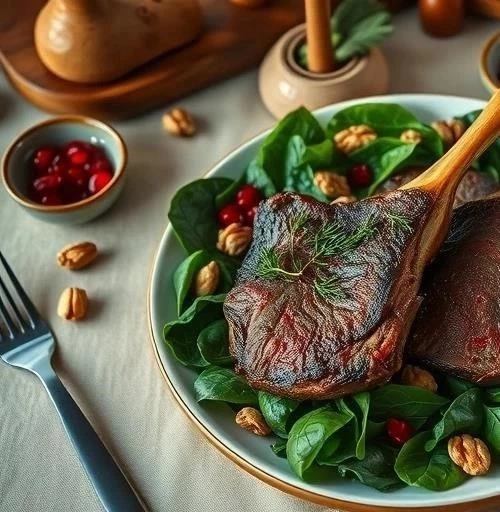
Ingredients
Serves: 4–6
Preparation: about 25 minutes
Cooking: about 2½–3 hours
- 1.5–1.8 kg beef short ribs‚ cut into individual portions
- 2 tablespoons neutral oil
- 2 medium onions‚ thinly sliced
- 4 garlic cloves‚ finely chopped
- 1 teaspoon ground coriander
- ½ teaspoon blue fenugreek‚ if available
- ½ teaspoon sweet paprika
- 1 small bay leaf
- 500–700 ml beef stock or water
- 700 g fresh spinach‚ washed and well drained
- 60 g walnuts‚ finely chopped or ground
- 2 tablespoons chopped fresh cilantro
- 1 tablespoon chopped fresh parsley
- 1–2 teaspoons red-wine vinegar‚ to taste
- Salt and freshly ground black pepper
- Optional: a pinch of chili flakes and pomegranate seeds for serving
Preparing the ribs
- Season and brown. Pat the ribs dry and season them on all sides with salt and pepper. Heat the oil in a heavy pot over medium-high heat. Brown the ribs in batches‚ turning them so several sides develop a deep color. Transfer the meat to a plate. Avoid crowding the pot‚ which can cause the ribs to steam instead of brown.
- Cook the aromatics. Reduce the heat to medium. Add the onions to the same pot and cook for 6–8 minutes‚ stirring occasionally‚ until softened and lightly golden. Stir in the garlic‚ coriander‚ fenugreek‚ paprika‚ and optional chili. Cook for about 30 seconds‚ just until fragrant.
- Braise slowly. Return the ribs and any collected juices to the pot. Add the bay leaf and enough stock to reach roughly halfway up the meat. Bring the liquid to a gentle simmer‚ cover‚ and cook on low heat for 2–2½ hours. Turn the ribs once or twice. They are ready when a fork enters easily and the meat begins to loosen from the bone. Add a little water if the pot becomes nearly dry.
Cooking the spinach
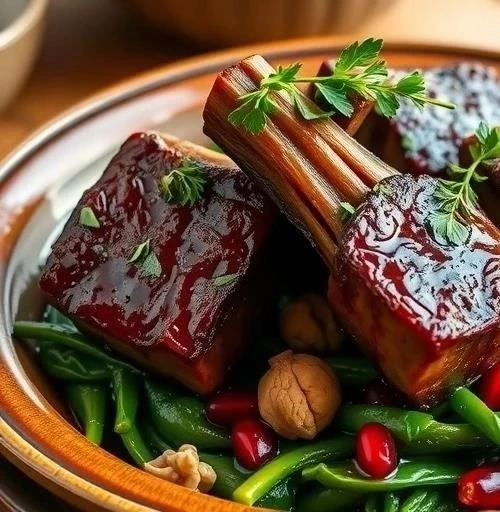
When the ribs are nearly tender‚ prepare the greens. If the spinach leaves are large‚ roughly chop them. Place them in a wide pan over medium heat with the moisture left from washing. Cover for 2–3 minutes‚ then uncover and stir until wilted. Work in batches if necessary; Drain excess liquid and press the spinach gently; removing surplus water helps the finished dish remain rich rather than diluted.
Mix the walnuts with a few spoonfuls of warm braising liquid to form a loose paste. Stir this into the spinach with the vinegar‚ cilantro‚ and parsley. Add the spinach mixture to the pot during the final 10 minutes of cooking‚ folding it around the ribs without breaking the meat apart. Taste the sauce and adjust the salt‚ pepper‚ and vinegar. The result should be savory and fragrant‚ with gentle acidity balancing the richness of the beef and nuts.
Serving and practical notes
Arrange the ribs in a warm serving dish and spoon the spinach and sauce over and around them. Pomegranate seeds can provide a bright‚ tart finish‚ but they are optional. Serve with crusty bread‚ boiled potatoes‚ rice‚ or Georgian-style cornbread so the cooking juices can be enjoyed. A fresh salad with cucumber and herbs also provides contrast.
Blue fenugreek is distinctive‚ but ground coriander alone will still give the dish a pleasant flavor if it is unavailable. Use unsalted stock when possible‚ since the sauce reduces during braising. For a milder walnut presence‚ use 30 g; for a thicker‚ more pronounced sauce‚ increase the amount slightly. The dish can be prepared a day ahead: cool it promptly‚ refrigerate it covered‚ and reheat gently until steaming hot. Add a splash of water or stock if the sauce has thickened. Keep leftovers refrigerated and use within three days.
Texture is the main guide to doneness: cooking times vary with rib size and the pot used‚ so check the meat rather than relying on the clock alone. A steady‚ gentle simmer produces tender ribs without rapidly reducing the liquid. Adding spinach only at the end keeps its herbal character distinct while allowing it to take on the aroma of the braising sauce.
3 Comments. Оставить новый
The instructions explain why the ribs should be browned in batches and give useful guidance on the braising liquid level. The combination of walnuts, herbs, and vinegar provides a distinctive finish.
The ingredient list offers practical alternatives, such as using water if beef stock is unavailable and treating blue fenugreek as optional. The flavor combinations are described without presenting the recipe as a definitive regional version.
The recipe clearly separates the braising and spinach preparation, which helps preserve the greens’ color and texture. The suggested cooking time and serving size also make the dish easy to plan.