
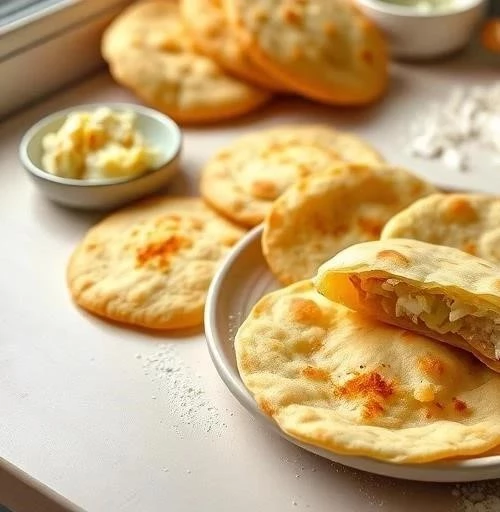
Why Potato Flatbreads Are a Practical Choice for Home Baking
Potato flatbreads make home baking worthwhile: they offer hearty food with ease.
Potato flatbreads are a satisfying answer to what to cook with potatoes: they make a simple recipe for hearty baking, and the yeast-free dough keeps preparation straightforward.
Potato flatbreads are a sensible answer to what to cook with potatoes: they turn an everyday staple into hearty home baking without demanding elaborate planning. Their appeal is practical, not merely comforting, because a yeast-free dough avoids waiting for a rise and keeps the process accessible. This simple recipe suits family meals, offers satisfying portions, and makes homemade baking feel achievable even for beginners.
Prepare the Potato Filling and Choose Ingredients for the Dough
Boiled potatoes make a mild filling; flour and kefir offer key practical choices.
Make the potato filling with boiled potatoes, then measure wheat flour, kefir, milk or water, butter, vegetable oil, salt, sugar, baking powder, and baking soda; these options let you adapt the recipe, including for lean flatbreads.
Use smooth boiled potatoes for a mild, cohesive filling; wheat flour forms the base, while kefir gives tang and milk or water lets you adjust the dough’s richness. Butter adds tenderness, but vegetable oil suits lean flatbreads. Measure salt, sugar, baking powder and baking soda carefully: balanced amounts support flavor and lift, while water and oil keep a lean option practical. It fits varied pantry and dietary needs with care.
Follow the Step-by-Step Recipe for Mixing and Kneading
Mix gradually: measured additions prevent lumps and make dough easier to control.
Combine the chosen liquid and dry ingredients gradually: careful dough kneading helps create soft dough that is easier to shape and less likely to tear.
Add the chosen liquid to the dry ingredients gradually, stirring as you go; this prevents lumps and keeps the mixture manageable. Knead just until the dough feels soft and even, since overworking can make it tough. This careful method is more reliable than adding everything at once: it gives you control over texture and helps the yeast-free dough remain supple, rather than stiff. This also makes the dough easy to assess and adjust.
Shape the Flatbreads and Select a Cooking Method
Even portions make shaping reliable; choose pan or oven to suit your kitchen too
Use an even portion of potato filling when shaping the flatbreads; pan-frying is convenient, while oven baking can cook several at once with less attention.
Divide the potato filling into equal portions so each flatbread has a balanced center and cooks evenly. Place one portion on each dough piece, bring the edges together, and press gently to seal; this reduces leaks and keeps every bite consistent. Pan-frying suits a quick small batch, while oven baking is more convenient when preparing several at once, since the tray needs less attention. Choose the method that really fits your kitchen.
Cook Until Golden and Serve
Cook until golden; check its center, since color alone cannot prove it is fully cooked.
Cook until each flatbread has a golden crust, checking that the dough is fully done; this final step makes homemade potato flatbreads both appealing and reliably satisfying.
Cook each flatbread until its surface is evenly golden, then check the center before serving: the dough should feel set, not sticky or raw. This check matters because a browned exterior alone does not guarantee the inside is done. Turn gently as needed, allowing the center time to cook through fully. Let the finished pieces rest for a moment; this helps the filling settle and makes the warm, homemade result more pleasant to enjoy.



9 Comments. Оставить новый
The practical focus is helpful: the article explains not only what ingredients are used, but why kefir, milk, or water might suit different preferences. A brief note on how to judge the dough’s texture would make the guidance even more useful.
I found the mention of lean flatbreads particularly useful because it shows that the recipe can accommodate different needs. The article also wisely stresses measuring leavening ingredients, since balance matters in a yeast-free dough.
I like that the article presents the recipe as adaptable rather than requiring a special shopping list. Its discussion of butter and vegetable oil gives readers a clear starting point for choosing between a richer version and a leaner one.
The emphasis on gradual mixing is sound advice, especially for beginners who may be unfamiliar with working with dough. The article is clear about the purpose of this step and how it can help prevent lumps and tearing.
The piece explains why this kind of baking can suit busy households: familiar ingredients and no rising period keep the process manageable. Adding a serving suggestion or storage advice would round out its practical value.
The article makes a convincing case for potato flatbreads as an approachable home-baking option. I especially appreciate the explanation that yeast-free dough removes the need for rising time, which is useful for readers planning a quick meal.
This is a thoughtful introduction to a practical recipe. The sections are organized around preparation and technique, and the explanation of the potato filling makes the dish feel accessible without overstating how complicated it is.
The article is welcoming to novice cooks because it explains the reasoning behind gradual additions and ingredient substitutions. Its practical tone is effective, and the guidance encourages flexibility while still emphasizing careful measurements.
The article does a good job of connecting ingredient choices to useful outcomes, such as tenderness or tang. Readers would benefit from exact quantities in the recipe itself, but the general advice is easy to follow.