
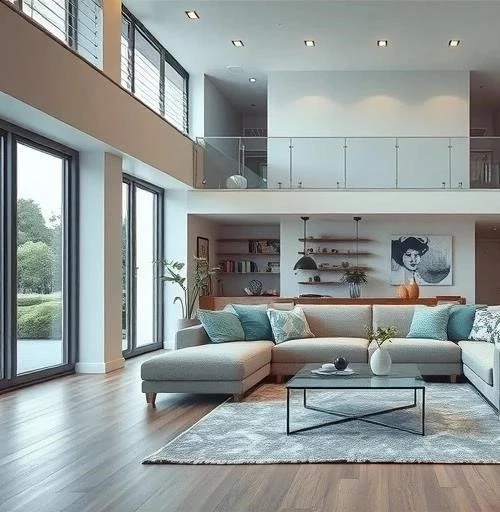
A living room in a modern style is not simply a room with fashionable furniture. Good living room design connects architecture, comfort and everyday needs. Common design mistakes can make even an attractive living room interior feel awkward. Plan carefully before choosing finishes or decor.
Start with the layout
A thoughtful living room layout supports room functionality and interior ergonomics. Measure the room, note doors and windows, and decide how people will move through it. Poor zoning is a frequent problem: a work area, dining space and seating zone may overlap or block circulation. Define each area with furniture, lighting or a rug, rather than dividing the room with bulky screens. Consider room proportions: oversized pieces can overwhelm a small room, while tiny furniture may look lost in a large one.
Choose materials and furniture as a whole
Furniture selection should reflect how the room is used, not just how pieces look in a showroom. Plan furniture arrangement around conversation, clear walkways and the focal point. Choose a restrained color palette and compatible finishing materials. Incompatible materials, excessive contrast and style inconsistency can undermine a modern architectural style. Clean lines and minimalism in interior design do not mean a bare, uncomfortable room; they mean keeping useful elements and removing visual clutter.
Balance light, texture and detail
Living room lighting needs both natural light and well-planned artificial lighting. Avoid heavy curtains that create a lack of light, and layer ceiling, task and accent fixtures for different activities. Architectural elements such as a fireplace, a built-in shelf or a window can guide the composition. Add warmth through a considered combination of textures: textiles in the interior, wood, stone or matte finishes. Living room decoration works best when living room decor and accent details are selective. Aim for visual balance, not a collection of unrelated objects.
Keep the design coherent
Overcrowded space is among the most common interior decorating mistakes. Too many accessories, competing patterns or oversized furniture make a room feel smaller and disrupt movement. Before buying anything, check its scale, purpose and relationship to existing pieces. Review the plan from the doorway and from each seat. A successful design feels calm, practical and personal: every zone has a purpose, materials work together, and decoration supports the architecture rather than competing with it.


4 Comments. Оставить новый
The sections on lighting and texture are great. Layered lighting and a thoughtful mix of materials can add warmth without filling the room with unnecessary decor.
A helpful guide to creating a living room that looks polished while still working for everyday life. The advice on measuring the space and keeping walkways clear is especially practical.
I like the reminder that minimalism does not have to mean an uncomfortable or empty room. Balancing useful furniture with a restrained palette makes the design advice feel realistic.
This article brings layout, furniture and finishing choices together in a clear way. Its focus on how people actually use the room is a strong starting point for any redesign.