
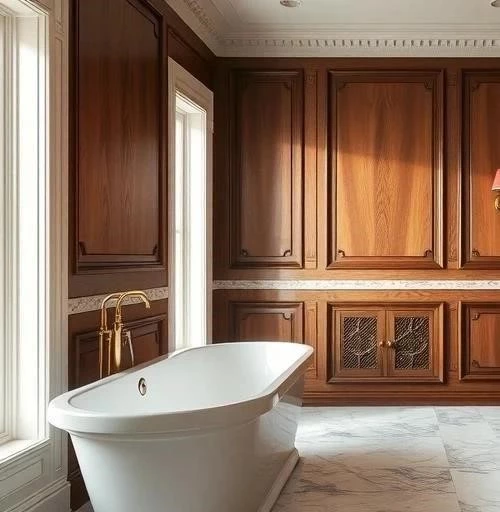
In a neoclassical bathroom‚ wood can feel like a quiet beam of sunlight: warm‚ tactile and unexpectedly elegant beside stone and polished metal. Yet the wrong board‚ finish or placement can turn that glow into gloom. The goal is not to make the room look like a sauna‚ but to let natural wood bring softness to a composed‚ luminous interior.
Choosing wood for the room you actually have
The first mistake is treating every species as bathroom-ready. Elevated humidity and temperature changes test timber every day; ordinary boards may swell‚ warp or split. Choose moisture-resistant wood‚ properly heat-treated timber‚ or stable species such as teak‚ oak and ash‚ and check that each product is suitable for wet interiors. Pale wood shades can preserve a light interior‚ but colour alone is no guarantee of durability.
A second mistake is skipping the invisible protection. Waterproofing must be continuous behind and beneath the finish‚ especially around showers‚ sinks and floor edges. Seal exposed surfaces with a suitable protective treatment‚ moisture-resistant varnish or oil-wax system‚ following the manufacturer’s instructions. These finishes are not substitutes for waterproofing or sound construction. Unsealed end grain is a small doorway for water—and a large invitation to later repairs.
Keeping the light‚ not just the wood
Too much timber is another common misstep. Covering every wall‚ the ceiling and the vanity in wood can flatten the room and weaken the neoclassical rhythm. Use wooden panels as an accent: perhaps on the vanity front‚ one dry wall or a framed niche. Let marble or porcelain stoneware carry the wettest zones. This thoughtful combination of materials gives the eye both warmth and a cool‚ reflective pause.
Scale matters‚ too. Heavy dark boards can shrink a compact bathroom visually‚ while carefully placed pale oak or ash helps create visual expansion. Preserve natural grain rather than hiding it beneath opaque paint; the texture of wood is the point. Pair it with classic mouldings‚ restrained neoclassical décor and brass hardware. Repeating one warm metal tone and one wood tone creates colour harmony instead of a showroom full of competing finishes.
Light‚ air and lasting care
Even the palest surface cannot compensate for poor lighting. Make the most of natural light with uncluttered windows and reflective stone‚ then add layered artificial lighting: flattering mirror lights‚ soft ambient illumination and discreet task lighting. A balanced interior composition lets mouldings‚ grain and brass details remain distinct without making the room feel theatrical.
Ventilation is not an optional extra. Effective bathroom ventilation helps control moisture‚ reducing the risk of mould and mildew‚ darkening wood and finish failure. Keep timber away from constant splashes where possible‚ wipe standing water promptly‚ and inspect joints and sealant regularly. Gentle cleaning and the right upkeep for wooden surfaces are safer than harsh chemicals or abrasive pads.
Four mistakes to avoid
- Using untreated timber or assuming a clear coat alone provides waterproofing.
- Ignoring ventilation‚ leaks and the movement caused by humidity and temperature shifts.
- Choosing dark‚ busy grain everywhere in pursuit of “luxury.”
- Forgetting that bathroom furniture needs suitable construction and protected edges.
Think of wood as a warm note in a neoclassical score‚ not the whole orchestra. Choose a stable species‚ protect it correctly‚ give it air and pair it with light-catching stone. Then the bathroom can feel bright without feeling sterile: a calm room where sunlight seems to linger in the grain.




8 Comments. Оставить новый
The image of unsealed end grain as a doorway for water makes the practical advice memorable. This is a thoughtful reminder that bathroom warmth should be designed, not improvised.
“A quiet beam of sunlight” is exactly the feeling good wood can bring to a bathroom. I appreciate that the advice also keeps that glow from becoming a maintenance headache.
The article makes a useful distinction between waterproofing and surface finishes—an important detail that can disappear beneath pretty bathroom photos. Practical, clear, and still full of atmosphere.
A refreshing case for restraint. One carefully chosen wooden accent can have more presence than a room wrapped entirely in timber—and the contrast with stone gives the design room to breathe.
This makes material choices feel less like a shopping list and more like composing a room. The reminder to check suitability for wet interiors is simple, sensible, and easy to overlook.
I like the balance here: wood is treated neither as a miracle material nor as a bathroom villain. Pairing its softness with reflective stone feels like a small design poem.
The scale advice is especially useful: pale timber can open up a compact room, while dark boards may make it feel tucked away. A practical guide with a designer’s eye.
A lovely argument for letting wood be the warm note, not the whole orchestra. The combination of careful protection, restrained placement, and natural grain is both elegant and grounded.