
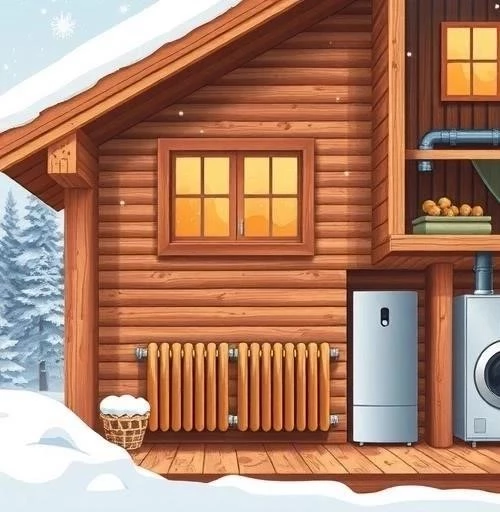
Heating a wooden house requires more than choosing a boiler. A wooden log house and a frame house respond differently to heat, moisture and structural movement, so the heating system should be planned together with insulation, ventilation and fire protection. Good design reduces heat loss, improves energy efficiency and helps maintain even room temperatures.
Assess the building first
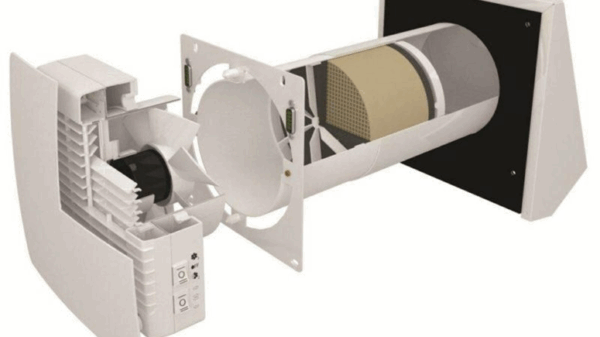
Before selecting equipment, assess the floor area, ceiling height, climate, window quality and insulation. Heat loss through walls, roofs, floors and air leaks determines the required boiler output. Proper wall insulation and careful sealing can lower heating costs, but ventilation must still provide fresh air and control indoor humidity. In timber buildings, excessive moisture can damage wood; balanced ventilation and sensible temperature control help protect the structure.
Choose a heat source
A gas boiler can be convenient where a reliable gas connection is available. An electric boiler is simple to install and needs no chimney, but operating costs depend on electricity prices and available capacity. A solid-fuel boiler may suit a home without gas, although it requires fuel storage, regular attention and a correctly designed chimney; Traditional wood-stove heating can provide useful backup or serve a small house, but it needs careful supervision and appropriate fire protection.
Boiler sizing should follow a heat-loss calculation rather than a rule of thumb. An oversized unit may cycle inefficiently, while an undersized one can struggle in cold weather. For autonomous heating, consider fuel availability, backup power, controls and the owner’s ability to maintain the equipment.
Design the heating circuit
Radiators are relatively easy to regulate and can respond quickly to changing conditions. Hydronic underfloor heating distributes warmth across a broad surface and can provide comfortable, even heating, but it needs a suitable floor assembly and careful commissioning. A system may combine both types. Pipe routing should be planned to protect pipes from impact and freezing, allow access for repairs, and account for the movement of timber structures.
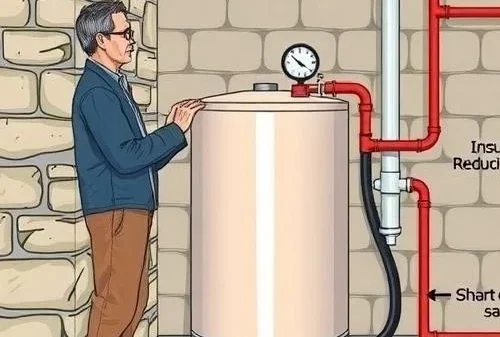
A typical water-based heating circuit includes a heat source, heat-transfer fluid, expansion tank and, where required, a circulation pump. Correct pipe sizing, balancing and controls are essential for reliable flow and consistent comfort. Professional heating installation should include pressure testing, flushing and commissioning.
Allow for timber movement and safety
A wooden house can settle and change dimensions as its moisture content changes. The settlement of a wooden house is especially important in a new log structure. Use sliding supports, flexible connections and compensation gaps around pipes, chimneys and equipment where movement is expected. Do not rigidly fix services to elements that may shift.
Fire safety is essential: maintain approved clearances around stoves, boilers and flues, use suitable non-combustible barriers, and have the chimney inspected. Protecting wood against ignition means using certified materials and following local codes—not relying on coatings alone. With sound insulation, a correctly calculated boiler and a professionally designed system, a wooden home can stay warm, safe and economical through the heating season.

5 Comments. Оставить новый
Clear and informative, particularly on boiler sizing and the drawbacks of choosing a unit based on a rule of thumb. A heat-loss calculation can prevent costly mistakes.
I appreciate the balanced comparison of different heat sources. Mentioning fuel availability, maintenance and backup power makes the advice practical for real homeowners.
This article makes the choices easier to understand without suggesting that one system suits every home. The practical points on insulation, controls and fire safety are valuable.
The discussion of moisture and ventilation is an important reminder that heating is about more than comfort. Protecting the wood structure should be part of the overall design.
A helpful overview of why heating plans should account for the specific construction of a timber home. The emphasis on assessing heat loss before choosing equipment is especially useful.