
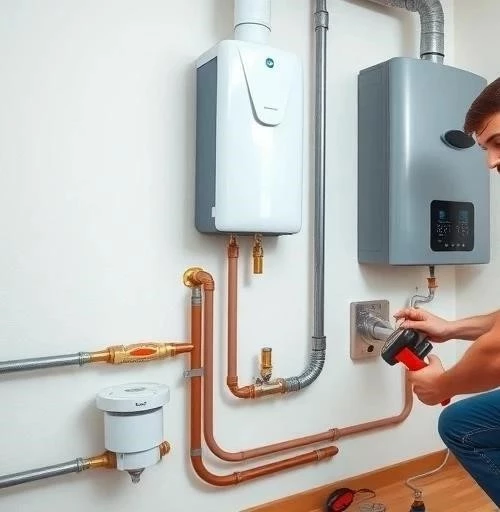
Heating installation begins with a design‚ not with pipework. The system must match the building’s layout‚ insulation‚ climate and available energy source. A professional plan helps make heating a private home reliable‚ comfortable and economical. The choice of equipment and installation method affects both maintenance and energy efficiency.
Planning the system
The first step is to assess the building’s heat loss. A hydraulic calculation determines the required boiler capacity‚ flow rates‚ pipe diameters and heat output of each room’s heating appliances. The resulting heating system diagram should show the boiler‚ radiators‚ valves‚ pumps and routes for all pipes. Oversizing equipment can increase costs and cause inefficient operation; undersizing it can leave rooms cold.
Choosing a layout
A single-pipe system can be relatively simple to install‚ but heat may vary between radiators along the circuit. A two-pipe system supplies hot water and returns cooled water through separate lines‚ making control more predictable. A manifold system distributes flow through individual branches and can simplify room-by-room adjustment‚ although it requires more pipework. The best layout depends on the building and the installation budget.
Installation and components
Pipe routes should be planned to avoid unnecessary bends‚ inaccessible joints and interference with other services. Radiator connections must allow for shut-off and adjustment‚ while isolation valves make servicing easier. The boiler‚ circulation pump and expansion vessel must be selected to suit the system. For underfloor heating‚ the installation also needs suitable manifolds and controls; floor circuits generally require lower water temperatures than radiators.
Installers should use compatible materials and follow equipment instructions and applicable local standards. Pipes need secure supports and appropriate protection where they pass through walls or floors. The heat-transfer fluid must be suitable for the boiler and system materials. Safety devices‚ air vents and drainage points should remain accessible after finishing work.
Testing and commissioning
Before operation‚ the completed system is flushed and pressure-tested. Commissioning includes checking connections‚ removing air‚ setting controls and confirming that the boiler and pump operate correctly. Balancing adjusts flow across circuits so that rooms receive the intended heat. Clear records of settings and equipment make later maintenance easier.
Key terminology
монтаж системы отопления; установка отопления в доме; схема отопления; отопительный контур; отопительные приборы; радиаторы отопления; котёл отопления; трубы отопления; подключение радиаторов; разводка труб; однотрубная система отопления; двухтрубная система отопления; коллекторная система отопления; монтаж тёплого пола; циркуляционный насос; расширительный бак; запорная арматура; теплоноситель; гидравлический расчёт; теплопотери здания; балансировка системы отопления; опрессовка отопления; пусконаладочные работы; нормы монтажа отопления; оборудование для отопления; отопление частного дома; энергоэффективность системы отопления.


5 Comments. Оставить новый
The article explains the main planning considerations for a home heating system, including heat-loss calculations and equipment sizing.
The discussion of pipe routing, isolation valves and accessible joints highlights practical details that can affect future maintenance.
The overview connects system design choices with comfort, installation costs and energy efficiency without presenting one layout as suitable for every home.
The comparison of single-pipe, two-pipe and manifold layouts provides a useful overview of their different characteristics.
The article notes that underfloor heating requires components and controls suited to its operating temperatures.