
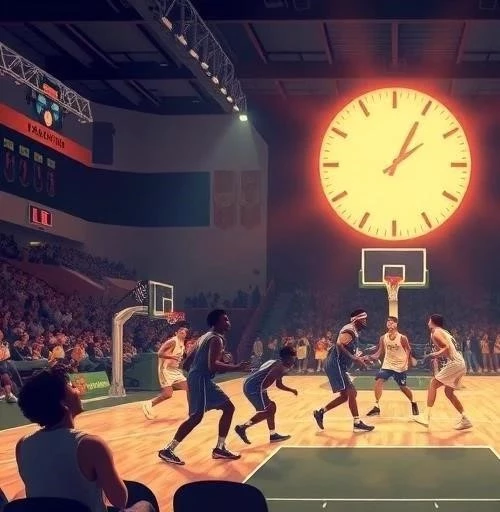
A basketball game looks like a neat block of minutes on a schedule․ The clock, however, tells only part of the story․ A regulation game may contain 40 or 48 minutes of playing time, yet the evening you spend watching it can stretch to two hours or more․ Think of the official clock as the game’s heartbeat—and every whistle, timeout, and replay as a pause in the music․
The short answer: it depends on the league
- NBA: four quarters of 12 minutes, for 48 minutes of regulation play․
- FIBA and most international games: four quarters of 10 minutes, for 40 minutes․
- NCAA men’s college basketball: two halves of 20 minutes, totaling 40 minutes․
- NCAA women’s college basketball: four 10-minute quarters, totaling 40 minutes․
- High school basketball: quarter lengths vary by state and competition, commonly around 8 minutes each in the United States․
Those figures describe game-clock time, not the time between tip-off and the final buzzer․ The clock stops whenever play is interrupted, so a 40-minute game is not usually a 40-minute appointment․
Why does the clock keep stopping?
Basketball is a sport of bursts: sprint, leap, pass, whistle, reset․ The clock generally pauses when the ball goes out of bounds, a foul is called, a player shoots free throws, a coach requests a timeout, or officials need to review a close decision․ It also stops at the end of a quarter or half․ In the final minutes, these interruptions can arrive in quick succession, turning a brief stretch of game time into a long, suspenseful chapter․
There are breaks built into the schedule, too․ Teams switch ends between periods, the halftime interval gives players a longer rest, and television broadcasts may add commercial breaks․ A close finish often takes longer than a lopsided one because teams use timeouts, commit tactical fouls, and send opponents to the free-throw line․ The scoreboard may show that only a few seconds remain; the audience may feel it has watched a whole miniature game․
So how long should you set aside?
For a typical NBA broadcast, plan on roughly 2 to 2½ hours․ A FIBA or international game often takes about 1½ to 2 hours, while college games commonly land near the two-hour mark, though the matchup and broadcast format matter․ These are useful estimates, not promises: a fast-moving game can finish sooner, while a close contest with reviews and overtime can run well beyond them․
Overtime is the biggest wild card․ If the score is tied at the end of regulation, teams play an extra period—usually five minutes in the NBA, FIBA, and NCAA rules․ If they are still tied, another overtime follows․ The clock resets, but the drama does not․ There is no fixed limit to the number of overtime periods, so a game can keep going until one team finishes a period ahead․
Game time versus real time
Imagine a 40-minute game as a short story printed on a very elastic page․ The official minutes measure the action; elapsed time includes all the pauses around it․ A quarter might take much longer than its listed length to watch, especially when every possession late in the game feels precious․ That is why “the game lasts 40 minutes” is technically true and practically misleading․
Warm-ups, pregame introductions, delays, and postgame celebrations can add time to your visit as well․ If you are attending in person, allow room for getting to your seat and leaving the arena․ If you are watching at home, the broadcast may begin before the game itself and continue after the final horn․
A quick guide for planning
- Check the league or competition: quarter and half lengths differ․
- Allow about two hours for most games, and more for a close NBA finish․
- Leave extra time if overtime is possible or you have a strict travel connection․
- Remember that the clock stops; the final minutes may be the longest ones․
Bottom line: basketball regulation lasts 40 or 48 minutes depending on the rules, but watching a complete game usually takes around 1½ to 2½ hours․ The scoreboard counts seconds․ The evening counts the whistles, the timeouts, the tension—and that last shot everyone remembers․


5 Comments. Оставить новый
A useful answer with a little court-side poetry. I especially appreciate that it distinguishes the clock on the scoreboard from the time a fan actually spends watching.
The “heartbeat” image makes the game clock feel almost alive. A clear, lively guide to why forty minutes can somehow occupy an entire evening.
I liked how this explains the difference between playing time and real-world time without making the rules feel like homework. The final-minutes observation is especially spot-on.
This article turns whistles and timeouts into the pauses in a piece of music—a clever way to describe basketball’s stop-start rhythm. Even casual viewers will come away knowing what to expect.
The league-by-league breakdown is practical, while the image of a few seconds becoming a “miniature game” captures the delicious drama of a close finish.