
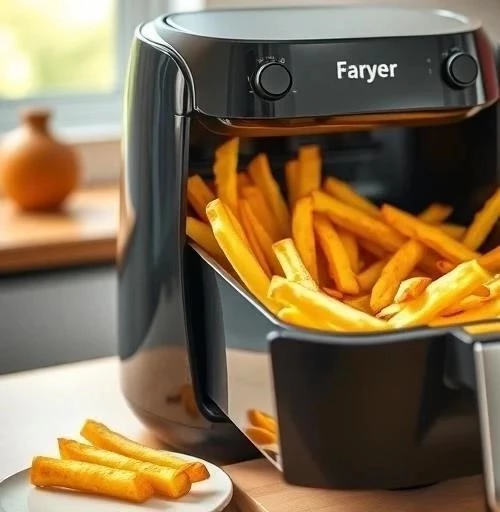
An air fryer can make crisp, golden fries with much less oil than deep-frying, but it does not work by magic. Hot air needs to circulate around each piece, so good results depend on dry potatoes, a modest amount of oil, and room in the basket. Follow those principles and the fries can be both satisfying and lighter; ignore them and they are likely to turn out limp or uneven.
Choose and prepare the potatoes
Starchy potatoes, such as Russets, are usually the best choice for a fluffy centre and crisp exterior. Scrub and peel them if you prefer, then cut them into evenly sized sticks, about 1 cm thick. Uniform pieces matter: thin fries cook faster, while thick ones need more time, and mixing sizes makes it difficult to finish them evenly.
For a crispier result, soak the cut potatoes in cold water for 20–30 minutes. This removes some surface starch, which can otherwise make the fries stick together. Drain them and dry them very thoroughly with a clean towel. This step is essential: water on the surface creates steam instead of helping the potatoes brown.
Season and load the basket
Toss the dry potatoes with a small amount of neutral oil—roughly 1 tablespoon for 500 g—and a little salt. Oil encourages browning, but too much can make the fries greasy. Add pepper, paprika, or garlic powder if desired; delicate herbs and finely grated cheese are better added after cooking, as they can burn.
Preheat the air fryer to 190–200°C (375–400°F) if your model recommends preheating. Arrange the fries in a loose, even layer. A crowded basket blocks airflow, so cook in batches rather than piling the potatoes high. Although making one large batch seems quicker, it commonly produces softer fries and takes longer overall because the potatoes need extra cooking time.
Cook, shake, and check
Air-fry for about 18–25 minutes, depending on the thickness of the fries and the appliance. Shake the basket or turn the fries every 5–7 minutes so different sides brown. Start checking early: models vary, and a few minutes can separate golden fries from dry, dark ones. If they are pale but tender, cook for another 2–3 minutes.
Transfer each finished batch to a warm plate and season with extra salt while hot. Avoid covering the fries, since trapped steam softens the crust. If cooking several batches, keep earlier ones warm in a low oven rather than sealing them in a container.
Fresh or frozen?
Frozen fries are already prepared and often contain oil, so they usually need no additional oil. Cook them straight from frozen, using the package directions as a starting point; around 200°C for 12–20 minutes is common. Shake halfway through and adjust the time to suit your preferred colour. Do not thaw them first, as thawing can make them soggy.
Why this method works
The air fryer is essentially a compact convection oven, not a deep fryer. It cannot reproduce exactly the same crust as hot oil, but it offers a useful balance of crunch, convenience, and reduced oil. The most reliable formula is simple: cut evenly, dry well, leave space, and shake during cooking. Serve promptly with your favourite dip.

4 Comments. Оставить новый
This is a well-reasoned guide that connects preparation choices with the final texture. The suggestions to cut evenly, cook in batches, and shake the basket address common causes of uneven fries without promising perfect results.
I appreciate the balanced guidance on oil: a small amount helps with browning, while too much can leave the fries greasy. The suggested temperature and cooking-time range also sensibly allow for differences between appliances and cut sizes.
The explanation about soaking is clear and helpful, and the reminder to dry the potatoes thoroughly makes the method easy to understand. I would find the full article even more useful with a doneness cue, since air fryers can vary considerably.
The advice is practical because it explains why each step matters, especially drying the potatoes and leaving space for air to circulate. Those details make the instructions more useful than a cooking time alone.