
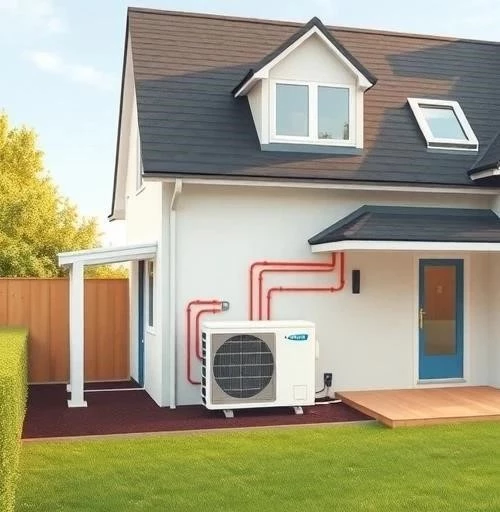
A heat pump does not create heat in the usual way: it moves thermal energy from the outdoor air, ground or water into your home. Think of it as a quiet energy courier, collecting warmth that is already present and delivering it where you need it. The right choice can make home heating and hot water efficient, but success depends on design—not just the equipment label.
Start with the building, not the brochure
Before choosing a heat pump for your home, arrange a proper heat-loss calculation. The home’s floor area matters, but insulation, windows, air leakage, ceiling height and local climate conditions matter just as much. Improving insulation first can reduce the required heat-pump capacity, electricity consumption and running costs. Avoid sizing by floor area alone: an oversized unit may cycle too often, while an undersized one can rely heavily on backup heating.
Choose the right heat source
An air-source heat pump is usually simpler to install and often costs less upfront. In an air-to-water configuration, it transfers heat from outdoor air to water for heating and domestic hot water. A ground-source unit draws more stable heat from buried loops; a ground-to-water system can be efficient, but excavation or drilling raises installation costs. A water-source unit can perform very well where a suitable, permitted water source is available. The best option depends on the site, climate, budget and access for installation—not on a universal ranking.
Match the heating system
Heat pumps work most efficiently with a low heating-water temperature. Underfloor heating is a natural partner because it spreads gentle warmth across a large surface. Radiators can also work, but existing units may need to be enlarged or the home better insulated. Ask the designer to check the required flow temperature on the coldest design day. A buffer tank may help stabilize operation in some layouts; an indirect hot-water cylinder is normally needed when the heat pump also serves taps and showers. Pumps, valves and pipework must be selected as a complete system.
Plan controls and backup
Weather-compensated automation adjusts water temperature as outdoor conditions change, rather than forcing the unit to run hotter than necessary. A clear control system should let you set schedules, hot-water priorities and safe operating limits. Discuss the connection diagram with the installer, including circulation pumps, sensors, electrical protection and any backup heat source. A boiler or electric heater can provide resilience during extreme cold or service interruptions, but its role should be deliberate, not a substitute for correct sizing.
Judge performance realistically
The COP (coefficient of performance) compares delivered heat with electricity used under specified test conditions. It is not a promise of identical performance all year: colder weather and higher water temperatures usually reduce efficiency. Request seasonal performance estimates for your climate and emitters, not just a headline COP. Compare total installation cost, expected operating costs, maintenance needs and the warranty. Payback depends on energy prices, the old heating system, grants and how the home is used; treat any single payback figure as an estimate.
Before signing
Get a written heat-loss calculation, equipment model and capacity, expected seasonal consumption, hydraulic diagram, commissioning plan and service schedule. Check noise, outdoor-unit placement, condensate drainage and access for maintenance. A well-designed heat pump can support autonomous heating and meaningful savings, but only when the building, controls and equipment work together. Choose a qualified installer who explains assumptions—and asks questions about your home before recommending a machine.
Search-term glossary
Keywords used in this guide: тепловой насос для дома, отопление частного дома, система отопления, источник тепла, тепловая энергия, отопление и горячее водоснабжение, воздушный тепловой насос, грунтовый тепловой насос, водяной тепловой насос, воздух-вода, грунт-вода, вода-вода, коэффициент преобразования COP, энергоэффективность, потребление электроэнергии, расчет теплопотерь, мощность теплового насоса, площадь дома, утепление дома, теплый пол, радиаторы отопления, буферная емкость, бойлер косвенного нагрева, циркуляционный насос, монтаж оборудования, выбор теплового насоса, стоимость установки, эксплуатационные расходы, обслуживание системы, срок окупаемости, температура теплоносителя, резервный источник отопления, погодозависимая автоматика, система управления, схема подключения, климатические условия, автономное отопление, экономия на отоплении.


3 Comments. Оставить новый
I liked the reminder that radiators aren’t automatically disqualified from the heat-pump story. The coldest-day flow-temperature check is a small detail with big consequences—exactly the kind of unflashy question that can save a homeowner from an expensive surprise.
The “quiet energy courier” image makes heat-pump science feel wonderfully tangible. More importantly, the article keeps the spotlight on the home itself: insulation and heat-loss calculations may be less glamorous than a shiny unit, but they’re the backstage crew that makes the performance work.
A refreshing guide that refuses to crown one heat source king. Its strongest note is practical humility: the right system depends on the site, climate, budget, and installation access. That’s much more useful than a universal “best option” shouted from a brochure.