
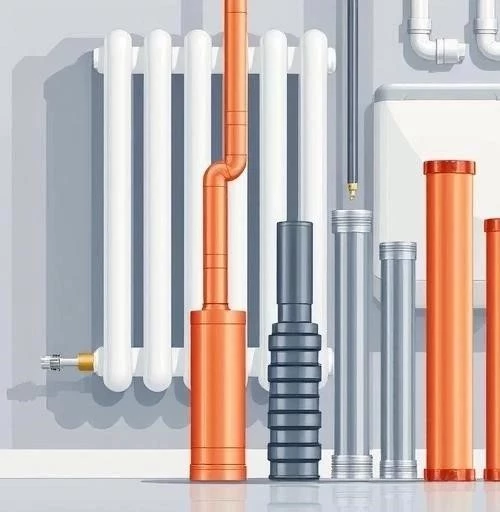
Choosing pipes for a heating system is not simply a matter of price. The right material must withstand the temperature of the heat-transfer fluid, operating pressure and conditions in the building. A poor choice can lead to leaks, expensive repairs or uneven heating. First establish whether the system is autonomous or connected to central heating, and check the boiler’s requirements.
Compare pipe materials
Polypropylene pipes are affordable and resist corrosion, but they expand when heated and require careful installation. Reinforced pipes reduce thermal expansion, though their reinforcement and joints must be suitable for the system. Metal-plastic pipes are flexible and convenient to route, but reliable fittings and correct installation are essential.
Cross-linked polyethylene pipes are flexible, durable and especially suitable for water underfloor heating, where long, continuous runs reduce the number of joints. Steel pipes tolerate demanding conditions but can corrode and are heavier to install. Copper pipes offer excellent corrosion resistance and a long service life, but usually cost more and require compatible fittings and skilled workmanship.
Check the system requirements
Compare the pipe’s rated working pressure and maximum operating temperature with the values specified for the boiler and heating system. Central heating may involve pressure surges and temperature changes, so do not rely on ordinary domestic-water ratings. For boiler connections, use pipes approved for the actual heat and pressure; short sections of metal pipe may be required by the manufacturer.
Choose the pipe diameter according to the heating design, not by guesswork. An incorrect diameter can cause noise, poor circulation or inadequate heat delivery. Radiator heating and underfloor heating have different flow and layout requirements, so a designer or installer should calculate the system and select compatible components.
Plan installation and service life
Account for thermal expansion: leave room for movement, use supports at the specified intervals and install expansion loops where needed. Select fittings for the exact pipe material and size; mixing incompatible components can create weak joints. During installation, follow the manufacturer’s joining instructions and pressure-test the completed system before covering pipes or starting regular operation.
The best choice depends on the building, budget and expected service conditions. For autonomous heating, a properly designed polymer system can be practical; for higher demands, metal or copper may be appropriate. For central heating, confirm that every component is rated for local conditions. In short, choose pipes by verified pressure and temperature limits, corrosion resistance, fitting compatibility and expected service life—not by purchase price alone.

5 Comments. Оставить новый
This is a useful overview because it explains why pipe selection should depend on system conditions rather than price alone. The comparison of materials is balanced, especially in noting that flexible or corrosion-resistant pipes still require compatible fittings and careful installation.
The emphasis on checking pressure and temperature ratings is important. A pipe that works well in one heating system may not be appropriate for another, so directing readers to the boiler specifications and system design makes the advice practical.
The article makes a strong case for involving a qualified designer or installer when selecting components. That is sensible advice because pressure, temperature, layout and fittings all interact, and mistakes may be costly to correct later.
The material descriptions are clear and appropriately cautious: affordability, flexibility and durability each come with trade-offs. This helps readers compare options without implying that one pipe type is automatically best for every project.
I appreciate the warning against choosing pipe diameters by guesswork. Poor sizing can affect circulation and heat delivery, and the article correctly points out that radiator systems and underfloor heating have different requirements.