
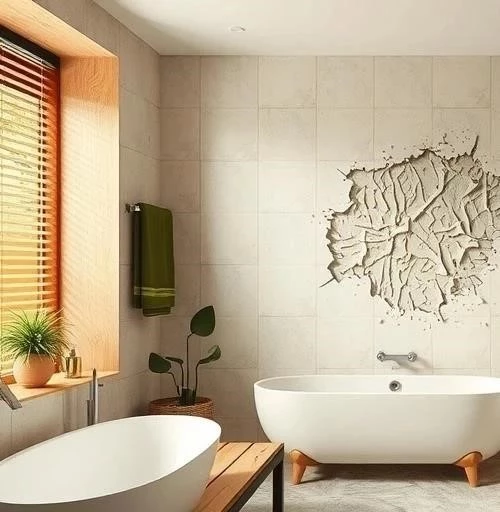
Decorative plaster for a bathroom can create a calm, tactile interior, but an attractive wall is not automatically a durable one․ The right finish depends on the room’s humidity, water exposure and ventilation․ Treating plaster as a complete waterproofing system is a common mistake: even moisture-resistant plaster needs a suitable substrate, careful detailing and a compatible protective finish․
Choose the finish for the conditions
Compare products by their stated moisture resistance and intended use, not by appearance alone․ Microcement in a bathroom forms a seamless look, while lime plaster offers a softer, mineral wall texture․ Both require a system designed for bathrooms․ A vapor-permeable coating can help walls release moisture, but it does not replace waterproofing․ In direct water-splash zones, use a specified waterproof system beneath the finish or choose a more suitable material․
Natural materials support an eco-friendly interior, yet “natural” does not mean maintenance-free․ For an eco-style bathroom, combine plaster with wood and stone thoughtfully: keep wood away from persistent splashes, seal edges, and provide adequate ventilation․ A practical finish is one that suits daily use as well as the design concept․
Preparation and application matter
Many mistakes when applying plaster begin before the first coat․ Surface preparation must remove dust, loose paint, grease and weak material; cracks and uneven areas need proper repair․ Wall priming with the manufacturer’s recommended primer helps the plaster bond consistently․ Skipping these steps can cause peeling, blotches or cracks, even when the plaster itself is high quality․
Bathroom waterproofing deserves special attention around floors, showers, pipes and corners․ Ensure continuity beneath the finish and complete joint sealing where walls meet fixtures or other materials․ Follow the specified drying times and layer thickness․ Applying coats too quickly or improvising products from different systems can undermine adhesion and shorten the coating lifespan․
Protect and maintain the result
Use only a compatible protective wax or matte varnish when the chosen system requires one․ These finishes can improve stain resistance and wear resistance of the finish, but they are not substitutes for waterproofing․ Incorrect sealers may change the color, reduce breathability or leave an uneven sheen․ Test the complete system on a sample before treating every wall․
Mold protection depends on more than the coating: repair leaks, remove standing water and maintain effective bathroom ventilation․ Care for decorative plaster by cleaning it gently with products approved for its finish; abrasive pads and harsh chemicals can damage the surface․ Inspect joints and worn areas regularly, and renew protection as directed․ With sound preparation, suitable materials and routine care, plaster can be a practical, long-lasting part of a bathroom rather than a costly experiment․


6 Comments. Оставить новый
The distinction between moisture resistance and waterproofing is especially useful. A finish may tolerate humid air without being suitable for a shower area, so choosing a complete system for the specific exposure is a sensible starting point.
I appreciate the practical focus on preparation rather than treating the plaster as a quick cosmetic upgrade. Cleaning, repairing and priming the wall can make a real difference to adhesion and help prevent defects later.
The reminders about drying times and coat thickness are practical and easy to overlook during a renovation. Following the manufacturer’s instructions may take longer, but it is more likely to produce an even finish that holds up.
The advice about corners, pipe penetrations and wall-to-floor joints is valuable because those details are often more vulnerable than the broad wall surface. Careful waterproofing there can prevent problems that a decorative topcoat cannot solve.
It is useful that the article avoids presenting microcement or lime plaster as universally suitable. Comparing product specifications and following one compatible system gives readers a more reliable basis for deciding what to use.
The article makes a helpful point that an eco-friendly aesthetic still needs to work in everyday conditions. Wood and natural plaster can look harmonious, but protecting vulnerable areas and maintaining ventilation are important for durability.