
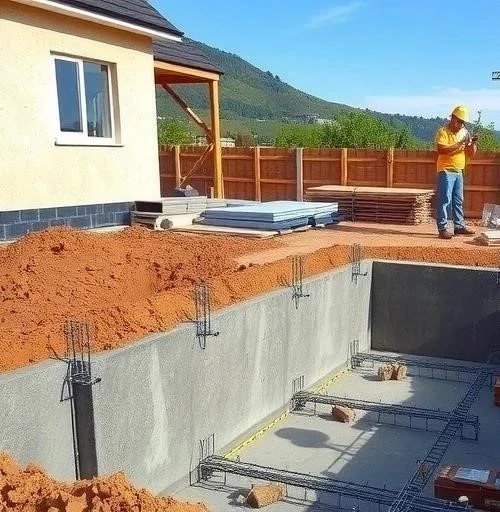
A strip foundation can be a cost-effective choice for a private house when its design matches the building and ground conditions. Savings should come from accurate planning and efficient work, not from reducing essential strength or ignoring construction standards. A reliable base helps protect the house and supports a long service life.
Plan before construction
Begin with site preparation and an assessment of soil type and groundwater level. These factors affect the foundation design, excavation, drainage needs, and depth of embedment. A geotechnical survey may seem like an extra expense, but it can prevent costly overdesign or settlement repairs. Do not choose a shallow foundation solely because it appears cheaper.
Use a qualified designer to determine strip width, reinforcement, and concrete grade. The design should account for the house’s weight, floors, materials, and local conditions. A cost estimate for the foundation should list labor, materials, delivery, equipment, waterproofing, and insulation. Compare supplier quotes using the same specifications so that a low price does not conceal missing work.
Control material and labor costs
Accurate quantity calculations reduce surplus concrete, timber, and reinforcement. Check dimensions before ordering and coordinate delivery with the construction schedule. This minimizes waste and storage damage. Where practical, compare the price of ready-mix concrete with on-site mixing, including labor, equipment, quality control, and delivery. Select the concrete grade specified by the design; choosing a weaker mix is not a safe way to save.
For a small project, self-building may lower labor costs if the owner has the necessary skills and time. However, complex excavation, reinforcement, and concrete placement may require experienced workers. Renting machinery can be economical when it reduces excavation time, but arrange access and scheduling first. Avoid buying equipment that will be used only once.
Keep the layout simple where the house plan allows. Unnecessary corners, steps, and changes in strip width increase formwork and labor. Set out the foundation carefully, then verify diagonals and elevations before earthworks begin. A stable sand cushion and crushed-stone layer should follow the design; reducing their thickness without approval can undermine performance.
Build efficiently without compromising quality
Reusable formwork can reduce costs if it remains rigid, clean, and correctly braced. Assemble the reinforcement cage to the drawings and tie the bars securely. Reinforcement tying must preserve the required cover and spacing. Before pouring, inspect formwork, reinforcement, openings, and embedded services. Plan the concrete pour so the mix can be placed and compacted without avoidable delays.
Waterproofing and plinth insulation should be included in the budget from the start. Omitting them may lead to moisture damage, heat loss, and expensive repairs. Follow the specified curing procedure and protect fresh concrete from unsuitable weather. Quality checks at each stage are usually less costly than correcting defects later.
Common mistakes to avoid
Typical errors include guessing the soil conditions, changing the foundation depth without engineering advice, ordering too much concrete, and rushing the pour. Poor drainage, weak formwork, and incorrect reinforcement placement can also reduce reliability. The most sustainable economy is a properly designed foundation, careful material use, and documented quality control—not cutting essential work from the estimate.

9 Comments. Оставить новый
The discussion of mixing concrete on site versus ordering ready-mix is balanced. Including equipment, labor, delivery, and quality control makes the comparison more meaningful.
The article covers several factors that can be overlooked in an initial estimate, including equipment, waterproofing, insulation, and delivery. Considering them early may reduce unexpected costs.
This is a clear overview of cost-conscious foundation planning. Its focus on accurate calculations, coordinated deliveries, and appropriate expertise is practical for small building projects.
The emphasis on professional design is important. Foundation dimensions and materials should be chosen according to the building and site rather than reduced simply to lower costs.
The article makes a useful distinction between reducing waste and compromising structural requirements. Accurate measurements and ordering can control costs without weakening the foundation.
The article clearly explains why soil conditions and groundwater levels should be assessed before selecting a strip foundation. This is useful context for planning a realistic budget.
The points about self-building are appropriately qualified. It may reduce labor expenses, but only when the owner has the necessary skills and enough time for the work.
The reminder not to choose a shallow foundation just because it costs less is valuable. Site conditions and a suitable design should guide that decision.
The cost-estimate advice is practical, especially the suggestion to compare supplier quotes using matching specifications. It can help identify when a low price leaves out essential work.