
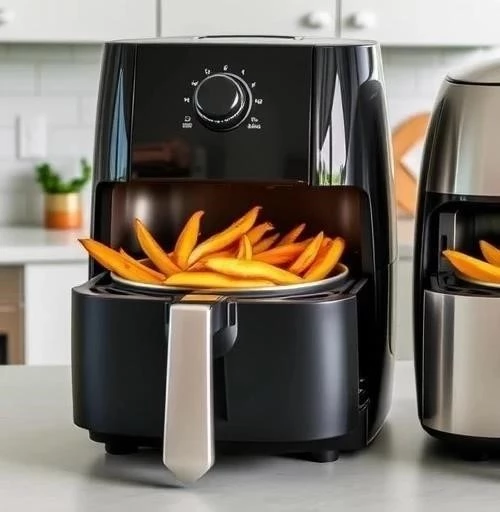
The best air fryer is not necessarily the most expensive or the one with the longest feature list. It is the model whose capacity‚ layout and controls fit the way you actually cook. A compact basket appliance may be ideal for one person‚ while a family that prepares several dishes at once may benefit more from a large or dual-zone model. The right choice depends on portions‚ counter space‚ budget and how much convenience matters to you.
Start with capacity‚ not advertising
Capacity is one of the most practical differences between air fryers. A basket around 4 litres can work for one or two people‚ but it may feel restrictive when cooking for three or four: food needs room for hot air to circulate‚ and a crowded basket can cook unevenly. For a household of that size‚ consider a model of about 5 litres or more. Larger families‚ batch cooks and people who want to prepare a whole meal at once may prefer a 6–7-litre basket or an oven-style appliance.
Remember that stated capacity does not tell the whole story. Basket shape and usable cooking area matter too. A tall‚ narrow basket may hold a generous volume but leave little space for a single layer of food. Check the dimensions and‚ when possible‚ look at the cooking tray rather than choosing by litres alone.
Choose the format that suits your routine
- Single-basket models are straightforward‚ compact and usually offer good value. They suit everyday cooking when one dish‚ or several foods cooked in sequence‚ is enough.
- Dual-zone models have two cooking compartments. They can prepare different foods at different temperatures and may let both finish together. This is useful for family dinners‚ but the appliance takes more counter space and can cost more.
- Air-fryer ovens offer a larger interior and shelves or trays‚ making them more versatile for bigger portions. They can replace some functions of a small countertop oven‚ but need extra room and may require rotating trays for even browning.
- Compact models make sense for small kitchens‚ occasional use or one-person portions. Their convenience is real‚ but limited capacity can mean repeated cooking for a family.
More functions are not automatically better. If you mostly cook chips‚ vegetables‚ chicken or reheated leftovers‚ a reliable basic model may be a smarter purchase than an appliance with many modes you will rarely use.
Power‚ controls and useful features
Wattage affects how quickly an appliance heats and how it performs under load‚ but it should not be judged in isolation. Capacity‚ airflow and temperature control also influence results. Compare models of similar size and check whether reviews describe consistent cooking‚ not just impressive specifications.
Digital controls and preset programmes can make operation more convenient‚ while mechanical dials are often easier to understand and may suit shoppers looking for a budget option. Smartphone control is useful if you genuinely want remote monitoring or app-based recipes; it is not essential for good cooking. Likewise‚ a self-cleaning claim should not replace checking whether the basket and removable parts are easy to wash. A dishwasher-safe basket can save time‚ but confirm this in the manufacturer’s instructions.
Some appliances advertise dual heating elements or steam functions. These may help with particular cooking styles‚ but features should earn their place through a clear benefit. For instance‚ steam may appeal to someone who wants a juicier result‚ while a second heating element may be useful if it improves cooking consistency. Neither is a reason by itself to ignore capacity‚ cleaning‚ warranty or independent user feedback.
Models worth comparing
Market roundups for 2026 include familiar options such as the Ninja Foodi MAX Dual Zone AF400EU for two-zone cooking‚ the Philips Airfryer XXL HD9650 for a larger single-basket format‚ and the Xiaomi Smart Air Fryer 6.5L for shoppers interested in app-connected controls. The Bosch MAF671B0 is listed as a 7.2-litre option‚ while models from Kitfort and Weissgauff appear in more budget-oriented comparisons. These are candidates to investigate‚ not a universal ranking: availability‚ current prices‚ warranty terms and customer experiences can differ by retailer and region.
Before buying‚ read recent reviews for recurring complaints rather than relying on a single enthusiastic rating. Look for comments about uneven browning‚ noise‚ wear‚ controls‚ cleaning and whether the actual usable capacity matches expectations. Ratings on marketplaces can be helpful‚ but they do not prove that a model is right for your household.
A practical recommendation
For one or two people: choose a compact single-basket model with simple controls. For three or four: start around 5 litres‚ and consider 6 litres or more if you cook full meals or want leftovers. For a busy family: compare dual-zone models with large single baskets; choose two zones only if cooking separate foods at once will save you time. For a very small kitchen: measure the counter and storage space before ordering‚ including room around the appliance for ventilation.
In short‚ the best air fryer is the one that gives your household enough usable space without taking over the kitchen. Prioritise capacity‚ even cooking‚ easy cleaning and dependable support. Treat smart controls‚ presets and extra heating modes as bonuses—not substitutes for those essentials. Compare current local prices and warranty conditions‚ then choose the simplest model that comfortably handles the food you make most often.


6 Comments. Оставить новый
The explanation of dual-zone cooking is useful because it highlights a specific benefit—finishing different foods at the same time—while also acknowledging the extra space and cost. That makes the recommendation feel measured rather than promotional.
The guide offers a sensible starting point for choosing an air fryer, especially for readers who are unsure whether they need a compact basket or a larger oven-style model. Checking dimensions and cooking-tray area is a particularly actionable suggestion.
The emphasis on usable cooking area is especially helpful. Capacity labels can be misleading, and explaining how basket shape affects single-layer cooking gives readers a practical way to compare models beyond the headline litre count.
The advice to consider household size while leaving room for food circulation is sound. It explains why buying the largest advertised capacity is not automatically the right choice and helps readers think about how they actually prepare meals.
I appreciate that the article mentions counter space and budget alongside cooking capacity. Those practical constraints are easy to overlook when comparing features, yet they often determine whether an appliance is convenient to use every day.
This is a balanced guide because it connects appliance format to everyday routines rather than presenting one type as universally best. The comparison of single-basket, dual-zone and oven-style models makes the trade-offs in space and convenience clear.