
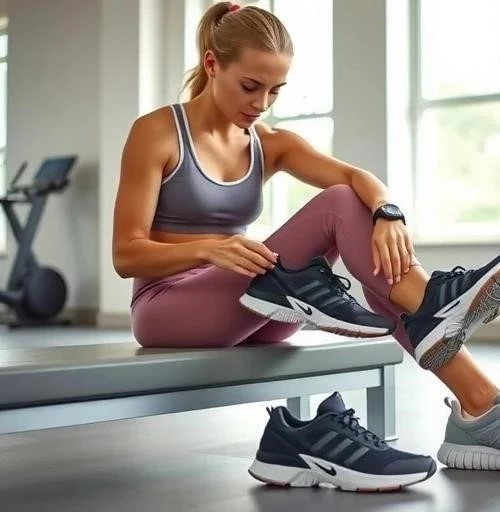
Your shoes are the quiet training partners that meet every landing, lunge, and last-minute change of direction. Choose them for the workout you actually do—not for the color that looks fastest on a shelf.
Start with your training, not the logo
“Fitness” can mean a treadmill run, a weight-room session, a dance class, or all three in one week. Each asks a shoe to solve a different problem. For regular running, look for a comfortable heel-to-toe transition, cushioning that suits your distance, and a secure fit that does not squeeze your toes. For strength training and circuit workouts, prioritize a stable base and dependable grip. If your routine mixes running with lifting, seek a versatile trainer—but know that a shoe built for everything may not feel perfect for either extreme.
Match the shoe to the movement
- Running: Choose a model designed for road or trail use, depending on where you run. Soft cushioning can feel pleasant over longer distances; a firmer, more responsive feel may suit faster sessions. Neither is automatically “best”—comfort is the test.
- Gym and strength work: A broader, stable platform can help you feel grounded during squats and controlled lifts. Look for a secure upper and outsole traction. Very tall, soft cushioning may feel less steady under heavy loads.
- HIIT and classes: Quick turns and side steps call for a snug heel, supportive upper, and grip that works on your studio floor. Try lateral movements when testing the shoe.
- Walking and everyday wear: Prioritize all-day comfort and a fit that stays pleasant after your feet warm up. A running shoe can work well, but it need not be your only option.
Decode the feel, not just the technology
Under Armour lines and cushioning systems—including names such as HOVR, Charged, or Flow—can help you narrow a search, but a technology label cannot tell you how a shoe will feel on your foot. Product features vary by model and season, so check the current description for intended activity, cushioning, outsole, and fit. Then try the shoe. Walk, jog, rise onto your toes, and make a few gentle side steps. Your heel should feel held, your toes should have room to spread, and nothing should rub or pinch.
Fit is personal—and worth a proper test
Shop later in the day or after exercise, when feet may be slightly larger. Wear the socks you train in, and compare both shoes: one foot can be bigger than the other. Leave a little space in front of the longest toe without letting your foot slide. If you use orthotics, bring them along. Do not assume your usual size fits every model; try nearby sizes and, where available, different widths. A shoe should feel comfortable from the start, not require a painful “break-in.”
Check your own training clues
Notice where your current shoes wear down, but do not diagnose your gait from the outsole alone. If you have recurring pain, a history of injury, or specific support needs, ask a qualified running-store specialist or clinician for guidance. For trail sessions, seek suitable traction; for indoor floors, make sure the outsole grips without feeling sticky. Replace shoes when comfort or support has noticeably faded, rather than relying on a universal mileage promise.
A smart fitting-room checklist
- Name your main workout and where you do it.
- Try shoes with training socks, on both feet.
- Check toe room, heel hold, and comfort while moving.
- Compare stability and cushioning with your real routine.
- Review the return policy before testing them outdoors.
The best women’s Under Armour fitness shoe is not the one with the boldest claim; it is the one that lets you focus on the next rep, step, or mile. Choose for your movement, trust your feet, and let the workout—not the display wall—deliver the final verdict.
8 Comments. Оставить новый
I like the article’s quiet rebellion against buying shoes by logo or color. The best shoe here is less a fashion statement than a well-matched tool: first decide what your feet will ask it to do, then go shopping.
The advice to test lateral movement for classes is a smart detail. Shoes should be auditioned for the choreography of real life, not merely admired while standing still in front of a mirror.
The reminder that “versatile” can mean “not perfect at either extreme” feels refreshingly honest. A do-everything trainer is a useful compromise, not a magical shoe that secretly moonlights as a running shoe, lifting shoe, and dance partner.
Useful, grounded guidance—and a welcome reminder that comfort is personal. The right pair doesn’t need to make you feel faster on the shelf; it needs to feel right when the workout begins.
This turns shoe shopping into a small experiment: walk, lunge, turn, and notice what your feet say. I appreciate that practical invitation more than another grand promise printed on a box.
A good guide for anyone whose workout routine changes shape during the week. It makes the case for matching the shoe to the movement instead of expecting one pair to understand every ambition.
I enjoyed the emphasis on fit over technology names. Marketing terms may sparkle, but a shoe that pinches your toes is still a shoe that pinches your toes.
The distinction between a soft landing and a stable platform is especially useful. Cushioning sounds universally appealing until you imagine balancing a heavy lift on a marshmallow.