
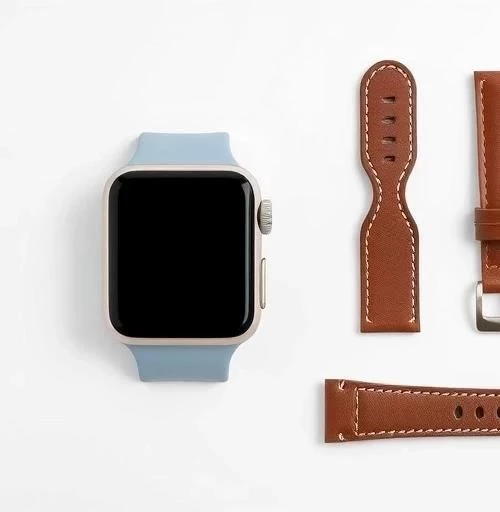
The right Apple Watch band should feel comfortable, suit your daily routine and fit your watch case. A band can change the look of the watch, but comfort and a secure fit matter most: you will often wear it for hours, including during exercise and sleep. Before choosing a material or style, check compatibility and measure your wrist.
Check size and compatibility first
Apple Watch bands are made for particular case-size families. Check the size printed on the back of your watch or in its settings, then compare it with the band’s stated compatibility. Some bands fit multiple generations, but do not assume that every band fits every case. Also consider wrist circumference: a band that is too short may not close, while an overly long one can leave the watch loose;
For an accurate fit, use the manufacturer’s sizing guide and measure your wrist where you wear the watch. A sport band should be snug enough for the sensors to maintain contact, but not tight enough to pinch or leave lasting marks. If you are between sizes, check the return policy before ordering.
Choose a band for the way you use your watch
- Sport Band: A versatile choice for everyday wear, walks and workouts. Its smooth, water-resistant material is easy to rinse and wipe clean. It has adjustable holes, so you can fine-tune the fit. Some people find it less breathable in hot weather.
- Sport Loop: A soft, lightweight fabric band that fastens with a hook-and-loop closure. It is easy to adjust and can feel airy during exercise or sleep. Fabric may hold sweat or dirt, so wash and dry it according to care instructions.
- Solo Loop or braided loop: These stretch-on styles have no buckle, creating a clean, simple look. Correct sizing is essential: too tight can feel uncomfortable, and too loose may let the watch move. Measure carefully, and remember that stretchy materials can change with use.
- Metal link or mesh: A polished option for work or formal occasions. Metal is durable and easy to wipe, but can feel heavier and may become uncomfortable in heat. Make sure the clasp is secure and the band is sized properly. Check whether links can be removed without special tools.
- Leather or other dress bands: These can look smart and develop a distinctive appearance over time. They are generally less suitable for swimming, sweaty workouts or frequent exposure to moisture. Follow the maker’s cleaning advice; water and harsh cleaners may damage the finish.
- Rugged or outdoor bands: Thick, reinforced designs can be useful for hiking or demanding work. They may offer extra security, but can feel bulky. Check that the band does not interfere with charging accessories or protective cases.
Match the band to your routine
If you exercise often, choose a washable, quick-drying band and a closure that stays secure while you move. For swimming, confirm that both the band and the watch are appropriate for water exposure; a water-resistant band does not make the watch more water-resistant. For all-day wear, prioritize a light material, smooth edges and an adjustment system that does not press on your wrist. If you sleep with your watch, a soft, breathable band may be more comfortable than metal.
For work or evenings out, consider a metal, leather or neutral-colored band that complements your clothes. You do not have to choose just one: a practical workout band and a dressier alternative can cover different situations. Bands are quick to swap, so changing them can refresh the look without changing the watch.
Fit, skin comfort and care
People can react differently to materials, coatings, sweat or trapped moisture. If a band irritates your skin, remove it, clean and dry the band and your wrist, and try a different material or looser fit. Keep the watch clean, especially after workouts, and let your skin dry before putting it back on. Follow the care guidance for the specific band; avoid assuming that a material is safe for every cleaner or environment.
Inspect the connector and clasp occasionally. A band should attach firmly and should not slide out when gently tugged. Avoid damaged or poorly fitting third-party bands, particularly if you rely on the watch during sports or outdoor activities.
Quick recommendation
For one all-purpose option, start with a comfortable, adjustable sport-style band. Choose a Sport Loop if softness and easy adjustment matter most, a metal or leather design for a dressier appearance, and a rugged band for demanding conditions. The best choice is the one that fits your wrist securely, feels good through a full day and suits the activities you actually do.


3 Comments. Оставить новый
A clear overview that balances style with comfort and fit. The advice about getting a snug—not tight—fit is particularly valuable for people who rely on their watch sensors during workouts.
The breakdown of band types makes it easier to match a band to everyday wear, exercise, or sleep. The care tips are useful too, especially for fabric styles that can hold sweat and dirt.
This is a helpful, practical guide. I especially appreciate the reminder to check case compatibility and measure wrist size before buying, since those details can prevent a lot of frustration.