
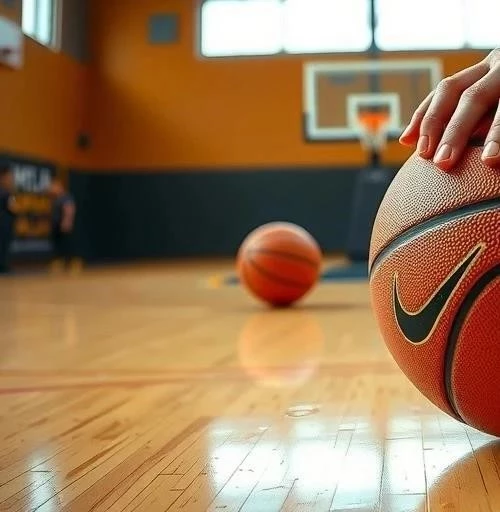
The right basketball should suit the player, the court and the way the ball will be used. A ball that is too large, too heavy or poorly matched to the playing surface can make learning harder and wear out quickly. Before buying, check its size, material, construction, grip and intended use.
Choose the correct size
Basketballs come in several standard sizes. The best choice depends mainly on the player’s age, league rules and level of comfort. When in doubt, check the requirements of the team or competition first.
- Size 7: The standard men’s ball, with a circumference of about 29.5 inches (75 cm). It is commonly used by boys from about age 15 and by adult men.
- Size 6: About 28.5 inches (72 cm). This is the standard women’s ball and is also used by many girls and boys aged roughly 12–14.
- Size 5: About 27.5 inches (70 cm). Often suitable for children around 9–11 years old.
- Size 4: A smaller ball, usually around 25.5 inches (65 cm), for younger children who are still developing coordination and hand strength.
Age ranges are only a guide: recommendations vary by country and competition. A child should be able to hold the ball securely, pass it with control and shoot without straining. If the ball is difficult to handle, moving down a size can help build good technique.
Match the ball to the playing surface
Indoor balls are generally made from leather or composite materials. They are designed to provide a consistent feel and good grip on a clean hardwood court. Traditional full-grain leather balls can feel stiff at first and usually need breaking in. Composite leather is often softer straight away and is a practical choice for regular recreational play.
Outdoor balls are usually made from durable rubber or tough composite material. These handle abrasive asphalt and concrete better than indoor leather. Using an indoor ball outdoors can roughen its surface quickly, damage its grip and shorten its life.
Indoor/outdoor balls offer a compromise for players who switch between surfaces. They are convenient, but may not feel as refined indoors as a dedicated court ball or last as long outdoors as a robust rubber model. If most of your play happens in one place, buy a ball designed for that surface.
Consider material, grip and feel
Material affects touch, durability and price. Rubber is usually affordable and hard-wearing, making it suitable for beginners, schools and outdoor play. Composite covers provide a more cushioned, tacky feel and work well for many recreational players. Premium leather is aimed mainly at indoor use and players who want a traditional feel.
Grip is personal, but the ball should feel secure without needing excessive force. Look for channels—the recessed lines between the panels—that are even and clearly defined. Try handling the ball with dry hands if possible. A heavily textured cover may improve control outdoors, while a softer surface can feel better on a hardwood court. Keep in mind that dust, moisture and worn-out material all reduce traction.
Check construction and bounce
Inspect the seams and panels for uneven joins, gaps or visible defects. The surface should feel consistent, and the valve should sit neatly in place. A well-made ball is more likely to retain its shape and perform predictably, though price alone does not guarantee quality.
Inflate the ball to the pressure printed near its valve or in the product instructions. Do not guess or overinflate it: excess pressure can make the ball feel harsh and may damage it. For a simple check, drop it from about 6 feet (1.8 m) onto a hard, level floor. A properly inflated ball should rebound to roughly waist height, though exact guidance varies by manufacturer. An inconsistent bounce may indicate incorrect pressure or a defect.
Buy for the player and budget
Beginners do not need the most expensive model. A correctly sized rubber or composite ball from a reliable brand is often enough for practice; More experienced players may value a softer cover, consistent flight and better grip. For team use, confirm that the ball meets the league’s specifications before purchasing.
If possible, hold or dribble the ball before deciding. Check the return policy when ordering online, since feel can be difficult to judge from photographs. Avoid choosing solely by color or design: appearance does not tell you whether the ball is the right size or surface type.
Care for your basketball
Use the ball on the surface it was designed for, wipe off dirt after play and store it away from extreme heat, cold and direct sunlight. Check pressure regularly with a gauge and use a compatible pump needle. Never drag the ball across rough ground or leave it outdoors for long periods.
In short: choose the right size first, then match the cover to your court. Check comfort, grip, construction and inflation, and pick a ball you can handle confidently. The best basketball is not necessarily the most expensive one; it is the one that fits the player, feels right and suits the way it will be used.
4 Comments. Оставить новый
A practical overview for anyone buying a first basketball. The surface and material advice makes it easier to narrow down the options.
Good explanation of why indoor and outdoor balls are made differently. I hadn’t realized that using an indoor ball on concrete could wear down its grip so quickly.
I appreciate that the age ranges are described as a guide rather than a strict rule. Comfort and control are sensible things to consider when choosing a size.
The size guide is helpful, especially the reminder to check league rules. Choosing a ball that feels manageable can make a real difference for younger players.