
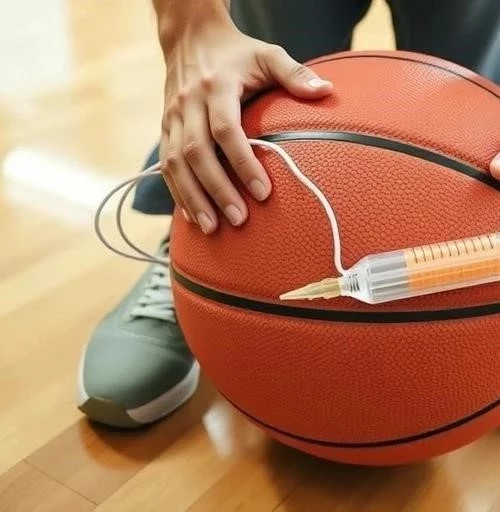
A flat basketball can often be made playable without a hand pump‚ but there is no reliable trick that creates air from nothing. The ball’s valve is narrow and needs a suitable nozzle to open it. Your safest options are another source of compressed air and a ball-inflation needle; improvised methods are less dependable and can damage the ball.
Use a compressor or tire inflator
If a garage‚ service station‚ or sports facility is nearby‚ ask to use an air compressor. You will still need a basketball needle‚ sometimes sold with bike-pump accessories. Moisten the needle with water or a little glycerin‚ insert it straight into the valve‚ and add air in short bursts. Check the ball between bursts so you do not overinflate it. A car-tire inflator can work if it has a controllable setting‚ but avoid high-pressure blasts.
Try a CO₂ inflator
A bicycle CO₂ inflator can provide a quick emergency fill when paired with the right ball needle or adapter. Follow the device instructions‚ use brief releases‚ and stop to check the ball. CO₂ may escape more quickly than ordinary air‚ so this is a temporary solution rather than the best choice for regular play.
What about blowing into the valve?
Blowing directly into a basketball valve is generally ineffective: the opening is designed for a needle‚ and your mouth cannot make a secure connection. Do not force a straw‚ pen tube‚ or other object into the valve. These can stretch or puncture it‚ while saliva and dirt may get inside. A balloon is not a practical substitute either; it cannot deliver air through the valve under dependable pressure.
Avoid risky shortcuts
- Do not use canned air or cleaning duster. Its contents may be cold‚ harmful‚ or unsuitable for inflating sports equipment.
- Do not use an unregulated compressor. Too much pressure can deform or burst the ball.
- Do not heat‚ cut‚ or pry open the valve. Damage may make the ball impossible to inflate properly.
Check the pressure
Use the pressure range printed near the valve or in the ball’s instructions; requirements vary by model. If you have no gauge‚ inflate gradually and test the bounce‚ then compare it with a properly inflated ball. Bounce is only a rough check‚ not a substitute for a gauge. If air leaks out quickly‚ the valve or bladder may be damaged‚ and adding more air will not solve the problem.
Bottom line: without a pump‚ the practical solution is to borrow a compressor or CO₂ inflator and use a proper basketball needle. If neither is available‚ waiting for the right equipment is safer than forcing an improvised tool into the valve.
3 Comments. Оставить новый
This is a clear, sensible guide that corrects common misconceptions, such as trying to blow air directly into the valve. It also explains why improvised tools and canned air are poor choices, so readers can avoid methods that may cause damage.
The article gives practical advice while making clear that a suitable inflation needle is still necessary. Its warnings against forcing objects into the valve and using uncontrolled pressure are especially useful because those shortcuts can damage the ball or create a safety risk.
The comparison of compressors and CO₂ inflators is helpful and appropriately distinguishes a temporary emergency option from a regular solution. The reminders to inflate in short bursts and check the ball’s pressure help make the guidance safer and easier to follow.