
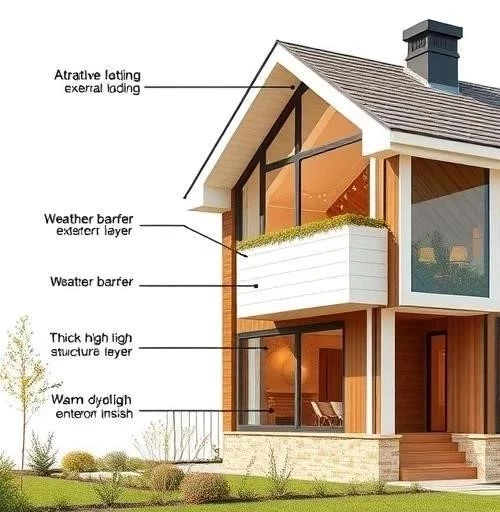
Well-designed wall insulation is one of the most effective ways to improve home energy efficiency. Exterior walls can account for a large share of heat loss‚ so choosing a suitable system helps reduce heating bills‚ limit overheating in summer and create a more comfortable indoor climate. The best solution depends on the building‚ local weather‚ budget and quality of installation.
Start with the wall and the climate
Before selecting insulation‚ assess the existing wall‚ its condition and exposure to rain and wind. The thermal conductivity of materials matters‚ but thickness alone does not determine performance. Joints‚ fixings‚ window reveals and connections to roofs and foundations must also be considered: poorly detailed thermal bridges can undermine an otherwise effective design. A continuous layer and good wall airtightness are essential for reliable heat loss reduction.
Wall construction affects the choice. Aerated concrete blocks and ceramic blocks may provide useful thermal performance‚ yet many homes still benefit from additional insulation. A multilayer wall can combine structural masonry‚ insulation‚ a protective layer and an external finish. Designers should consider the dew point and moisture movement through the assembly to reduce the risk of condensation.
Compare insulation and facade systems
- Mineral wool is non-combustible‚ provides sound insulation and allows water vapor to pass through. It is common in both ventilated facade systems and wet facade assemblies.
- Expanded polystyrene is lightweight and often economical for a wet facade. It requires careful detailing and protection from fire and physical damage.
- PIR panels offer high insulation performance for their thickness‚ making them useful where space is limited. Check compatibility with the wall and finish.
- Facade thermal panels combine insulation and a finished outer surface‚ which can speed up installation. Their joints and fixing method still need careful attention.
A ventilated facade has a cladding layer separated from the insulation by an air gap. This cavity helps drain moisture and dry the assembly. A wet facade‚ by contrast‚ bonds or fixes insulation to the wall and covers it with reinforced render. Both are modern facade systems; neither is universally best. Select materials and details as a complete system‚ rather than mixing components without technical guidance.
Moisture control and long-term performance
Vapor barrier placement depends on the wall build-up and indoor conditions; it should not be added automatically. Waterproofing‚ flashing and sound drainage protect against rain‚ while sealed joints help maintain airtightness. Professional design can prevent trapped moisture and avoid shifting the dew point into a vulnerable part of the wall.
Durability of insulation depends on correct installation‚ protection from water and suitable maintenance. Choose eco-friendly building materials where practical‚ but compare service life‚ fire safety‚ emissions and environmental impact across the whole system. Energy-efficient construction is not only about adding insulation: careful detailing and quality workmanship matter just as much.
Plan for comfort and savings
Before work begins‚ inspect the facade‚ repair defects and resolve ventilation issues. Ask a qualified designer to calculate insulation needs and specify compatible layers‚ including vapor control and waterproofing. With the right solution‚ wall insulation can cut energy use‚ protect the building fabric and support a stable‚ healthy indoor climate for years.

3 Comments. Оставить новый
This article clearly explains why there is no one-size-fits-all facade system. Considering the existing wall, local climate and installation quality together is sound advice for anyone planning an energy-efficiency upgrade.
The comparison of mineral wool, polystyrene and PIR makes the options easy to understand. It would also be helpful to emphasize that a qualified professional should assess moisture risks and local fire requirements before installation.
A useful overview of the factors that shape insulation choices. I especially appreciate the reminder that careful detailing around windows, roofs and foundations is just as important as selecting the insulation material.