
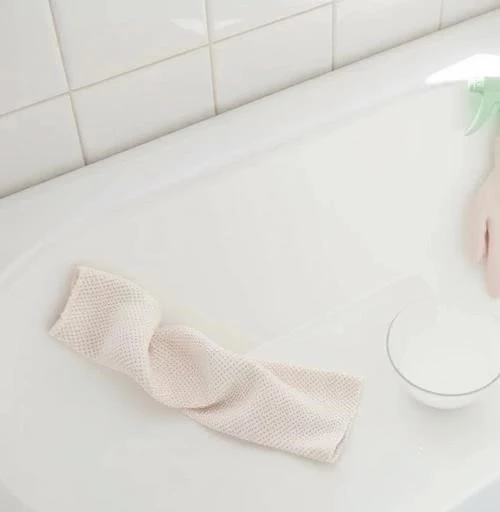
Acrylic is smooth and easy to maintain, but its surface can scratch or become dull if cleaned with harsh products. The safest approach is regular washing with mild, non-abrasive cleaners and a soft cloth. Always check the bathtub manufacturer’s care instructions, especially before trying a new product.
What you will need
- Warm water and a little mild dishwashing liquid or gentle liquid soap;
- A soft microfiber cloth or non-scratch sponge;
- A clean towel for drying;
- If necessary, a cleaner specifically labelled as safe for acrylic.
Routine cleaning
- Rinse the tub with warm water to remove loose dirt, hair and soap residue.
- Apply diluted dish soap or an acrylic-safe cleaner to the surface. Follow the product label; do not mix cleaners.
- Wipe gently with a soft cloth, using light pressure. Give soapy or greasy areas a little extra time rather than scrubbing harder.
- Rinse thoroughly with clean water and dry with a soft towel. Drying helps prevent water marks and mineral deposits.
Cleaning after use, or at least once a week, is usually easier than tackling a thick layer of buildup later.
Soap film, limescale and stains
For soap film, repeat the mild-soap wash and rinse well. For limescale, use only a descaler whose label explicitly says it is suitable for acrylic, following the stated contact time. If you are unsure, ask the tub’s manufacturer. Do not assume that vinegar or citric acid is safe: acidic remedies can damage some finishes.
For a small mark, try warm water and soap first. If it remains, use an acrylic-approved cleaner and test it on a hidden area. Avoid scraping deposits with a blade or abrasive pad. Persistent rust, deep scratches or discoloration may need professional advice; aggressive treatment can make the damage worse.
What not to use
- Scouring powders, abrasive creams, steel wool, rough brushes or scratchy pads;
- Acetone, paint thinner, solvents, alcohol-based products or nail-polish remover;
- Strong acids, drain cleaners, oven cleaners or bleach unless the manufacturer specifically approves the product for your tub;
- Boiling water, and mixtures of cleaning products.
These may scratch, dull, discolor or weaken acrylic. A cleaner advertised as “universal” is not necessarily safe for this material. Never combine bleach with acids or ammonia; dangerous fumes can result.
Simple prevention
Rinse away shampoo and bath products after each use, wipe the tub dry, and deal with spills promptly. Keep metal objects and gritty cleaning tools off the surface. If a cleaner causes a change in color or shine, rinse it off immediately and stop using it. Gentle, regular care is generally the best way to keep an acrylic bathtub clean without damaging its finish.

3 Comments. Оставить новый
I appreciate the caution about acidic remedies and abrasive tools. Those warnings help prevent accidental damage, and the suggestion to test an approved cleaner in a hidden spot is sensible.
The article is easy to follow and distinguishes routine cleaning from tougher stains. It appears to end mid-list, though, so completing the final section would make the guidance feel more polished.
This is a clear, practical guide, especially the reminder to check the manufacturer’s care instructions before using a cleaner. The advice to dry the tub after rinsing is also a helpful detail.