
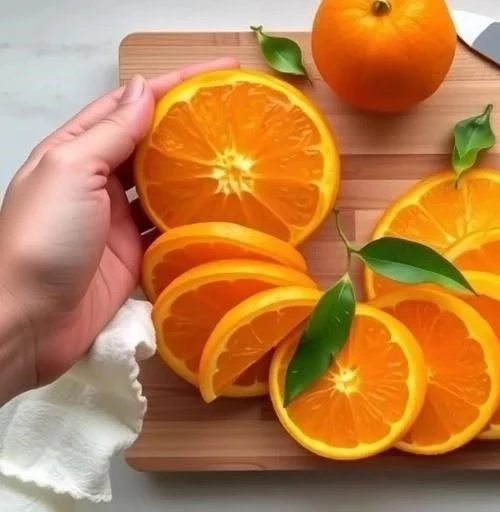
A neatly cut orange can make a fruit plate, dessert, or drink look more inviting. The best cutting style depends on how the orange will be served: rounds suit platters and drinks, wedges are easy to eat, and peeled segments work well in salads. Choose a firm, ripe orange with unbroken skin, and wash and dry it before cutting.
Prepare the fruit and knife
Use a stable cutting board and a sharp knife with a smooth blade. A dull knife can crush the fruit and make slippery cuts less controlled. If the orange rolls, trim a very thin slice from one end to create a flat base. Keep your fingers curled away from the blade, and cut slowly, especially through the peel.
Make attractive orange rounds
- Place the orange on its side on the board.
- Trim off a small piece from the stem end, if needed, so the fruit sits securely.
- Cut crosswise into even slices, about 5–8 millimetres thick. Use a gentle sawing motion rather than pressing down hard.
- Remove any visible seeds with the knife tip or a clean small spoon.
Even slices create a tidy pattern of segments and look especially good when overlapped in a fan on a plate. For a garnish, make a single cut from the outer edge to the centre, then twist the two sides in opposite directions to form a curl. A thin round can also be placed on the rim of a glass: cut a short slit from the edge to the centre and slide it onto the rim.
Cut wedges for serving
For classic wedges, stand the orange on a flat end and cut it in half from top to bottom. Place each half cut-side down, then divide it into two or three wedges, depending on the fruit’s size. This method keeps the peel on, making the pieces easy to pick up. For smaller portions, cut each wedge in half again. Arrange them with the pointed ends facing inward or alternate their direction for a simple, balanced presentation.
Make peeled segments
To serve orange without peel or much pith, cut off both ends until the flesh is visible. Stand the fruit upright. Following its curve, slice away the peel and white pith in strips, turning the orange as you work. Then hold the peeled fruit over a bowl and cut along the membranes on either side of each segment. Lift out the segments and discard any seeds. This technique, sometimes called supreming, gives clean pieces for salads, desserts, and garnishes. Work over a bowl to catch the juice.
Finishing and presentation
Arrange cut pieces shortly before serving so they stay fresh and juicy. Pat excess juice from rounds if they will be placed on a cake or other delicate dessert. Combine different shapes—such as rounds around a small pile of wedges—to add variety without making the plate look crowded. A little mint or a few berries can provide contrast, but the orange should remain the focus.
Use a clean board and knife, and refrigerate prepared fruit in a covered container if it will not be served right away. For the neatest result, choose one cutting style that suits the dish, keep pieces similar in size, and let the natural colour and pattern of the orange provide the decoration.





2 Comments. Оставить новый
The article presents clear, practical instructions for preparing orange rounds, wedges, and peeled segments. The safety advice and serving suggestions make it useful for readers with different needs.
The step-by-step structure is easy to follow, and the suggested slice thickness adds helpful detail. The article appears to end mid-instruction, so completing that section would make it feel more finished.