
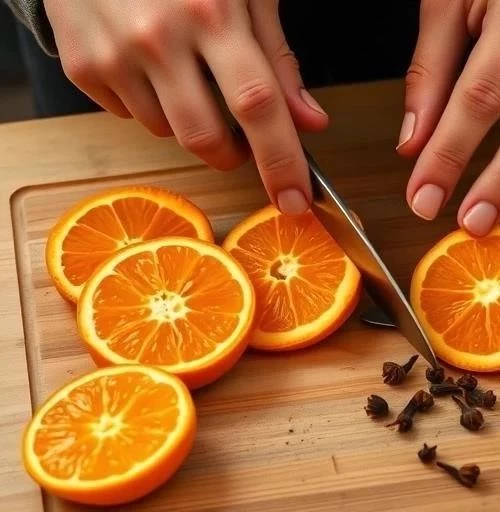
An orange in mulled wine is more than a pretty wheel bobbing in a mug. Its peel releases fragrant oils, its flesh lends a gentle brightness, and its shape affects how quickly those flavors enter the drink. Cut it thoughtfully and it becomes part of the recipe; cut it carelessly and it can bring bitterness, cloudy pulp, or an awkward garnish. Here is how to give this winter classic its best citrus notes.
Choose the orange before you reach for the knife
Pick a firm, heavy orange with smooth, unbroken skin. It should feel juicy for its size and smell fresh when you rub the peel. Navel oranges are an easy all-purpose choice: sweet, fragrant, and usually seedless. A blood orange adds a deeper, berry-like note and a dramatic ruby edge. If you want a more floral, slightly sharper aroma, use a Seville or other bitter orange sparingly, since its peel can dominate.
Wash the fruit under warm running water and rub the surface well, especially if you plan to simmer the peel. Dry it before cutting so it does not slip. A clean, sharp knife matters: a dull blade squashes the fruit, pushes juice onto the board, and makes neat slices harder to achieve;
The classic cut: thin rounds
- Trim a very small slice from the top and bottom, just enough to remove the dry ends and give the orange a stable base.
- Stand the fruit upright on a cutting board. Slice crosswise into rounds about 5–7 millimeters thick.
- Remove visible seeds with the tip of the knife. Keep the peel on: it carries much of the orange’s perfume.
Thin rounds release flavor quickly and look beautiful in a clear pot or glass mug. They are ideal when you want orange in both the drink and the presentation. Avoid paper-thin slices, though. They can fall apart during a long simmer and leave soft bits of pulp in the wine. If you are serving the slices, make them sturdy enough to lift out with a spoon.
Half-moons for a lighter touch
For smaller pieces, or a less showy pot, cut the orange in half from stem to base, then place each half cut-side down and slice it into half-moons. These fit neatly around cinnamon sticks and cloves, and are easy to fish out before serving. Half-moons also expose plenty of juicy flesh while keeping the peel in manageable pieces.
Peel, zest, or slices?
Choose according to the flavor you want. Whole rounds give the wine a balanced citrus note and make an attractive garnish. Wide strips of peel, cut with a vegetable peeler, provide a stronger fragrance with less pulp. Aim for colored skin only: the white layer underneath, called the pith, can taste bitter, especially after prolonged heating. A fine zest gives intense aroma, but it is easy to overdo and difficult to strain out, so use it sparingly.
For a gentler, cleaner drink, remove broad strips of peel and leave the fruit itself for another use. For a rustic, generous pot, use rounds. There is no single correct cut; the best one depends on whether you want the orange to whisper in the background or announce itself as soon as the lid comes off.
When to add it—and what to avoid
Add the orange after pouring the wine and other ingredients into the pot. Warm everything slowly over low heat, letting the citrus steep with the spices. Do not let the wine boil: boiling drives off aroma and can make the fruit taste stewed. A gentle, steaming heat is enough. If you are preparing the drink well ahead, add slices closer to the warming stage rather than leaving them in the wine for hours; long contact can make the peel and pith more assertive.
Want more orange flavor without extra bitterness? Squeeze a little juice into the pot, then add a few fresh slices for fragrance. If the wine is already quite sweet, use less juice and let the peel do the aromatic work. Taste as you go; oranges differ in sweetness and sharpness, just as wines do.
A quick guide to the right cut
- Thin rounds: classic appearance, quick infusion, easy garnish.
- Half-moons: convenient pieces, ideal for serving and removing.
- Wide peel strips: bright aroma with less pulp; trim away the white pith.
- Fine zest: concentrated fragrance; use a little and strain the drink.
For a simple pot, start with one washed orange cut into 5–7 millimeter rounds. Remove the seeds, add the slices to the wine with your spices, and warm gently. If the citrus becomes too prominent, take the fruit out; if you want a fresher finish, add a new slice to each mug. The knife work takes only a minute, but it sets the mood: a bright curl of peel, a jewel-like round, and suddenly the kitchen smells like winter has decided to be kind.
1 Comment. Оставить новый
I like how this turns a simple orange slice into a small act of kitchen engineering: thickness controls flavor, while the peel carries the perfume. The knife advice is especially welcome—mulled wine should taste of winter, not of a bruised orange and a slippery cutting board.