
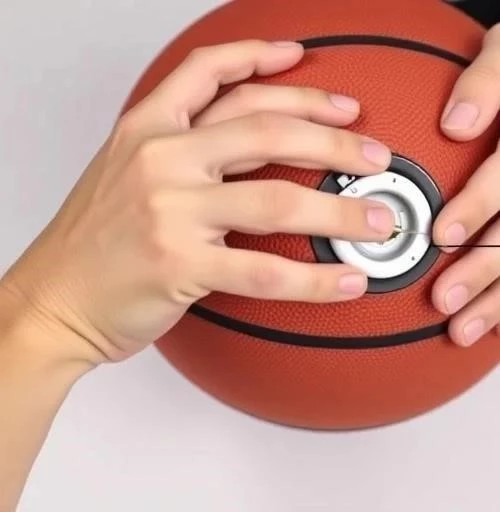
A basketball is a small weather system: air presses outward‚ rubber and composite materials hold the pressure in‚ and a tiny valve keeps the whole arrangement ready to bounce. To deflate it‚ you do not need to puncture‚ squeeze‚ or wrestle the ball. You simply open its valve carefully and let the air leave in a controlled stream.
What you’ll need
- A basketball inflation needle—the narrow metal or plastic needle made for sports balls.
- A little clean water or valve-safe lubricant to moisten the needle.
- A towel‚ if you want to catch dust or moisture from the ball’s surface.
A pump is not necessary. Never substitute a sewing needle‚ pin‚ screwdriver‚ or other sharp object: those can damage the valve or bladder‚ turning a routine adjustment into a leaky-ball emergency.
Step-by-step: let the air out
- Find the valve. Look for the small circular opening‚ usually set into one of the black channels between the ball’s panels. Brush away grit so it cannot be pushed inside.
- Moisten the inflation needle. Wet its tip with clean water or a lubricant approved for ball valves. A dry needle creates unnecessary friction and may tear the valve’s inner surface.
- Insert it gently. Hold the ball steady and guide the needle straight into the valve. Use light pressure; do not twist‚ jab‚ or force it. If it will not slide in‚ withdraw it‚ add a little more moisture‚ and try again at a slightly different angle.
- Listen and wait. Once the needle reaches the valve‚ air should begin to hiss out. Keep the needle still and allow the ball to soften gradually. You can press the ball very lightly to encourage airflow‚ but do not fold or crush it.
- Stop at the right point. When the ball is as soft as you need‚ pull the needle straight out. If you want it completely deflated‚ continue patiently rather than squeezing hard to force out the last breath.
How flat should it be?
For carrying or fitting a ball into limited storage space‚ reducing its pressure may be enough; it does not always need to become completely flat. If the ball will be stored for a long time‚ follow its manufacturer’s guidance. Avoid sharply creasing it or leaving it compressed beneath heavy objects‚ because the cover and inner bladder can deform.
If you are deflating it only to adjust the bounce‚ release air in short stages. Remove the needle‚ check how the ball feels‚ and repeat if necessary. A ball that is too soft can bounce poorly and may be harder to control‚ so do not let all the air out by accident when a small adjustment will do.
Afterward: protect the valve
Wipe away any moisture and dirt around the opening. Store the ball somewhere cool and dry‚ away from direct sunlight‚ heaters‚ and sharp objects. Heat can affect the materials and pressure; a damp‚ dirty valve can also become difficult to use later. If the needle comes out wet‚ clean and dry it before putting it away.
When you want to play again‚ inflate the basketball with a suitable pump and needle‚ following the pressure range printed on the ball or recommended by its maker. Check pressure with a gauge when possible instead of relying only on a thumb press. Remove the needle straight out after inflation‚ and never leave it in the valve.
Common mistakes to avoid
- Using a sharp pin. It may puncture the valve or bladder‚ and the damage can be permanent.
- Forcing a dry needle. Resistance is a reason to pause‚ moisten‚ and realign—not to push harder.
- Squeezing aggressively. Strong compression can strain the seams and distort the ball. Let air escape through the valve instead.
- Using heat or tools. Do not warm the ball‚ cut it‚ or use pliers to manipulate the valve. Deflation should be controlled and tool-free apart from the proper needle.
If air will not come out
First check that you have an inflation needle‚ not a needleless pump attachment‚ and that it is fully but gently seated in the valve. If there is no hiss‚ remove it and try again with a moistened tip. Do not keep pushing if you meet firm resistance. A blocked‚ damaged‚ or leaking valve may need attention from a sporting-goods repair shop; forcing it can make the problem worse.
If the ball suddenly loses air after the needle is removed‚ inspect the valve for dirt or damage. A persistent leak is different from normal deflation and may mean the valve or bladder needs repair. In short: use the right needle‚ keep it moist‚ work slowly‚ and let the ball breathe out through its own doorway.