
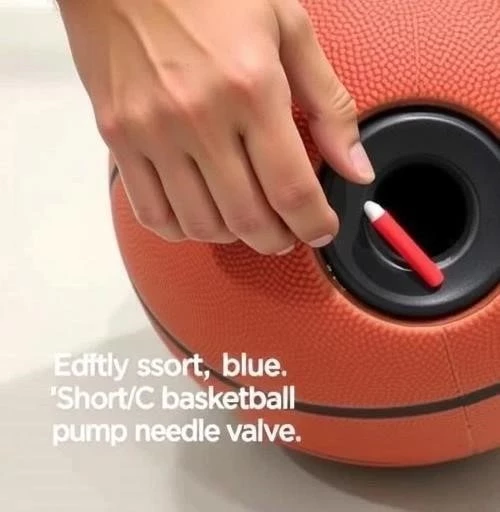
Letting air out of a basketball is simple‚ but the valve is easy to damage if you rush or use the wrong tool. The safest method is to use a proper ball-inflation needle‚ ideally attached to a hand pump. A needle is not a lever or a pin: it must be smooth‚ clean‚ and inserted gently. Protecting the valve matters more than saving a few seconds‚ because a damaged valve may leak and make the ball unusable.
What you need
- A clean‚ straight basketball inflation needle designed for sports balls.
- A small amount of water or manufacturer-approved silicone lubricant.
- A towel‚ if you want to keep the ball from rolling.
Do not substitute a sewing needle‚ paper clip‚ hairpin‚ pen refill‚ or other improvised object. These may be too sharp‚ too wide‚ rough‚ or hollow in the wrong way. They can puncture the bladder or tear the valve. If you do not have a proper ball needle‚ borrow one or buy one rather than risking permanent damage.
Step-by-step instructions
- Find the valve. It is the small rubber opening‚ often called the nipple‚ on the ball’s surface. Wipe away grit so dirt is not pushed inside.
- Lubricate the needle. Moisten its tip with water or use a little suitable silicone lubricant. Lubrication reduces friction and helps the needle pass through the valve without tearing it. Do not use oil‚ petroleum jelly‚ or solvents unless the ball’s manufacturer specifically permits them; some products can harm rubber.
- Hold the ball steady. Set it on a stable surface and locate the valve again. Keep the needle aligned with the opening‚ straight and perpendicular to the ball’s surface. Do not angle it or twist it forcefully.
- Insert gently. Push the needle slowly into the valve. It should slide in with light‚ steady pressure. A faint hiss means air is escaping; you do not need to push farther just to make the sound louder. If the needle catches‚ stop‚ withdraw it carefully‚ add lubricant‚ and realign it.
- Release air gradually. Let the ball deflate on its own‚ or press lightly with your hands to speed the process. Use even pressure and check the ball often. Avoid standing on it‚ squeezing it sharply‚ or pressing it against a hard edge: excessive force can stress the seams and bladder.
- Stop at the desired firmness. When enough air has escaped‚ pull the needle straight out. Do not leave it inserted longer than necessary. Check the ball by gently pressing it and‚ if appropriate‚ testing its bounce.
Important precautions
There is usually no need to remove every trace of air. If you are storing or transporting the ball‚ follow the manufacturer’s advice; a little remaining air can help the ball retain its shape. If the goal is to make it easier to pack‚ release only enough air to achieve that. For an accurate playing feel‚ use a pressure gauge when inflating again and follow the pressure range printed near the valve or in the ball’s instructions. Bounce alone is only a rough check.
Never force a needle into a valve that will not accept it; Forcing‚ bending‚ or repeatedly probing the opening can split the rubber or puncture the inner bladder. If air does not escape after the needle is correctly inserted‚ check that the needle is actually made for ball valves and that the valve is not blocked. If you hear continued leaking after removing the needle‚ or the ball will not hold air later‚ stop using it and have it inspected or replaced.
Bottom line
A proper lubricated ball needle‚ straight alignment‚ and gentle pressure are the key safeguards. Insert it carefully‚ let the air out in controlled stages‚ and stop before squeezing the ball flat. This approach is slower than forcing an improvised tool into the valve‚ but it is far more likely to preserve the basketball and its seal.
7 Comments. Оставить новый
The article appropriately prioritizes protecting the valve over speed. Its advice to use steady pressure and let air escape gradually should help readers avoid unnecessary force.
This is a clear, safety-conscious explanation. In particular, telling readers to stop if the needle catches prevents them from forcing it and potentially causing permanent damage.
This guidance is especially helpful for someone who might otherwise reach for a pin or paper clip. It explains why those shortcuts are risky and offers a straightforward, safer method.
I appreciate the emphasis on gentle insertion and keeping the needle straight. Those details make the instructions practical and help reduce the risk of tearing the valve.
The advice to use a proper inflation needle rather than an improvised object is important. A sharp or rough substitute could damage the valve or puncture the ball, so taking a moment to find the right tool is sensible.
The warning about lubricants is useful because not every product is safe for rubber. Recommending water or an approved silicone lubricant gives readers a safer alternative to guessing.
The instructions are easy to follow, and the reminder to clean grit from around the valve is a helpful practical detail. Keeping dirt out of the opening can protect the ball while it deflates.