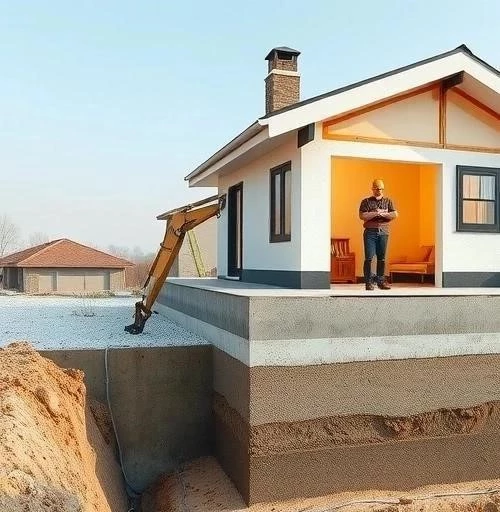
A strip foundation can be economical and still support a comfortable‚ energy-efficient home. The key is to optimize design before construction‚ not to cut corners on materials or workmanship. Poor decisions can cause settlement‚ dampness and heat loss—repairs that quickly outweigh any initial savings.
Design for the actual site
Start with geotechnical surveys and a load calculation. Soil conditions‚ groundwater‚ building weight and local building codes determine the foundation depth and strip width. Guessing these values‚ or copying a neighbour’s design‚ risks overbuilding or failure. A qualified designer can specify only the concrete and reinforcement the project needs. This is a more reliable route to cost optimization than reducing steel or using a weaker concrete mix.
Plan costs‚ not just materials
Ask a foundation contractor for an itemized estimate covering excavation‚ base preparation‚ the sand-and-gravel cushion‚ formwork‚ reinforcement‚ concrete‚ drainage and waterproofing. Compare equivalent scopes and check what is excluded. Early planning also helps coordinate deliveries and avoid idle labour. Choose materials for their suitability and service life; the cheapest option is not always the least expensive over time.
Protect comfort and durability
Proper site drainage and foundation waterproofing help prevent moisture damage. Insulating the plinth and floor‚ combined with frost protection appropriate to the climate‚ reduces heat loss and improves indoor comfort. Underfloor heating can provide an even temperature‚ but it works best with a well-insulated floor and a considered heating design. Where a crawlspace is part of the project‚ provide ventilation as required by the design and local standards. These measures support a comfortable microclimate and an energy-efficient home.
Where savings are safe
Use a clear construction sequence‚ avoid unnecessary design changes and arrange inspections before concrete is poured. Reusable formwork‚ accurate quantities and careful scheduling can reduce waste. Never economize by skipping soil investigations‚ undersizing reinforcement‚ diluting the mix or ignoring curing. Such mistakes in foundation construction can undermine durability and be costly to correct.
Bottom line: The best savings come from a site-specific design‚ a transparent estimate and quality construction. Invest in the details that prevent moisture and heat loss‚ and trim only avoidable waste—not structural safety.