
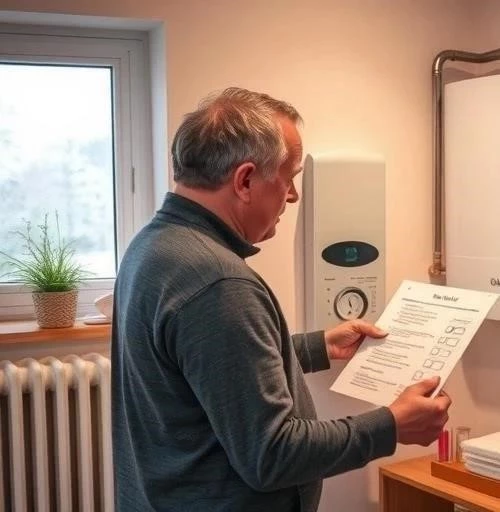
A condensing gas boiler can heat a home efficiently without expensive upgrades. Before cold weather arrives, focus on safe boiler maintenance and simple adjustments. Good boiler preparation for winter can improve comfort, reduce gas consumption and support heating cost savings—even on a limited budget.
Start with safety and basic checks
Pre-season prevention begins with a visual inspection. Look for leaks, corrosion, unusual noises and error codes. A DIY boiler check should be limited to tasks allowed by the manufacturer: never remove the casing or adjust gas valves. Gas equipment safety comes first. Arrange a call to a boiler specialist if you smell gas, see damage, or the appliance repeatedly shuts down.
Ask a qualified technician to carry out a chimney inspection, inspect the condensate trap and clean the heat exchanger when required. These jobs need proper tools and expertise. Check that the flue outlet is clear from outside only if it is safely accessible. Do not attempt a heating system flush yourself; professional flushing may be worthwhile if radiators are cold or water is dirty.
Check pressure and circulation
With the system cool, perform a system pressure check using the boiler gauge and compare the reading with the manual. If pressure is low, top up only as instructed. Frequent pressure loss suggests a leak or another fault, not a need for repeated refilling. Expansion tank pressure should be tested by a technician, since checking or charging it incorrectly can cause problems.
Bleeding radiators can remove trapped air and restore heat, but afterward recheck system pressure. Make sure the circulation pump runs normally and that radiator valves are not blocked. Radiator balancing—adjusting flow so rooms warm evenly—can often improve comfort without replacing equipment.
Adjust settings for efficient heating
Heating system adjustment starts with the lowest flow temperature that still keeps rooms comfortable. In many homes, lowering the flow temperature helps a condensing boiler work more efficiently. The return temperature matters too: cooler return water supports condensation and better boiler efficiency. Change settings gradually, following the manual, and allow time to see the result.
Use weather-compensated controls if installed, and check the thermostat setting. A room thermostat should be placed away from direct sun, draughts and heat sources. Set a steady, practical schedule instead of repeatedly turning the heating on and off. Avoid overheating rooms; reducing the target by even a small amount may contribute to gas consumption reduction.
Plan the winter routine
Choose the correct operating mode for heating and domestic hot water, and confirm the winter operating mode before a cold spell. Do not confuse hot-water settings with heating settings. Common operating errors include covering the boiler, blocking ventilation, ignoring warning lights and setting temperatures unnecessarily high. Keep the manual handy and note any fault codes before requesting help.
Prioritize low-cost actions first: clear access to radiators, bleed air when needed, balance rooms and review the schedule. Professional servicing is still important, especially before a demanding season. These practical steps make boiler preparation for winter more reliable, while safe servicing and sensible controls help keep energy use—and household costs—under control.
5 Comments. Оставить новый
A practical and safety-conscious guide. I especially appreciate the reminder that gas-related repairs should be left to a qualified technician.
I like that this focuses on affordable steps while still emphasizing professional inspections where they matter. A helpful winter checklist.
This explains boiler preparation in an approachable way without encouraging risky DIY work. The circulation and radiator-balancing tips are particularly useful.
A balanced overview of safety, maintenance, and efficiency. It would be even more useful with a little more detail on choosing a suitable flow temperature.
The advice on checking pressure and bleeding radiators is clear and useful. The warning about frequent pressure loss is an important point.