
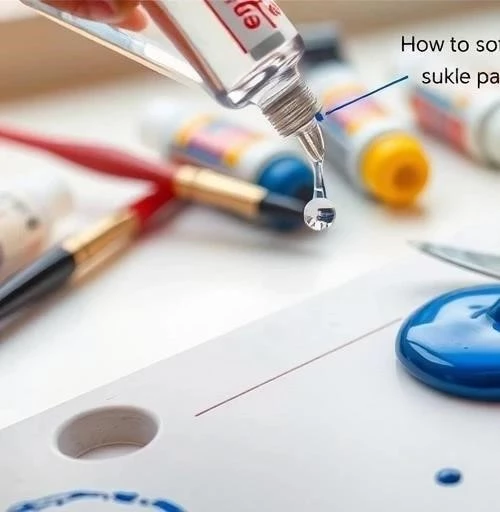
Acrylic paint is water-based while wet, but it becomes water-resistant as it dries. The right way to soften it depends on whether the paint is still usable in its container, has dried on a palette, or has cured on a surface. Work gradually: adding too much water or the wrong solvent can weaken the paint, damage the object, or create a sticky mess.
Soften paint that is still in the tube or jar
If paint has thickened but is not completely dried, stir it thoroughly with a clean palette knife; Add a few drops of clean water, mix, and check the consistency before adding more. For a better-preserved film and smoother flow, use an acrylic painting medium or the manufacturer’s recommended thinner instead of water. Add it in small amounts, following the product label.
Do not pour water into a large container of paint and leave it there. Excess water can make the paint runny, reduce its binding strength, and encourage contamination. Keep the rim clean, close the lid tightly, and store the container away from heat and direct sunlight. If the paint smells unusual, shows mold, or has separated in a way that does not blend back together, discard it.
Rehydrate paint on a palette
- Check that the paint has not formed a hard, continuous skin. A dry acrylic film generally cannot be returned to its original paint form.
- If it is only tacky or beginning to dry, mist it lightly with water or add a few drops of water or acrylic medium.
- Mix gently with a palette knife, scrape paint from the edges, and test the texture. Repeat sparingly if needed.
- For future sessions, use a stay-wet palette or cover the palette between work periods. A palette that keeps paint moist can extend working time, but it does not preserve paint indefinitely.
Once acrylic paint has dried into a solid film, adding water will not truly soften or dissolve it. You may be able to peel it from a nonporous palette, but do not expect it to become fresh, reliable paint again.
Soften dried paint on a brush
Do not pull hardened bristles apart forcefully; they can break or lose their shape. First rinse out any remaining wet paint. Then soak only the bristles in warm water with a little mild soap, keeping the ferrule and handle as dry as possible. Gently massage the bristles and wipe them on a cloth. Repeat with fresh water if the paint begins to loosen.
If the paint is fully hardened, use a brush cleaner specifically labeled for dried acrylics, and follow its directions in a ventilated area. Test it first, wear gloves if the label recommends them, and never mix cleaning products. Strong solvents can damage bristles, handles, finishes, and skin. If the brush remains stiff after treatment, replacing it may be safer and more effective.
Remove or soften acrylic on other surfaces
Clothing: Act quickly. Blot wet paint rather than rubbing it, rinse from the back of the fabric with cool water, and apply laundry detergent before washing according to the care label. Do not put the item in a dryer until the stain is gone, because heat may set it. Dried paint is much harder to remove; carefully lift excess material with a blunt edge, then test a suitable stain remover on a hidden area.
Glass or a nonporous palette: Soak the area with warm, soapy water and lift softened edges with a plastic scraper. On glass, a suitable scraper may be used carefully, held at a shallow angle. Avoid scratching coatings or nearby surfaces.
Walls, wood, or finished furniture: Start with a damp cloth and mild soap, testing an inconspicuous spot first. Scrubbing, soaking, or using alcohol and other solvents can remove the underlying finish along with the paint. For valuable, delicate, or large surfaces, ask a restoration or paint professional before proceeding.
Important precautions
- Identify the surface and check its care instructions before applying water or a cleaner.
- Test any cleaner in a hidden spot and use the mildest method that works.
- Ventilate the area and follow all label warnings when using commercial removers.
- Never heat acrylic paint to soften it, and do not use solvents on skin. Wash skin with soap and water.
In short: Slightly thick, still-wet acrylic can often be loosened with a little water or acrylic medium. Fully dried paint usually needs careful physical removal or a product made for that purpose; it cannot simply be restored by adding water.

4 Comments. Оставить новый
The advice to add water or medium gradually and test the consistency as you go is simple and sensible. The stay-wet palette suggestion is a helpful extra.
Clear, practical advice. The warning not to add water to a whole container is easy to overlook, and the storage tips are useful.
The distinction between paint that is merely thickened and paint that has dried into a solid film is especially helpful. I’ll try an acrylic medium before adding much water next time.
I appreciate the realistic explanation that dried acrylic on a palette generally cannot be restored to fresh paint. This should save beginners a lot of frustration.