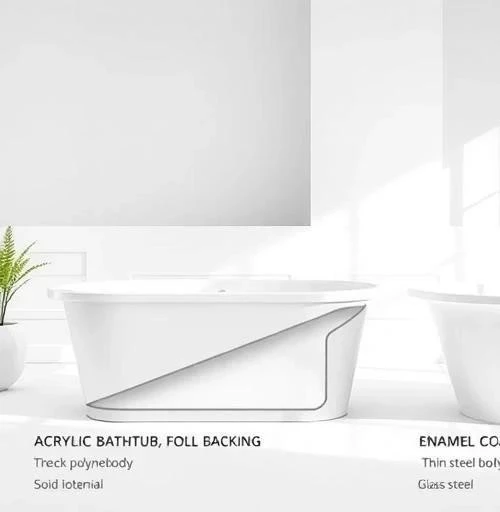
Acrylic and enamelled bathtubs can look remarkably similar when new, but they are made differently and behave differently in use. Acrylic is a moulded plastic material; an enamelled bath has a metal body—usually steel or cast iron—covered with a hard, glass-like coating. Identifying the material helps you choose suitable cleaners, understand the bath’s durability and avoid damage. No single quick test is conclusive, so compare several clues.
Check the underside and exposed edges
Look beneath the bath, around the drain opening, or at an unfinished edge that is already visible. Acrylic usually appears as a smooth, coloured plastic layer. Some models have reinforcing materials, such as fibreglass or resin, on the underside; the surface may look layered or slightly rough. Do not scrape or cut the bath to inspect it.
An enamelled bath has a metal body beneath its glossy coating. Where the underside is visible, you may see grey or dark metal, a factory finish, or a cast-iron shape. At a drain or overflow opening, a very thin edge may reveal the underlying metal. Be cautious: trim, sealant and fittings can conceal the material, and reinforced acrylic can look quite substantial.
Try a magnet—but interpret the result carefully
Place a small magnet against an accessible, uncoated part of the bath, such as the underside or a suitable area near an edge. A strong attraction is a useful sign that the body is steel, which is commonly enamelled. A magnet will not normally stick to acrylic or cast iron.
This test cannot identify every enamelled bath: cast iron is not attracted to an ordinary magnet, and the coating or construction may affect how strong the attraction feels. A negative result therefore does not prove that the bath is acrylic. Test more than one accessible spot and treat the magnet as one clue, not a final verdict.
Compare weight, sound and feel
- Weight: Cast-iron enamel baths are exceptionally heavy. Steel enamel baths are usually lighter than cast iron but still feel rigid. Acrylic baths are generally lighter and easier to manoeuvre. Weight alone is unreliable: size, reinforcement and the supporting frame all matter.
- Sound: A gentle tap with a knuckle may produce a sharper, metallic ring from steel. Acrylic often sounds duller or more hollow. Cast iron tends to feel solid and may make little ringing noise. Do not strike the surface with a tool.
- Temperature: Acrylic often feels less cold to the touch and may warm quickly as hot water enters. Enamelled metal usually feels cool initially and conducts heat readily. Room temperature, bath thickness and water temperature can change this impression.
- Flex: Press gently on a broad, accessible area. Some acrylic baths flex slightly, particularly if their support is poor; a metal bath is generally rigid. A correctly installed acrylic bath may feel very firm, so flexibility is not a dependable test by itself.
Look closely at the finish
Both materials can have a smooth, shiny white surface. Enamel often has a hard, glass-like look and feel, while acrylic may appear a little warmer or more plastic-like. These differences are subtle, and modern finishes can make visual identification difficult. Avoid using a knife, abrasive pad, solvent or chemical “test”: such methods can permanently scratch, dull or discolour the bath.
Check documents and installation details
The most reliable confirmation is the manufacturer’s label, model number, invoice or product specification. Search the model number on the maker’s website or ask the supplier. Installation can offer supporting clues: acrylic baths are often mounted on a frame or adjustable feet, while metal baths may use different supports. However, installation methods vary, and panels can hide the body.
Why the distinction matters
Acrylic is comparatively lightweight and can sometimes be repaired if scratched, although repairs should suit the specific finish. Enamel is hard and wear-resistant but can chip if struck; exposed metal may rust. Use the manufacturer’s recommended cleaner for either type, and avoid abrasive powders unless the instructions specifically permit them.
In short: inspect an existing edge or the underside, try a magnet, and compare weight, sound and temperature. Then verify the result with the product label or model number. If the clues conflict, do not guess—both reinforced acrylic and different kinds of enamelled metal can defeat simple at-home tests.