
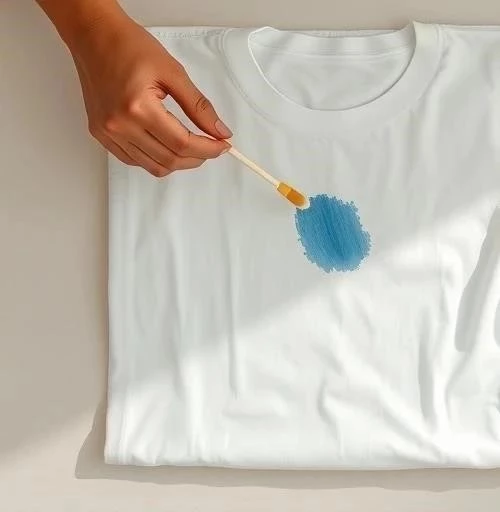
Dried acrylic paint can be difficult to remove because it forms a durable‚ water-resistant film as it cures. That does not mean every stained garment is beyond saving: fresh‚ thin deposits are often easier to lift than thick‚ fully hardened paint. Success depends on the fabric‚ the paint‚ and how long the stain has been dry. Work patiently‚ test any cleaning product first‚ and avoid heat until the mark is gone.
Before you begin
Check the garment’s care label. If it is marked “dry-clean only‚” or is made from delicate material such as silk‚ acetate‚ or wool‚ take it to a professional cleaner and identify the stain as acrylic paint. Home solvents can damage dyes‚ finishes‚ and fibers. For washable clothing‚ test rubbing alcohol or another chosen product on a hidden seam. Wait a few minutes‚ then check for color loss‚ fading‚ or texture changes. If anything changes‚ stop.
Put a clean white towel or several layers of paper towel behind the stained area. This helps absorb loosened paint instead of letting it spread to the other side. Work in a well-ventilated place‚ keep alcohol and other solvents away from flames‚ and wear gloves if your skin is sensitive. Never mix cleaning products.
Step-by-step removal
- Lift off excess paint. Use a spoon‚ dull knife‚ or plastic card to gently scrape away raised‚ brittle paint. Keep the tool nearly flat and work from the outside toward the center. Do not cut‚ pull‚ or aggressively rub the fabric; that can damage fibers and push pigment deeper.
- Soften the residue. Dampen a white cloth or cotton swab with isopropyl rubbing alcohol and dab the paint. Do not pour solvent directly onto the garment. Let it work briefly‚ then gently loosen the softened film with the blunt edge of a tool. Blot with a clean section of cloth as pigment transfers. Replace the backing towel when it becomes stained.
- Repeat carefully. Apply small amounts of alcohol and continue blotting rather than scrubbing. Several short treatments are usually safer than one long soak. If the fabric begins to bleed‚ feel sticky‚ or change texture‚ stop and rinse the area with cool water.
- Use detergent. Once the paint has loosened‚ work a little liquid laundry detergent or stain remover labeled safe for the garment into the remaining mark. Leave it for the time stated on the product label‚ then rinse from the back of the fabric with cool water.
- Wash and inspect. Launder according to the care label‚ using the warmest water permitted. Before drying‚ check the stain in good light. If any paint remains‚ repeat the treatment instead of using a tumble dryer‚ iron‚ or radiator.
Choose products with care
Isopropyl alcohol is a common option for loosening dried acrylic‚ but it is not suitable for every dye or textile. A commercial stain remover may help if its label specifically permits use on the fabric. Follow its directions and test it first. Acetone and nail-polish remover are risky: they can dissolve or weaken acetate and other synthetic fibers‚ and may strip color. Do not use them unless the garment’s care guidance and the product label clearly confirm compatibility.
Hairspray‚ paint thinner‚ and improvised mixtures are not reliable shortcuts. Some products contain additives that leave a residue or create a new stain; harsh solvents can damage clothing and produce irritating fumes. Avoid bleach unless the care label allows it and the product is appropriate for that fabric and color. Never combine bleach with alcohol‚ ammonia‚ or other cleaners.
What if the stain does not come out?
Paint that has cured for a long time‚ soaked into a thick weave‚ or covered a large area may not come out completely. Stop if repeated gentle attempts make no progress: more force can leave a hole‚ faded patch‚ or rough surface. A professional cleaner may be able to improve the result‚ though removal cannot be guaranteed. Tell the cleaner what products you have already tried.
Common mistakes to avoid
- Using heat too soon: heat can set remaining residue and make later treatment harder.
- Scrubbing hard: friction may spread pigment and abrade the fabric.
- Skipping the test: a solvent can remove garment dye along with paint.
- Expecting one treatment to work: patient‚ repeated blotting is safer than aggressive cleaning.
In short: gently scrape away what you can‚ test a small amount of rubbing alcohol‚ dab rather than rub‚ treat the residue with suitable detergent‚ and air-dry only after checking the stain. The sooner you start—and the more cautiously you work—the better the chance of saving the garment.



5 Comments. Оставить новый
This is a practical guide because it explains why dried acrylic paint can be challenging without suggesting that removal is guaranteed. The reminder to avoid heat until the stain is gone is a valuable detail.
The safety guidance makes this advice more responsible than a simple list of stain-removal steps. Ventilation, gloves when needed, and keeping solvents away from flames are all relevant precautions.
I appreciate the distinction between washable clothing and delicate or dry-clean-only fabrics. Recommending professional cleaning for those items helps prevent well-intentioned home treatment from causing more damage.
The advice to test a cleaning product on a hidden area first is especially useful. It recognizes that even a method that works on one garment could damage another, and encourages a cautious approach before treating the stain.
The instructions to scrape gently, dab rather than scrub, and use a clean backing towel are clear and sensible. Together, these steps help reduce the risk of spreading the paint or harming the fabric.