
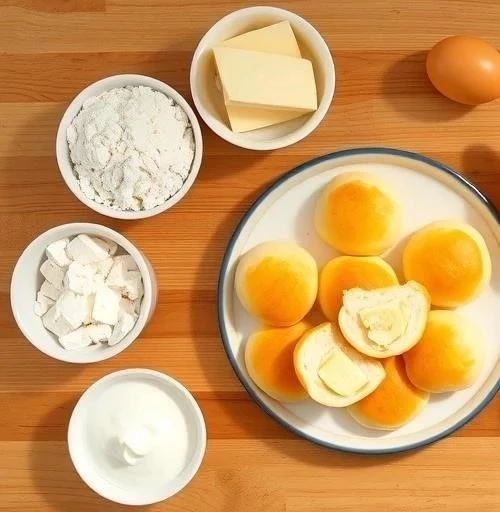
A good dough is less a strict formula than a friendly little agreement between ingredients. If the fridge is missing something, these ingredient substitutions can rescue your pampushki without turning baking into a chemistry exam. The secret: change one thing at a time, and keep the dough soft, not stiff.
Start with the cottage cheese
Wondering what to use instead of cottage cheese? Thick ricotta, well-drained farmer’s cheese, or smooth quark are the closest alternatives. If using ricotta, drain it in a sieve first; extra moisture can make the dough sticky. For a dairy-free version, try firm tofu blended until creamy, with a little lemon juice for tang. Lactose-free products also work well: choose a thick lactose-free cottage cheese or yogurt and use the same amount.
Flour, eggs, and dairy swaps
For a flour substitute, replace up to one-third of the wheat flour with gluten-free flour blend. A blend containing starch and a binder gives a more tender result than rice flour alone. Gluten-free dough may need a spoonful of extra liquid, so add it gradually.
For an egg substitute, use one tablespoon ground flaxseed mixed with three tablespoons water per egg; let it thicken for five minutes. Mashed banana can bind too, but it adds sweetness and a noticeable flavor. If you need to replace kefir, use plain yogurt thinned with water or milk in a one-to-one ratio. A little lemon juice stirred into milk is another quick stand-in.
For a butter substitute, use melted vegetable oil, replacing each 100 g butter with about 80 ml oil. The crumb will be moist, though less buttery. Soft margarine is another option. These swaps make the dough suitable for many cooks, but always check labels if allergies are involved.
Keep the dough balanced
In a classic pampushki recipe, begin with 250 g cottage cheese, one egg, 200–230 g flour, 2 tablespoons sugar, and 1 teaspoon baking powder. These ingredient ratios are a starting point, not a law: wet cheese may take more flour, while dry cheese may need a splash of kefir. Add flour in stages. The right dough for pampushki is soft and slightly tacky; too much flour produces little bready rocks.
To replace baking powder, combine ¼ teaspoon baking soda with ½ teaspoon lemon juice or vinegar for each teaspoon of baking powder. Add the acid to the wet ingredients and bake promptly. For a sugar substitute, use honey or maple syrup, reducing other liquid slightly. A calorie-free sweetener can work too, but follow its package conversion guide.
Make the recipe your own
Cottage-cheese pampushki welcome filling options: raisins, lemon zest, chopped dried apricots, or a small square of chocolate. Keep fillings modest so the dough closes neatly. For savory bites, skip most of the sugar and add herbs or grated cheese.
Cooking tips: chill very sticky dough for 15 minutes, flour your hands lightly, and avoid crowding the baking tray. Bake until golden, then let the pampushki rest briefly. Homemade baking rewards patience: the warm centers become tender pampushki, not dense dumplings. The calorie content of pampushki varies with size, fillings, and swaps; oil and sweet additions raise it, while smaller portions keep each treat lighter. Taste, adjust, and let the kitchen be your playground.




6 Comments. Оставить новый
A useful little map for ingredient detours, with enough detail to help a beginner choose wisely. The allergy-label reminder is a welcome note of care amid all the clever kitchen improvisation.
This is a thoughtful guide for cooks with different needs, not just a list of swaps. I appreciate that it notes how banana changes the flavor and oil changes the crumb—substitutions have personalities, too.
I like the “friendly agreement” framing: it makes substitutions feel less like culinary sabotage and more like a small kitchen negotiation. The reminder to change one ingredient at a time is especially useful when you want to know what actually worked.
The ricotta-draining tip deserves a tiny kitchen medal. Moisture is the quiet plot twist in many doughs, and this article explains how to keep it from stealing the show.
The advice to add gluten-free liquid gradually is wonderfully practical. Dough can be a weather system of its own, and a slow adjustment beats trying to rescue a sticky storm later.
I’m glad the article treats the measurements as a starting point rather than sacred numbers. Cottage cheese varies, kitchens vary, and the best recipe is sometimes the one that listens to the dough.