
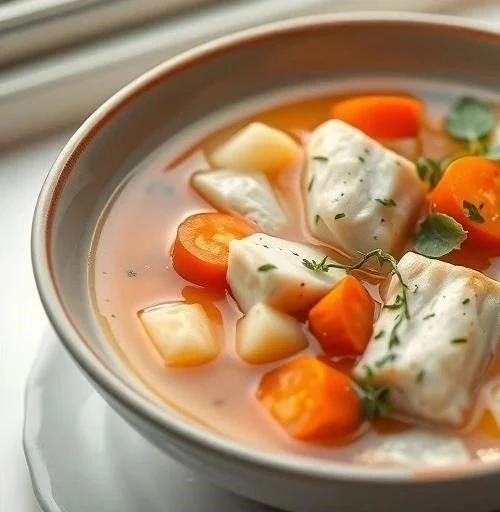
This guide presents a light hake soup concept in a clear, neutral format, with a simple recipe framework for everyday home cooking. A clear overview is provided.
Choose the Ingredients: Hake Fillet, Lean Fish, Onion and Carrots, and Vegetable Broth
Select firm, fresh hake fillet with a mild scent and moist, translucent flesh; choose boneless portions of similar thickness for even flavor. Lean white fish is the central ingredient, so avoid pieces that look dry, discolored, or strongly scented. For the vegetables, choose a small onion and firm carrots, preferably medium-sized and free from soft spots. Their mild sweetness complements hake without overpowering it. A light, low-salt vegetable broth provides a balanced base; check its label for a short ingredient list and adjust salt preference later. Keep quantities proportionate: about 300 g hake, one small onion, two carrots, and 1 litre of broth suit a modest family pot. Fresh or properly thawed fish may be used, and carrots of similar size are easiest to measure. Set out these ingredients before cooking, and keep the fish chilled until needed. Choose mild carrots.
Prepare the Baked Hake and Roasted Vegetables Using Oven Cooking
Heat the oven to 200°C (400°F) and line a shallow tray with baking paper. Pat the hake fillet dry, check for any remaining bones, and place it on the tray. Brush lightly with olive oil, then season with a little salt, black pepper, and optional dried dill. Cut the carrots into even thin batons and slice the onion into wedges; arrange them around the fish in a single layer. Add a teaspoon of oil and toss the vegetables gently so their surfaces are lightly coated, not greasy. Bake until the carrots are tender at the edges and the hake turns opaque and flakes easily with a fork, usually about 12–18 minutes depending on thickness. Check the fish at the shorter end of the cooking time to prevent drying. Transfer the baked fish and roasted vegetables carefully, keeping the pieces intact. Let them rest briefly before using. Cool briefly.
Cook the Soup: Add Potatoes to the Broth for a Simple Fish Soup Recipe
Pour the vegetable broth into a saucepan and bring it to a gentle simmer over medium heat. Cut the potatoes into evenly sized cubes so they cook at the same rate, then add them to the broth. Keep the liquid below a vigorous boil; steady, gentle heat helps the pieces soften without breaking apart. Partly cover the pan and cook for about 10–15 minutes, checking a cube with a fork near the end. When the potatoes are nearly tender, add the baked hake and roasted vegetables in large pieces. Stir slowly once, taking care not to crush the fish, and let the soup simmer for 2–3 minutes, just until the hake is hot throughout. Taste the broth and adjust the seasoning with a small amount of salt or pepper if needed. If the soup becomes too concentrated, add a little hot water or broth. Keep broth gentle; potato, hake, vegetables stay distinct.
Serve and Describe the Result: Hake Soup, White Fish Soup, Carrot Soup, or Homemade Soup—a Light, Low-Calorie Diet Soup Without Frying and a Healthy Lunch; Note the Fish Soup Calories
Ladle the soup into warm bowls and distribute the hake, carrots, and potatoes evenly. Serve it freshly prepared, with chopped parsley or a small wedge of lemon, if desired; keep additions modest to preserve the mild flavor. The result is a clear, light homemade fish soup with tender white fish, gentle sweetness from carrots, and a simple broth. Because the ingredients are not fried and hake is naturally lean, the dish can fit a balanced lunch or a lighter meal. Its calorie content depends on portion size, the amount of oil used for baking, and the broth’s composition. For a practical estimate, calculate the calories from the labels or ingredient weights, then divide the total by the number of servings. A bowl is not automatically low-calorie, so record optional toppings and oil as well. Serve warm; chill leftovers promptly.



4 Comments. Оставить новый
The ingredient quantities and freshness tips make the recipe accessible for a modest family meal. The heading and introduction refer to soup, while the method does not include preparing broth, creating a noticeable mismatch.
The article gives clear ingredient-selection advice and practical guidance on preparing hake with vegetables. However, its opening describes a soup while the cooking instructions focus on baked fish, so aligning the introduction and recipe would improve clarity.
The article offers useful advice on choosing fish, cutting vegetables evenly, and checking doneness to avoid overcooking. A revised title or cooking method would help ensure the recipe matches its description.
The cooking steps are easy to follow, and the suggested baking time appropriately accounts for differences in fish thickness. The article could be clearer about whether the finished dish is intended to be served as soup or as baked hake with roasted vegetables.