
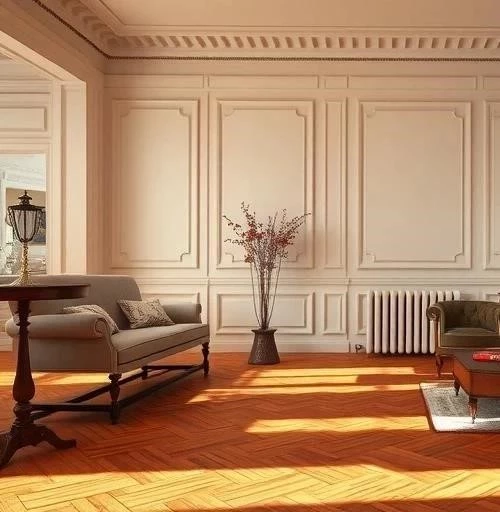
Updating a historic home does not mean hiding everything that gives it character. A well-planned heating system can improve comfort and efficiency while respecting original proportions, finishes and decorative details. The goal is a thoughtful blend of old and new: reliable modern technology, carefully chosen visible elements and discreet engineering work.
Start with the building
Before choosing equipment, assess insulation, windows, room use and the condition of existing engineering services. A heating specialist can calculate heat loss and check the boiler, pipework and radiators. This is especially important for country-house heating, where room sizes, high ceilings and exposure to cold may vary considerably. Correct sizing helps prevent chilly rooms and unnecessary energy use.
Choose radiators that suit the interior
Cast-iron radiators are a natural option for many period homes. Their substantial shape and slow, steady heat can complement a classic interior, while restored originals preserve a sense of authenticity. Where existing units cannot be reused, retro-style radiators offer similar character with modern performance. Consider the heating appliance design as part of the room: finish, colour, height and placement all affect the overall interior design.
Decorative screens can soften the appearance of a radiator, but they should not block airflow. Choose an open design with enough clearance around the unit, and make sure it can be removed for cleaning and servicing. A screen should frame the radiator, not turn it into a hidden obstacle to thermal comfort.
Make the pipework discreet
Concealed pipe routing can keep heating pipes out of sight and protect a carefully restored wall or floor. Plan routes before replastering or installing new finishes; poorly placed pipes can make later repairs difficult. Where concealment is not practical, neat exposed pipework, painted to match the wall or metalwork, may look more appropriate than extensive building work. In every case, allow access to valves and joints.
Radiator installation should be coordinated with the wider renovation. Check wall strength, pipe connections and clearances, and use a qualified installer to balance the system. This work respects the preservation of the building’s architectural appearance while making the equipment safer and easier to maintain.
Improve control and efficiency
Modern wall thermostats and thermostatic radiator valves provide straightforward temperature control, letting each room be heated to suit its use. Programmable schedules can reduce heating when the house is empty or residents are asleep. Energy-efficient heating depends on more than a new appliance: controls, insulation, system balancing and sensible settings all matter.
Boiler-room modernization may include replacing an ageing heating boiler with modern heating equipment, upgrading pumps and improving controls. Select a boiler that matches the calculated demand, rather than simply choosing the largest model. A professional should check ventilation, flues and safety requirements, then explain how to operate and maintain the system.
Consider alternative heat sources
Underfloor heating can be useful in kitchens, bathrooms or rooms undergoing major renovation, though it may not suit every historic floor. Floor convectors are another option where large windows or glazed doors make wall space scarce. Both choices require careful planning of floor depth, access and heat output. They should support the main system, not compromise original materials without good reason.
Plan for lasting comfort
Successful modernization brings engineering communications together with the character of the home. Coordinate the heating work with electrical upgrades, plaster repairs and interior restoration, and keep photographs or plans of concealed pipe routes for future maintenance. With sound design, appropriate equipment and careful installation, a classic home can retain its distinctive atmosphere while offering dependable warmth, practical temperature control and lower running costs.

5 Comments. Оставить новый
A thoughtful reminder that comfort and historic character can coexist. Starting with a proper assessment before selecting equipment seems especially important.
Helpful guidance for balancing appearance with performance, especially the point that restored original radiators may still be worth considering.
The article makes a strong case for planning pipe routes early. That step could save a lot of disruption during a restoration.
I appreciate the practical advice about radiator screens. They can look beautiful, but preserving airflow is essential for the heating to work well.
A clear, sensible overview. I like that it treats exposed pipework as a possible design choice rather than assuming everything must be hidden.