Both a multicooker and an air fryer can make everyday cooking easier, but they solve different problems. A multicooker is designed for meals that simmer, steam, boil, or cook slowly in a covered bowl. An air fryer uses rapidly circulating hot air to brown and crisp food. The right choice depends less on which appliance sounds more advanced and more on what you like to eat, how you cook, and how much counter space you have.
How a multicooker works
A multicooker heats food in a removable bowl and offers several cooking modes in one appliance. Depending on the model, it may handle rice, porridge, soup, stews, steaming, baking, or slow cooking. Some models also work as pressure cookers, which can shorten the time needed for certain dishes; Automatic programs set a cooking cycle for you, while adjustable settings give you more control over time and temperature.
Its main advantage is convenience with dishes that need moisture and a longer cooking process. Put in the ingredients, choose a program, and let the appliance do the work. A keep-warm function can help when dinner is not served immediately, and a delayed start may be useful for planning a meal. These features vary by model, so check the manual and product specifications rather than assuming every multicooker includes them.
A multicooker is particularly useful for soups, grains, beans, steamed vegetables, and one-pot meals. It can also reduce the need to watch a saucepan on the stove. However, the bowl usually has limited capacity, and cooking several separate components at once may be inconvenient. Some dishes may not develop a browned or crisp surface without an additional step, such as finishing them in an oven or pan.
How an air fryer works
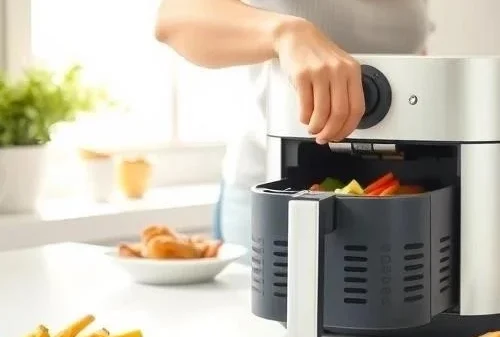
An air fryer cooks by circulating hot air around food in a basket or cooking chamber. It is best known for making the outside of foods such as potatoes, vegetables, and breaded snacks crisp while using less added oil than deep-frying. It can also roast, reheat, and cook many smaller portions. Results depend on the appliance, the food, and how much you load into the basket.
The biggest attraction is texture and speed for relatively small batches. An air fryer is often a practical choice for quick lunches, reheating leftovers, or cooking a side dish without heating a full-size oven. But it is not a direct replacement for every cooking method. It is less suited to liquid-heavy recipes such as soup, and a crowded basket can prevent hot air from reaching food evenly. You may need to cook in batches or shake and turn the food partway through.
Key differences at a glance
- Best for: multicookers excel at moist, one-pot dishes; air fryers excel at browning and crisping.
- Cooking style: multicookers use a covered bowl and preset or adjustable modes; air fryers circulate hot air around food.
- Typical tasks: choose a multicooker for porridge, rice, soups, and stews; choose an air fryer for crisp vegetables, snacks, and reheating.
- Planning: multicookers may offer delayed start and keep-warm functions; air fryers are commonly used for shorter cooking sessions.
- Capacity: compare usable capacity, not just the advertised volume. Basket shape and bowl size affect how much food you can prepare at once.
Which appliance fits your routine?
Choose a multicooker if your regular meals include grains, soups, stews, steamed food, or ingredients that benefit from slow, unattended cooking. It is also a strong option if you want one appliance to cover several moist-cooking methods. Before buying, check the bowl capacity, whether the inner bowl is easy to remove and clean, which programs are included, and whether you need pressure cooking. A larger list of programs is not automatically better if you will only use a few.
Choose an air fryer if crisp texture matters most and you often prepare smaller portions of vegetables, potatoes, snacks, or reheated food. Check basket capacity, available temperature and time controls, ease of cleaning, and how much counter space the unit requires. Consider whether the basket is large enough for your household; a compact model may be convenient but require repeated batches for several people.
If you cook for a family, think about the meals you make on an ordinary weekday, not just occasional recipes. A multicooker may be more useful for a household that plans dinners in advance, while an air fryer may suit someone who values quick, crisp results. Neither appliance guarantees lower energy use or better results in every situation: cooking time, portion size, and the specific model all matter.
Can you buy both?
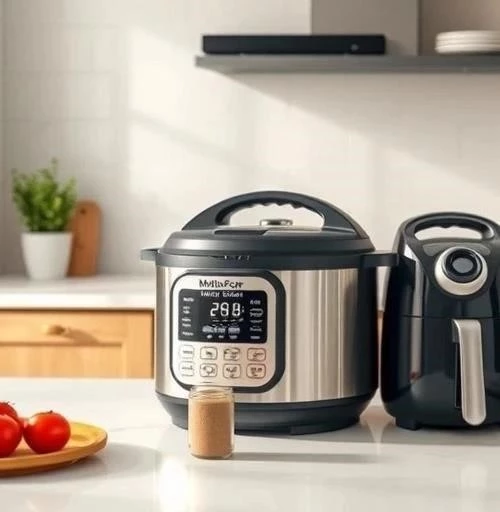
The appliances can complement each other. A multicooker can prepare rice, soup, or a tender main dish while an air fryer cooks a crisp side. If kitchen space and budget allow, owning both gives you more flexibility. If you can buy only one, avoid choosing by trend or by the number of advertised functions. Write down the dishes you make most often and pick the appliance that handles more of them well.
What to check before purchasing
- Capacity suited to the number of people you usually feed.
- Controls and programs that are clear and useful to you.
- Removable parts that are straightforward to clean.
- Dimensions, lid or basket design, and storage requirements.
- Warranty, safety instructions, and availability of replacement parts.
Bottom line: a multicooker is the better all-round helper for soups, grains, steaming, and hands-off one-pot cooking. An air fryer is the better choice for crisp, browned food and quick smaller batches. Choose according to your everyday menu: moisture and versatility point toward a multicooker; crunch and fast air-circulated cooking point toward an air fryer.