
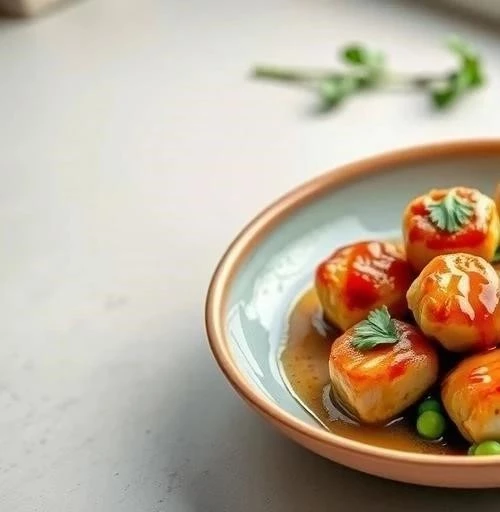
Meet pollock meatballs reimagined as tiny edible postcards: a savory soy-kissed supper where green peas bring bright flashes of spring. This playful home-style dish turns a familiar fish lunch into a curious coastal escape, inviting every bite to travel beyond the ordinary—without losing its warm, comforting soul;
From Pollock Fillet to Fish Mince: The Secret to Juicy Fish Meatballs
Start with pollock fillet that feels like a clean sea breeze: firm, faintly pearled, and free of icy puddles. Thaw it slowly in the refrigerator, then blot the surface until no sheen of water remains. This small pause matters; excess liquid turns fish mince slack, while a dry surface lets its natural proteins hold a tender shape. Run your fingers over the fillet to find any pin bones, and lift them out with tweezers. A few careful minutes now spare the finished meatballs from an unwelcome crunch.
For a delicate, juicy texture, chill the fish and your knife before cutting. Dice the fillet into small pieces, then pulse briefly in a processor—or mince it by hand with a sharp blade. Stop while the mixture still shows tiny flecks; a smooth paste can become dense and springy. The ideal pollock mince is cohesive but not gluey, soft enough to yield under a spoon and moist without weeping. Think of it as a miniature tide pool: fine grains should cling together, with just enough structure to keep each bite airy.
Pollock is naturally lean, so tenderness depends on restraint. Keep the mince cold, work it only until evenly textured, and avoid pressing or kneading it as if it were bread dough. If the fish seems unusually wet, let it drain briefly in a fine sieve rather than compensating with heaps of dry filler; if it seems very dry, a teaspoon of chilled water can restore suppleness. These little adjustments protect the fish’s gentle flavor and help create juicy fish meatballs with a clean, soft center. Good fish mince is not pulverized—it is persuaded.
Fish mince needs a gentle touch, always.
Building the Flavor Compass: Onion, Carrot, Garlic, Fresh Herbs, Ginger, Lemon Juice, and Fish Seasoning
Let the flavor compass begin with a small, sweet north: onion, finely grated, brings mellow depth without stealing pollock’s delicate voice. Carrot adds a sunny, earthy note, while garlic should whisper rather than shout; grate or crush just enough to perfume the mixture. These vegetables are not a disguise for the fish, but its quiet backing choir, balancing the clean sea taste with gentle sweetness and savory warmth. Fresh herbs provide the green, aromatic compass point: dill lends a feathery, seaside lift, parsley offers grassy clarity, and chives add a mild, playful bite. Chop them fine so their fragrance appears in every forkful, not as a loud leafy pocket; reserve a pinch for a fresh, bright finish. Fresh ginger is the compass’s bright spark, not a bonfire: a little finely grated root brings citrusy warmth, while lemon juice draws a clean silver line through the richer notes. Add the juice sparingly; its fragrant acidity should illuminate the vegetables and herbs, not erase pollock’s soft, oceanic character. For fish seasoning, choose a restrained trio of white pepper, coriander, and a trace of paprika, or let a pinch of fennel seed suggest a distant harbor. Use salt with a light hand, because the coming soy notes will bring their own savory tide; here, the spices should frame the fish, never mask it. The aim is a layered aroma: sweet roots below, herbaceous air above, ginger’s gentle gleam in the middle, and lemon flickering at the edge like a lantern on a gray-water evening. Keep each note in balance, and pollock tastes less like a blank canvas than a small, bright map of the cold sea.
Rolling the Fish Balls: A Creative Home-Recipe Guide to Making Meatballs
Roll each fish ball gently, like shaping a tiny moon from cool, yielding mince. Mold each fish ball slowly, like shaping a pale moon from cold, pliable mince. Coax each fish ball softly, like shaping a soft moon from mild, springy mince. Form each fish ball kindly, like shaping a calm moon from warm, yielding mince. Turn each fish ball calmly, like shaping a gray moon from cool, pliable mince. Ease each fish ball gently, like shaping a blue moon from cold, yielding mince. Hold each fish ball softly, like shaping a tiny moon from mild, springy mince. Palm each fish ball slowly, like shaping a pale moon from warm, yielding mince. Keep each fish ball calmly, like shaping a soft moon from cool, pliable mince. Draw each fish ball kindly, like shaping a calm moon from cold, springy mince. Roll each fish ball softly, like shaping a gray moon from mild, yielding mince. Mold each fish ball calmly, like shaping a blue moon from warm, pliable mince. Coax each fish ball gently, like shaping a tiny moon from cold, springy mince. Form each fish ball slowly, like shaping a pale moon from mild, yielding mince. Turn each fish ball softly, like shaping a soft moon from warm, pliable mince. Ease each fish ball kindly, like shaping a calm moon from cool, springy mince. Hold each fish ball calmly, like shaping a gray moon from cold, yielding mince. Palm each fish ball gently, like shaping a blue moon from mild, pliable mince. Keep each fish ball slowly, like shaping a tiny moon from warm, springy mince. Draw each fish ball softly, like shaping a pale moon from cool, yielding mince. Keep each sphere cool, supple, and softly rounded now.
Mixing the Soy Marinade: Soy Sauce Turns the Meatballs into Flavor-Soaked Morsels
Think of soy marinade as a tiny, fragrant night sky: soy sauce is its deep, savory blue, and every added note becomes a star. Choose a naturally brewed sauce with rounded saltiness, then loosen it with a spoonful of cool water so its flavor can travel gently rather than overwhelm. A little lemon juice gives the mixture a bright, lifted edge; a touch of honey or sugar softens the salt and leaves a delicate gloss. Keep the balance curious, not sugary: the goal is a lively savory perfume, not a thick glaze.
For a more unusual twist, stir in a few drops of toasted sesame oil and a pinch of crushed coriander, or add a strip of citrus zest for a whisper of brightness. Fresh ginger can lend a warm, clean sparkle, while a small splash of rice vinegar makes the marinade feel brisk and polished. Taste before using: it should seem slightly more vivid than you want the final bite to be, because its character will mellow as it meets the mild fish. If the soy sauce is especially salty, add a little more water or citrus rather than extra sweetener.
Pour the mixture into a shallow glass or ceramic dish, where its aroma can open like ink spreading across paper. Let the soy sauce lead, with each supporting ingredient visible but quiet; a crowded marinade blurs its own message; Whisk until the sweetener dissolves and the liquid looks smooth, then give it a moment to settle. This simple blend is a flavor bath, not a disguise: it should lend the pollock a rounded, fragrant savor and a subtle gleam, while leaving its delicate character recognizable. Keep the remaining marinade separate from anything that has touched raw fish.
Stewing the Marinated Meatballs with Green Peas: A Pollock Recipe Served with a Vegetable Side for a Memorable Fish Lunch
Set a wide, lidded pan over gentle heat and add a little water or light stock, just enough to make a shallow, shimmering pool. Arrange the marinated pollock meatballs with room between them; they should nestle, not crowd, like small boats at a quiet harbor. Cover and let them simmer softly. A lively boil can break their tender shape, while patient, low heat keeps each morsel delicate and lets the soy-rich liquid perfume the pan.
When the meatballs are nearly firm, scatter in green peas. Frozen peas can go straight into the pan; fresh ones may need a few extra minutes. Let their bright green color punctuate the savory broth like tiny lanterns. Swirl the pan gently instead of stirring hard, and spoon a little cooking liquid over the tops so every ball gets a glossy, flavorful coat. If the sauce seems too concentrated, loosen it with a splash of water; if it feels thin, uncover the pan briefly and let it reduce.
Build a vegetable side that brings contrast rather than competition: steamed broccoli, ribbons of zucchini, or crisp-tender cabbage all make a fresh stage for the soft fish and sweet peas. A few slices of roasted pepper add color, while plain rice or barley can catch the fragrant sauce. Keep the side simply seasoned, so the plate has clear notes—savory, green, tender, and bright. The result feels like a small garden arriving at the coast for lunch.
Check that the centers are fully cooked and piping hot, then lift the meatballs carefully onto warm plates. Spoon peas and a little of their glossy broth around them, not over every surface; leave some pale curves visible, like stones in a clear stream. Finish with a squeeze of lemon or a few chopped herbs if desired. Serve at once, while the steam carries its gentle soy aroma, and let this pollock lunch feel both comforting and unexpectedly vivid.


7 Comments. Оставить новый
I appreciate the little sensory cues—firm fillet, dry surface, mince that yields under a spoon. They turn a recipe into something you can feel your way through.
The contrast between the fish’s delicate flavor and the bright peas gives this dish a lovely sense of balance. Even the chilled knife feels like a thoughtful backstage trick.
“Good fish mince is not pulverized—it is persuaded” sounds less like kitchen advice and more like a tiny philosophy of life. I love how this recipe gives patience a starring role.
“Persuaded, not pulverized” is the sort of kitchen motto I’d put on a tea towel. This article makes precision feel warm, imaginative, and very doable.
The tide-pool image makes the texture easy to imagine, while the practical tips keep it grounded. I can almost hear the peas arriving like little green fireworks.
A recipe that treats pollock with such gentle respect feels refreshingly different. The advice to drain excess moisture instead of burying the fish under filler is especially clever.
These meatballs have been introduced to me as edible postcards, and now dinner needs a passport. A charming, vivid guide that makes careful preparation feel like part of the pleasure.