
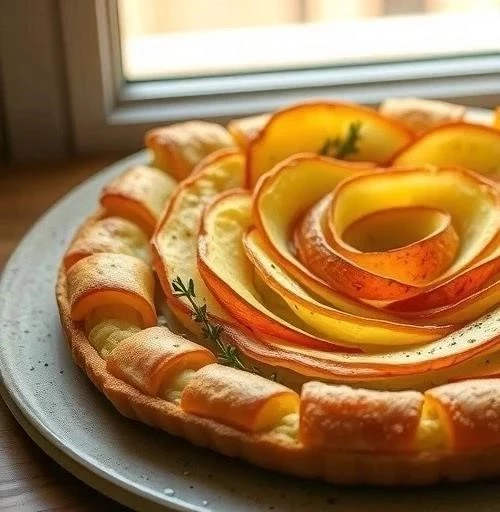
A potato tart proves that simple ingredients can make a memorable meal when each is prepared with care. This open pie belongs naturally among savory bakes: crisp pastry, tender potatoes and a creamy filling give every slice contrast. Although it draws on French cuisine, a homemade tart is flexible enough for weeknight dinners and relaxed gatherings.
Build a crisp pastry base
For a shortcrust pastry tart, keep the butter cold and handle the dough briefly. The tart dough should come together without becoming sticky; overworking it makes the crust tough. Chill it before rolling, then line the pan and prick the base with a fork. Blind-bake the shell until it begins to set. This step matters because raw potatoes and cream release moisture, which can otherwise leave the bottom soft.
Prepare the potato filling
Slice potatoes evenly so they cook at the same rate. For reliable results, partially cook them first: baked potatoes or potatoes cooked in the oven can be used, but thin, briefly boiled slices also work. The potato filling should be tender, not falling apart. Soften onion in a pan, then add a little garlic, spices, thyme, rosemary or herbs de Provence. These aromatics deepen the flavor without hiding the potatoes.
Make a balanced custard
Whisk cream and eggs into a tart custard, then fold in grated cheese. Season thoughtfully: cheese is already salty, while herbs provide fragrance; Arrange the potatoes and onion in the shell and pour over the custard. A good tart filling should bind the layers, not drown them; add just enough liquid to reach between the slices while leaving their tops visible.
Bake for texture, not just color
Set the baking temperature to 180°C (350°F) and bake for about 35–45 minutes, adjusting for the depth of the pan and your oven. The cooking time is only a guide: the center should be set, the potatoes tender and the top a golden crust. If it browns too quickly, cover it loosely with foil. Let the tart rest for ten minutes before slicing; the filling will settle and hold its shape.
Variations and serving
For a heartier pie with potatoes and cheese, add a sharper cheese such as Gruyère. A potato and bacon tart benefits from crisp, cooked bacon, while a potato and mushroom tart is best with mushrooms browned first to remove excess moisture. You can also think of this as a potato quiche, though a tart often has a firmer, more pastry-led profile.
The secrets of making tart are straightforward: dry ingredients, even slices, a pre-baked crust and patient resting. If you wonder how to make a potato tart successfully, focus on those details rather than adding more seasoning. Serve the tart warm or at room temperature with a crisp salad. This recipe for potato tart rewards careful preparation, and its balance of buttery pastry, savory potatoes and creamy cheese makes it worth repeating.

8 Comments. Оставить новый
The article presents the tart as adaptable while still giving clear guidance on pastry, filling, and baking. That balance makes the dish seem approachable for both newer and more experienced cooks.
The advice to balance the custard rather than drown the potatoes is especially helpful. It explains how to keep the tart cohesive while still letting the main ingredients remain distinct.
Including a temperature range and checking for a set center is more useful than relying on color alone. The suggestion to cover the tart if it browns too quickly is a sensible troubleshooting tip.
I appreciate the emphasis on slicing the potatoes evenly and partially cooking them first. Those steps make the suggested baking time more dependable and help the filling cook uniformly.
The suggested herbs and aromatics sound flexible without making the recipe feel complicated. I also like the reminder that cheese contributes salt, which encourages more careful seasoning.
This is a thoughtful guide because it explains why each step matters, not just what to do. The warning about overworking the dough is a good example of practical advice that can improve the final texture.
The short resting period before serving is a small but valuable detail. It should help the custard settle, making the tart easier to slice and giving the layers a chance to hold together.
The article makes a useful case for blind-baking the pastry, especially since the potato and cream filling can release moisture. That practical detail could help home cooks avoid a soggy base.