
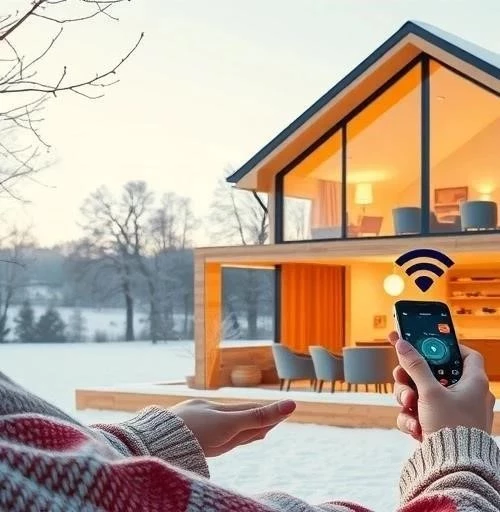
Heating a large house requires more than choosing a powerful boiler. A reliable private house heating system should deliver even warmth to every room‚ respond to changing weather‚ and remain easy to monitor when nobody is at home. Remote heating control helps coordinate these tasks while giving residents a clear way to adjust comfort and review system status.
Plan the system around the building
Begin with a heat-loss assessment and a layout of the boiler room‚ floors‚ and occupied spaces. The boiler should match the calculated demand‚ while heating circuits should be arranged for different floors or uses. A typical design combines radiator heating for quick response with underfloor heating in selected rooms; A circulation pump moves water through the circuits; balancing and correct commissioning help prevent some rooms becoming too hot while others stay cool.
Choose controls that work together
Heating automation is most effective when a smart home controller can communicate with the boiler‚ room thermostat‚ temperature sensors‚ and thermostatic valves. Heating zoning lets occupants set different schedules for bedrooms‚ living areas‚ and rarely used spaces. Weather-compensated automation can adjust water temperature as outdoor conditions change‚ while local controls remain available if the internet connection fails.
Wi-Fi control and app control make routine temperature setting convenient from a phone. A GSM module can provide a separate communication route where broadband is unreliable. Remote boiler monitoring should show operating mode‚ indoor and outdoor readings‚ and faults—not merely an on/off button. Before choosing equipment‚ check compatibility‚ cybersecurity options‚ and whether the system can be operated manually at the property.
Use remote access responsibly
For safe remote operation‚ use strong unique passwords‚ enable multi-factor authentication where available‚ and limit account access to trusted users. Set sensible minimum and maximum temperatures‚ especially when the home is empty or pipes may be exposed to freezing conditions. Emergency alerts can report loss of power‚ abnormal temperatures‚ pressure problems‚ or a boiler fault. Notifications are useful‚ but they do not replace regular inspections or a qualified technician.
Measure results and refine schedules
Monitoring energy consumption helps reveal whether schedules match actual use. Compare readings over similar periods and consider outdoor temperature before drawing conclusions. Heating cost savings usually come from avoiding unnecessary heating‚ improving insulation‚ and tuning schedules—not from repeatedly making large temperature changes. Keep records after adjustments so that comfort and energy use can be assessed together.
A practical setup is commissioned circuit by circuit: test sensors‚ verify valve response‚ check pump operation‚ and confirm that app commands reach the boiler. Review schedules after the first weeks of use and at the start of each heating season. With clear zoning‚ secure remote access‚ and regular maintenance‚ climate control in the home can be convenient without making the system difficult to manage.

9 Comments. Оставить новый
The article makes a helpful distinction between remote convenience and the need for local controls when internet access is unavailable.
The emphasis on system commissioning and balancing helps connect automation features with the underlying heating setup.
The discussion of combining radiator and underfloor heating provides useful context for planning different areas of a home.
The cybersecurity reminders are a useful addition to a discussion of remote access to household systems.
The article clearly explains why heating design should begin with assessing the building’s heat loss and layout.
The overview of heating zones and separate schedules is clear and relevant to homes with rooms used at different times.
The article gives a balanced overview of Wi-Fi and GSM options without suggesting that one solution suits every property.
The article organizes its main considerations well, from initial system planning to remote monitoring and responsible access.
Compatibility, monitoring, and manual operation are practical points to consider when selecting heating control equipment.