
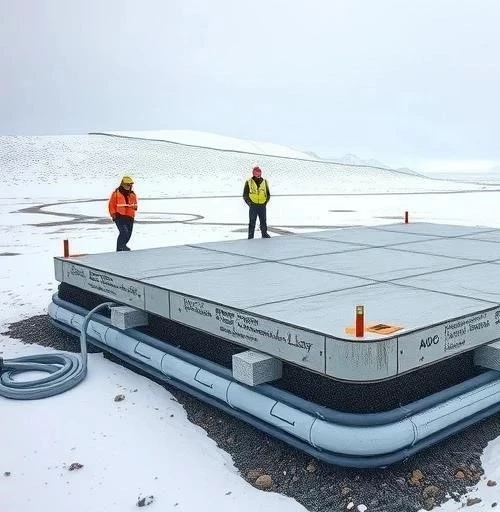
Construction in permafrost conditions demands a different approach from building on ordinary soil. Permafrost soils can lose strength when warmed; thawing may cause uneven settlement and damage to walls‚ utilities‚ and floors. A slab foundation is therefore not a universal solution. It is suitable only when geocryological investigations and engineering calculations show that the ground can safely support it‚ or when the design deliberately controls the ground’s temperature and movement.
Investigate before designing
Geocryological investigations should establish the soil layers‚ ice content‚ groundwater conditions‚ depth of the active layer‚ and temperature profile throughout the year. These findings help engineers determine soil bearing capacity and predict how it may change if the site is disturbed. The foundation design must account for both the present frozen ground and possible future warming. A thermal calculation should model heat transfer from the building‚ snow cover‚ sunlight‚ and seasonal weather‚ and estimate the resulting thermal regime beneath the slab.
Choose a ground-temperature strategy
In many locations‚ the priority is preservation of the frozen state of the soil. The building is then designed to limit heat entering the ground. An insulated foundation slab may include continuous slab insulation beneath and around its edges‚ with carefully sealed joints to prevent thermal bridges. Where appropriate‚ thermosyphons passively remove heat from the ground during cold periods. A ventilated crawl space can also keep warm indoor air away from the frozen soil‚ although it requires protection from wind-driven snow and reliable access for inspection;
In other projects‚ engineers may intentionally allow controlled thawing before construction or design for stable soil after thaw. This option requires detailed analysis: uncontrolled thawing can create large differences in support and serious ground deformations. Ground thermal stabilization may be needed to keep temperatures within a specified range. The choice between maintaining frozen ground and designing for thawed conditions depends on site data‚ the building’s load‚ climate‚ and maintenance capacity.
Prepare and build the slab
Excavation should be planned to avoid unnecessary disturbance and warming of the natural ground. The design may include a compacted sand cushion‚ but its thickness and grading must be based on soil conditions rather than a standard rule. A drainage system should direct surface water away from the building without washing out the support layer. Foundation waterproofing protects the structure from moisture‚ while frost-resistant concrete helps withstand repeated freezing and thawing in exposed areas.
Slab reinforcement must be designed for building loads‚ temperature effects‚ and anticipated differential movement. The calculation of the foundation should check bearing pressure‚ bending‚ punching shear‚ and settlement of the foundation. Frost heave and the thickness of the active layer also matter: freezing moisture can lift or distort shallow construction. Flexible utility connections and movement joints may reduce the risk of damage if small movements occur.
Monitor performance
Construction must follow the approved design and applicable codes for building on permafrost soils. Keep records of ground temperatures‚ slab levels‚ and any visible cracking. Monitoring is particularly important during the first years‚ when changes in snow cover‚ drainage‚ or indoor heating can alter the ground’s thermal regime. Repairs to insulation‚ drainage‚ or ventilation should be made promptly; small changes in water flow or heat loss can have long-term consequences.
A successful slab foundation in permafrost is not simply a thick concrete plate. It is an engineered system that combines reliable investigations‚ suitable ground preparation‚ thermal control‚ structural design‚ and ongoing observation. When those measures are matched to the site‚ the slab can provide durable support while limiting settlement and protecting the building from changing ground conditions.


3 Comments. Оставить новый
A clear and useful overview of why permafrost foundations require site-specific engineering. The emphasis on geocryological investigations and thermal calculations is especially important.
The comparison between preserving frozen ground and allowing controlled thaw helps explain the key design choices. It would also be useful to mention how ongoing monitoring can identify changes in ground temperature and settlement.
This article effectively shows that a slab foundation is not automatically suitable in permafrost conditions. The practical discussion of insulation, thermosyphons, and ventilated crawl spaces makes the engineering considerations easier to understand.