
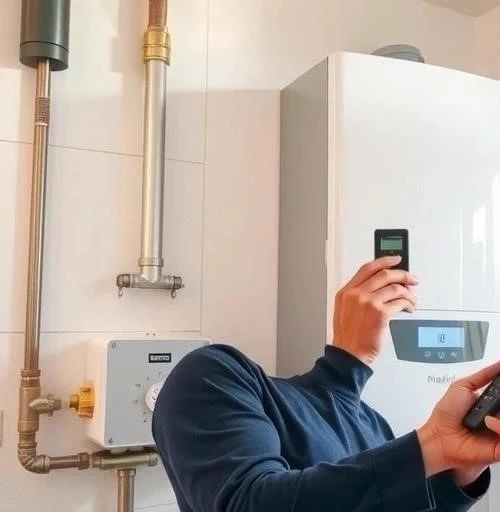
A gas boiler is more than a warm-room machine: it is a small, carefully supervised fire. In an energy-efficient home, good heating adjustment must balance comfort, gas savings, and safety. The smartest system is not one that never stops, but one that knows when to stop—and why.
Let automation watch the flame
Modern boiler automation coordinates temperature control with a network of safeguards. A draft sensor checks that combustion products can leave through the chimney; an overheating sensor reacts if water gets dangerously hot. A gas leak sensor can trigger gas control and a gas supply shutoff. Together, these devices form a safety system and provide emergency boiler protection. If a critical fault appears, emergency shutdown is a feature, not a nuisance: never bypass it to keep the house warm.
A room thermostat prevents needless heating when the rooms are already comfortable. Weather-compensating automation can also lower the water temperature on mild days and raise it when the weather turns severe. This gentle adjustment often means fewer burner cycles, more even comfort, and real gas savings. Set schedules around how the household lives, not around an imaginary “perfect” temperature.
Protect the whole heating circuit
Safety depends on more than the burner. The circulation pump must move water reliably; heating-system pressure must stay within the manufacturer’s stated range. An expansion tank absorbs pressure changes as water warms. If pressure repeatedly falls or rises, or the pump becomes noisy, arrange fault diagnosis rather than repeatedly topping up or resetting the boiler.
Freeze protection matters in a vacant home, but it is not a promise that pipes can never freeze. Keep the boiler powered if its manual requires it, maintain the specified minimum setting, and ask a qualified professional how to protect vulnerable pipes during a long absence. Never use an open flame to thaw them.
Make the room part of the safety system
A clear chimney and adequate boiler-room ventilation are essential for safe combustion. Keep vents unobstructed; do not store fuel, paint, or clutter beside the appliance. A carbon-monoxide alarm is a valuable additional warning, but it does not replace correct installation, ventilation, or servicing.
Routine maintenance and equipment inspection should follow the manufacturer’s schedule and local requirements. A qualified technician can test safety devices, inspect the flue, check connections, and verify combustion. These checks support gas-equipment safety and can reveal problems before they become emergencies. Follow boiler operating rules, keep the manual accessible, and record service visits.
When something seems wrong
If you smell gas, do not operate switches or create a flame. Leave the building, warn others, and call the gas service from a safe location, following local emergency instructions. For a boiler lockout, unusual noise, repeated pressure changes, or a failed sensor, stop guessing and request professional diagnosis. Do not open the casing or repair gas components yourself.
Finally, pair careful heating adjustment with heat-loss reduction: seal drafts, insulate where appropriate, and keep radiators unobstructed. The result is a home’s heating system that works less frantically and more intelligently. Efficiency is not simply a lower number on a bill; it is warmth delivered with control, and protection ready to act when the unexpected arrives.

6 Comments. Оставить новый
I like the idea that a boiler’s smartest feature may be its ability to stop. That flips the usual “more heat is better” mindset into something safer and more thoughtful.
The article makes invisible safeguards feel tangible. Sensors, pumps, and pressure control become a quiet backstage crew keeping comfort from turning into a hazard.
A useful point here is that efficiency isn’t simply about burning less—it’s about matching heat to the home’s real needs. That’s a much more human way to think about automation.
This piece gives household heating the attention usually reserved for cars or computers: routine oversight, sensible settings, and respect for warning signals. Clear and reassuring without making safety sound optional.
I appreciated the steady, no-shortcuts tone. The advice treats repeated pressure problems as a clue to investigate, not an invitation to keep pressing reset and hope.
This reads like a calm conversation with a vigilant housemate: practical, alert, and not prone to panic. The reminder not to bypass a shutdown is especially important.