
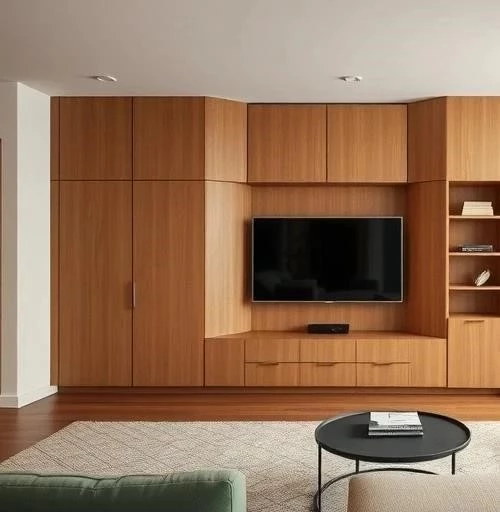
Remote work has changed how people use their homes, but its newest furniture trends rarely solve the everyday problem of clutter. A stylish desk or fashionable chair can quickly feel outdated; thoughtful storage remains useful for years. In a functional living room, hidden storage systems help keep work materials close while allowing the room to feel calm after the laptop is shut. This is not simply a question of appearance: good space organization makes daily routines easier.
Design for real life, not a passing trend
Living room design often has to support several activities: relaxing, hosting guests, and working. When every activity leaves visible objects behind, the room becomes tiring to use. Built-in wardrobes, floor-to-ceiling cabinets, closed shelving, and hidden niches make compact storage possible without filling the room with separate units. They provide places for storing belongings, routers, chargers, and paperwork, helping preserve free space and an interior without visual clutter.
That matters especially in a home office shared with the living area. Remote work may require a desk today, but not everyone wants work equipment to define the room all day. A cabinet with document and equipment storage can conceal office essentials in the evening. Custom furniture can fit an alcove or an awkward wall, while transformable furniture may turn a console or dining table into a temporary home workspace. The best choice depends on the household’s routine, not on a trend photograph.
Storage is part of the layout
Well-planned storage systems in interiors improve interior ergonomics because frequently used items stay accessible and occasional items can be put away. This practical furniture supports an efficient use of floor area: instead of adding more cabinets later, plan storage alongside lighting, seating, and circulation. Space zoning can distinguish a work corner from a lounge without installing a bulky divider. A discreet cabinet, for example, can mark the boundary while serving a useful purpose.
Minimalism in interior design does not mean owning very little or hiding everything at any cost. It means choosing what deserves to remain visible and giving the rest a dependable place. Closed shelving is useful for mixed household items; open shelves can display a few books or objects. The balance keeps the living room personal, rather than turning it into either a storage room or an empty showroom. Order at home is easier to maintain when putting things away takes less effort than leaving them out.
Plan around changing needs
Before choosing a system, list what the room must hold, measure the available walls, and consider who uses each item. A family may need deep compartments for games, while a remote worker may need a lockable drawer for documents. Allow room for cables, ventilation, and doors to open comfortably. In a small apartment, made-to-measure units can use vertical space and corners that standard furniture wastes.
Trends can inspire color or finishes, but they should not dictate the whole layout. A functional living room is one that adapts when work schedules, hobbies, or household needs change; By prioritizing concealed storage, access, and comfort, homeowners create a living room interior that looks composed and works hard. The result is not merely a tidier background for video calls, but a more flexible, restful home every day.
4 Comments. Оставить новый
The discussion of custom storage and awkward spaces is useful because standard furniture does not suit every room. Planning storage alongside lighting, seating, and movement through the space can prevent clutter without making the room feel crowded. The article could benefit from more detail on cost, but its core advice is practical.
A strong point here is that the right solution depends on how people actually use their homes, not on what looks good in a trend photograph. Concealing work equipment can help a living space feel restful at the end of the day, while keeping essentials accessible during work hours. That balance is worth considering before choosing furniture.
The article makes a convincing case that storage should be planned as part of a room’s layout rather than added as an afterthought. I especially appreciate the emphasis on how a shared living room needs to adapt between work and relaxation. The practical examples show why useful storage is about everyday comfort as much as appearance.
I agree that storage can help distinguish a work area from a lounge without relying on a bulky divider. The article also rightly connects organization with ergonomics: frequently used belongings should be easy to reach, while less-used items can be tucked away. This is a sensible approach to making a multipurpose room work better.