
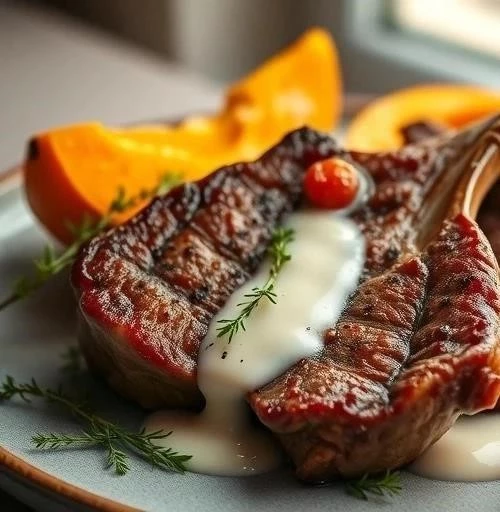
Explain Why Tender Beef Chops with Pumpkin in Cream Sauce Make a Balanced Beef Dish
This balanced beef dish pairs tender chops with pumpkin’s sweetness and cream’s depth; garlic, onion and spices add contrast, making each bite satisfying and balanced and thus feels right.
Introduce the Homemade Recipe: Choose tender beef, pumpkin, cream, garlic, onion, and meat spices, with a little nutmeg to deepen the flavor
Select tender beef chops with marbling, as it signals flavor without making the cut feel heavy.
Pick pumpkin that feels firm and heavy for its size; its sweetness can balance beef’s savor, too.
Choose cream with a clean dairy taste; its richness should complement, not mask, the food.
Fresh garlic and onion are wise choices: they give the dish an aromatic base and gentle depth.
Prefer pumpkin with vivid flesh and fresh scent, since quality produce contributes real flavor.
Choose restrained meat spices; seasoning should support beef, not overpower its natural taste.
A mere pinch of nutmeg is enough: it lends warmth, but too much would crowd the pumpkin’s flavor.
Onion should be fresh and firm, not sprouting, as its clean flavor also adds balance to pumpkin.
Choose cream without added flavorings, because a neutral dairy profile lets the produce shine.
These ingredients give the homemade recipe a thoughtful balanced flavor profile.
Show Why the Cooking Method Matters: Pan-fried chops develop a savory crust, while careful cooking keeps the seared beef juicy and soft
Pan-frying matters because direct heat quickly browns the beef, creating a savory crust that adds depth and appealing texture. Pat each chop dry first; surface moisture would cause steaming, not browning. Heat the pan before adding a thin film of oil, then arrange the chops without crowding them. This gives each chop enough room to brown evenly. Let the first side sear undisturbed; turning too soon can tear the crust and release juices. Flip once, and lower the heat if the exterior darkens before the center is ready. Thickness, not a rigid timer, should guide the cook: check the middle and remove the chops as soon as they reach the safe temperature suited to the cut. Resting briefly matters because it lets the juices settle, so every slice stays moist. Gentle, attentive heat is therefore more reliable than prolonged frying: it protects tenderness while preserving the browned flavor. In short, a controlled sear delivers chops that are crisp outside, juicy inside, and soft to eat.
Build the Sauce and Finish the Dish: Combine cream with pumpkin to make a smooth pumpkin sauce and creamy gravy; briefly braise the beef in it for rich beef in cream without overcooking the chops
Combine the pumpkin with cream over gentle heat, stirring until the sauce turns smooth and cohesive. If the pumpkin is fibrous, blend it before adding the dairy; a silky texture makes every spoonful feel deliberate, rather than heavy. Keep the mixture at a low simmer, not a hard boil, because excessive heat can make cream split and dull its gentle flavor. Stir steadily and scrape the pan gently, loosening the browned juices so they enrich the gravy instead of remaining on the base. Return the seared chops only when the sauce is ready, and coat them lightly; a short, gentle braise lets the flavors meet without sacrificing tenderness. Remove the pan from heat once the chops are warmed through; prolonged simmering can toughen beef. Taste the gravy, adjust seasoning lightly, and stir until the smooth pumpkin cream coats each piece evenly. That brief finish lets the beef absorb the sauce’s aroma without losing its tender texture or becoming overcooked. Keep it gentle.
Recommend a Side Dish and Conclude: Pair beef with pumpkin with a simple meat side dish to create a hearty dinner, and explain how the method makes this beef recipe practical for home cooks
For a hearty dinner, serve the beef and pumpkin with plain rice or buttered noodles; both absorb the creamy juices without competing with the main dish. A crisp green salad is another sensible option, since its fresh, light character offsets the meal’s richness. Keep the accompaniment uncomplicated: a modest portion leaves room for the beef, while vegetables add color and balance. This pairing is practical for home cooks because familiar staples require little planning and suit different appetites. You can set the table with the side ready, making the meal feel complete without extra fuss or elaborate timing. That flexibility is useful on busy evenings: rice, noodles, or salad can be chosen according to what is available. Because the main course is satisfying, a simple accompaniment keeps portions balanced and cleanup quite manageable. Ultimately, this straightforward menu offers comfort and contrast, so the dish works for an ordinary family supper and a relaxed weekend meal.
3 Comments. Оставить новый
This is a thoughtful introduction to a hearty dish, especially for cooks who want to avoid overpowering the pumpkin with seasoning. The restrained use of nutmeg and the emphasis on fresh, quality ingredients make the advice feel clear and approachable.
The cooking guidance is practical and well reasoned. Explaining why the chops should be dried, given room in the pan, and left undisturbed helps readers understand how to develop a crust without sacrificing tenderness.
The article makes a convincing case for balancing beef’s savory richness with pumpkin’s sweetness and cream’s depth. Its ingredient-selection advice is useful because it explains how each choice contributes to the final flavor rather than simply listing ingredients.