
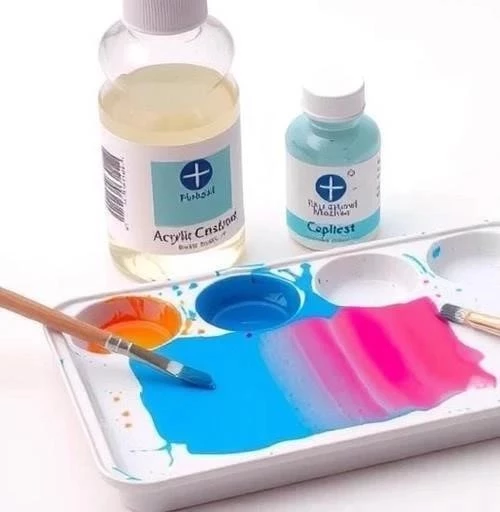
Acrylic paint is water-based‚ so clean water is usually the simplest way to make it more fluid. However‚ the right choice depends on the paint‚ the surface‚ the desired effect‚ and how much you need to change its consistency. Adding too much liquid can weaken the paint film‚ reduce coverage‚ or make the finish uneven. For reliable results‚ thin gradually and follow the paint manufacturer’s instructions.
Water: the basic option
For most ordinary painting‚ use clean water at room temperature. Add a little at a time and mix thoroughly‚ checking the consistency before adding more. Water is useful for improving flow‚ making a wash‚ or slightly reducing the thickness of paint. It is not a substitute for an acrylic medium when you need to preserve the paint’s working properties or apply a large amount of dilution.
Use a clean container and fresh water rather than dipping a dirty brush into the paint. Contamination can affect the colour or introduce debris. If the paint becomes too runny‚ mix in a small amount of undiluted paint or an appropriate acrylic medium to restore body. Avoid trying to correct a whole batch until you have tested a small sample.
Acrylic mediums and flow products
Acrylic mediums are designed to mix with acrylic paint. They can make paint more fluid while helping it retain adhesion and form a durable film. A fluid or gloss medium can increase transparency and flow; a matte medium can reduce sheen; and a glazing medium is intended for thin‚ translucent layers. A flow improver may help paint spread smoothly‚ but it is generally concentrated and must be used according to its label. It may need to be diluted separately before mixing with paint.
Products are not interchangeable. A medium can change the finish‚ transparency‚ drying time‚ or texture‚ so check its description before use. If the work will be varnished or exposed to wear‚ use products intended for the same type of acrylic system. Follow the manufacturer’s stated limits for additions‚ since excessive medium or flow aid may compromise the paint layer.
Choosing an option for the task
- For brush painting: Start with a small amount of water if the paint is only slightly too thick; Use a fluid medium if you want more flow without relying on a large amount of water.
- For transparent washes: Water can make colour more transparent‚ but a glazing or fluid medium is often a better choice for broad‚ even layers. Test first‚ because the pigment and surface affect the result.
- For fine detail: A small amount of water or a suitable flow product may help paint move from the brush. Keep enough body for clean edges‚ and avoid making the mixture so thin that it runs.
- For airbrushing: Use paint and thinner or reducer specified for airbrush use. Ordinary artist’s acrylic may need a compatible airbrush medium‚ and the correct mixture depends on the paint and equipment. Strain the mixture if the product instructions recommend it.
- For pouring: Use a pouring medium formulated for acrylic paint. Water alone can make a mixture unstable and may encourage cracking‚ poor adhesion‚ or separation as it dries.
How much water is safe?
There is no single ratio that suits every acrylic paint. Artist-grade and student-grade paints differ‚ as do pigments‚ brands‚ and intended techniques. A small addition may be enough for brushwork‚ while a wash requires more. Some manufacturers set a maximum proportion of water; others advise using a medium for substantial dilution. Treat the product label as the primary guide rather than assuming that all paints behave alike.
When a product gives no specific ratio‚ begin with a few drops of water in a small amount of paint. Mix until the texture is uniform‚ then test it on a scrap piece of the same surface. If the paint beads‚ runs‚ looks patchy‚ or loses coverage‚ adjust the mixture or switch to a medium. Do not thin the entire container at once: keeping most of the paint unaltered makes it easier to correct the mix and store the remainder.
What not to use
Do not use oil-paint solvents such as turpentine or mineral spirits to thin standard water-based acrylic paint. They are not designed for this purpose and may cause separation or other unwanted results. Household cleaners‚ alcohol‚ and unknown additives are also unreliable choices unless the paint manufacturer specifically recommends them. Avoid adding large quantities of water simply to make old‚ thickened paint usable: paint that has dried in the container cannot be restored by thinning.
Mixing and applying
- Read the paint and medium labels‚ and work in a clean‚ ventilated area.
- Place a small amount of paint on a palette or in a separate cup.
- Add water or a compatible medium in small increments and stir until consistent.
- Test the mixture on the intended surface and let the sample dry before judging the finish.
- Apply thin layers rather than flooding the surface. Allow each layer to dry as directed.
Acrylic paint dries relatively quickly‚ and a mixture left exposed may thicken as water evaporates. Keep the palette covered when practical‚ and add only a little water if the paint begins to dry during a session. Do not return thinned paint to its original container‚ since this may alter the stored paint or introduce contaminants.
Surface and drying considerations
The surface affects how a thinned layer behaves. Absorbent paper or unsealed wood may draw water out quickly‚ while a primed canvas or non-absorbent surface may allow the mixture to move for longer. Prepare the surface as appropriate and test the paint before working on the final piece. Very watery layers can dry with less even colour‚ especially on absorbent materials‚ and may require several applications.
Thin layers generally dry faster than thick ones‚ but drying time also depends on humidity‚ temperature‚ airflow‚ the surface‚ and the amount of medium used. Let each layer dry before adding another if you want to avoid lifting or disturbing the paint below. Do not use heat unless the product guidance permits it‚ as rapid or uneven drying can affect the finish.
Practical rule
For a modest adjustment‚ start with clean water. For significant thinning‚ glazing‚ airbrushing‚ or pouring‚ choose a compatible medium made for that technique. Add it gradually‚ test the mixture‚ and observe the manufacturer’s limits. This approach helps maintain predictable flow‚ coverage‚ adhesion‚ and finish without assuming that one thinner or ratio is suitable for every acrylic paint.
1 Comment. Оставить новый
The article clearly distinguishes between thinning acrylic paint with water and using a medium to preserve its working properties. The advice to add products gradually, check manufacturer instructions, and test a small amount first is practical.