
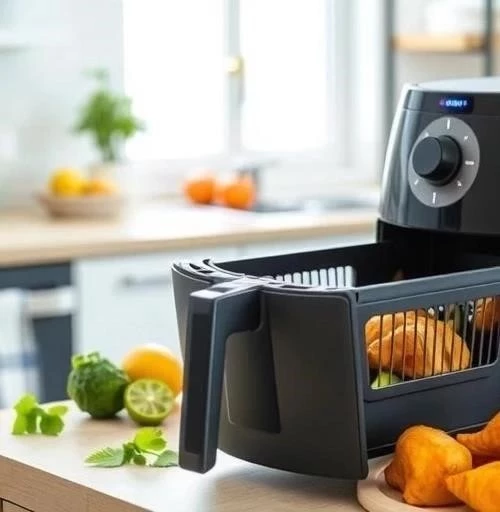
An air fryer is a compact countertop cooker that prepares food by circulating hot air at high speed․ A heating element warms the air, and a fan moves it around the cooking chamber or basket․ This process, known as convection, cooks food on several sides and can create a browned, crisp surface with little or no added oil․ Despite its name, an air fryer does not fry food by immersing it in oil․
Everyday cooking uses
The appliance is commonly used for foods that benefit from a dry, hot cooking environment․ It can roast, bake, brown, and reheat a range of ingredients․ Typical choices include potato wedges, vegetables, chicken pieces, fish fillets, sausages, and frozen snacks․ Many models can also bake small cakes or pastries, although the basket size and shape may limit what fits․
- Roasting: Cook vegetables, meat, or fish in a relatively small space․ A light coating of oil is optional and can help seasoning adhere or improve browning․
- Crisping: Prepare foods such as potato pieces or breaded items with less oil than deep-frying usually requires․ Results depend on the recipe, food thickness, and appliance․
- Reheating: Warm pizza, pastries, and other leftovers while helping the exterior remain crisp․ It is an alternative to a microwave when texture matters․
- Baking: Make small portions of baked dishes in a suitable heat-safe pan that fits inside the cooking chamber․
- Defrosting or drying: Some models have dedicated settings for thawing or dehydrating․ These functions and their effectiveness vary by model․
How it works
Food is placed in a basket, tray, or bowl, leaving space for air to circulate․ The heating element supplies heat while the fan drives hot air around the food․ The strong airflow can cook small portions relatively quickly, but it does not guarantee perfectly even browning․ Turning or shaking the food during cooking may help, especially when the basket is full․ Overcrowding blocks airflow and can leave some areas softer or less thoroughly cooked․
Air fryers are available in several designs․ Basket models are often suited to snacks and individual portions; oven-style models may offer racks and more room for different shapes of food․ Capacity, temperature range, controls, and accessories differ․ Following the maker’s instructions is important because cooking times and suitable containers are not identical across appliances․
How it compares with other appliances
An air fryer works much like a small convection oven, with a compact chamber and strong airflow․ It can be convenient when cooking a few portions without heating a full-size oven, and its small volume may allow it to reach cooking temperature quickly․ A conventional oven is usually more practical for large dishes, several trays, or batch cooking․
A microwave heats food differently and is often faster for warming liquids or soft foods, but it does not usually produce a crisp exterior․ A multicooker is designed for tasks such as simmering, steaming, or pressure cooking, depending on its functions․ An air fryer is therefore not a complete replacement for an oven, microwave, or multicooker; its usefulness depends on the meals prepared and the space available․
Practical points and limitations
Cooking time depends on the food, its size, starting temperature, and the model․ Use recipes as a starting point, check food as it cooks, and verify that meat and other potentially hazardous foods reach a safe internal temperature with a food thermometer․ Do not rely on a browned surface alone to judge doneness․ For best airflow, arrange food in a single layer where possible and leave room between pieces․
Use only cookware and liners approved for the appliance, and never cover openings that allow air to move; Keep the unit on a stable, heat-resistant surface with clearance around it․ The basket and interior become hot, so handle them carefully․ Allow removable parts to cool before cleaning and follow the manufacturer’s care guidance․
Who may find one useful?
An air fryer may suit people who often cook small portions, want crisp textures with limited added oil, or prefer a compact alternative to using a large oven․ It is less useful when meals are routinely prepared for many people or require large dishes․ Before buying, consider capacity, counter space, cleaning, noise, controls, and whether the available functions match your cooking habits․
In short, an air fryer is primarily a countertop convection cooker for roasting, crisping, baking, and reheating․ Its main advantages are convenience and fast cooking for suitable portions; its results depend on airflow, food preparation, and the particular model․
3 Comments. Оставить новый
The discussion covers a useful range of cooking tasks and notes that results can vary by appliance and recipe. The guidance on airflow and overcrowding adds helpful context.
The article clearly explains how an air fryer works and distinguishes convection cooking from deep-frying. Its overview of common uses is practical and accessible.
This is a straightforward introduction for readers considering an air fryer. The explanations of cooking methods are concise, with appropriate reminders about model differences.