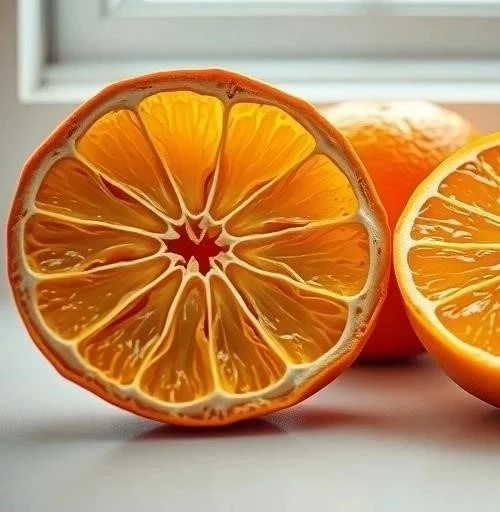
A dry orange can look perfectly normal from the outside‚ yet contain firm‚ mealy segments with little juice. This is usually a quality issue rather than a sign that the fruit was deliberately “filled with chemicals.” Juiciness depends on how the orange developed‚ when it was picked‚ and how it was stored. Once the fruit is harvested‚ a shopper cannot restore the juice that it never formed or has since lost.
How oranges become dry
Growing conditions
Oranges need a steady supply of water while they grow. Drought‚ irregular irrigation‚ extreme heat‚ or damaged roots can disrupt the fruit’s development. Water stress may leave the pulp less juicy; sudden changes in water availability can also affect its texture. Growing conditions matter‚ but dryness alone cannot reveal exactly what happened on the farm.
Harvest time and maturity
Fruit picked before it has developed fully may taste bland or sour and may not have the expected texture. On the other hand‚ an orange that has been left on the tree too long can lose quality. Timing varies by variety and climate‚ so colour is not a reliable measure of ripeness: some ripe oranges remain greenish‚ while bright colour does not guarantee a juicy interior.
Variety and fruit size
Different varieties naturally have different amounts of juice and different textures. Even within one variety‚ size is not a dependable guide: a large orange is not automatically juicier than a small one. The appearance of the navel may help identify a type‚ but it cannot guarantee the condition of every fruit. Weight is a more useful clue because juice contributes to the fruit’s heft.
Storage and age
After picking‚ oranges continue to lose moisture‚ especially in warm‚ dry air or during prolonged storage. A dry environment can draw water through the peel‚ and time can leave the segments leathery or less pleasant to eat. Refrigeration slows deterioration‚ but it does not reverse it. A shrivelled peel‚ unusually light feel‚ or dried-out stem area may suggest age‚ although none is conclusive on its own.
How to choose a juicier orange
- Compare fruits of similar size and choose one that feels heavy for its size.
- Look for firm‚ intact skin without soft spots‚ deep wrinkles‚ or visible damage.
- Prefer fruit that feels fresh rather than unusually light or dried out.
- Buy only what you can use soon‚ and store it cool; avoid leaving it for long in a hot‚ dry place.
These checks improve the odds‚ not guarantee a perfect result. You cannot reliably judge the pulp by colour alone‚ and a greenish peel does not necessarily mean an orange is unripe.
Can a dry orange still be eaten?
If the fruit is merely dry or mealy but has no mould‚ leaking‚ or fermented or otherwise unpleasant smell‚ it is generally a matter of taste and texture. You can squeeze it‚ blend it into a dressing or smoothie‚ or use the zest in cooking. Discard it if there is mould‚ decay‚ or a suspicious smell; cutting away one visibly spoiled patch may not make a badly deteriorated fruit acceptable.
In short: an orange is usually dry because of its growing conditions‚ maturity‚ variety‚ or moisture loss in storage. Choose fruit that feels heavy and fresh‚ but remember that no outside sign can guarantee what is inside. If one orange disappoints‚ that does not by itself prove that all fruit from the same source is poor.