
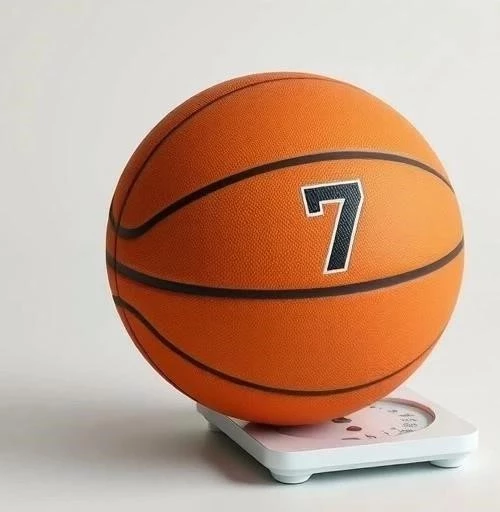
A regulation size 7 basketball weighs about 600 grams‚ or roughly 1.3 pounds. The precise weight depends on the competition rules‚ the ball’s materials‚ and the manufacturer. For a ball intended for adult men’s play‚ a useful specification to look for is approximately 580–620 grams (20.5–21.9 ounces). Some leagues and product descriptions allow a slightly wider range‚ so the official standard for a particular competition should take priority.
Quick answer
- Typical weight: around 600 g (1.32 lb).
- Common regulation range: about 580–620 g (20.5–21.9 oz)‚ depending on the rules.
- Typical circumference: approximately 75–77 cm (29.5–30.3 in).
- Intended players: generally adult men and older boys‚ subject to league guidelines.
What does “size 7” mean?
Basketball sizes identify a ball’s approximate circumference and intended use; the number is not a measurement of its diameter. Size 7 is the standard full-size ball commonly used in men’s basketball. It is larger and heavier than size 6‚ which is often used in women’s competitions and by many younger players. Age cutoffs vary between leagues‚ so check the rules for the players’ division rather than choosing by age alone.
A size 7 ball is about 24 cm (9.4 in) across when measured through its center. Because it is inflated and slightly compressible‚ its exact dimensions can vary within the applicable standard. The ball should feel properly firm‚ but it should not be inflated so much that it becomes unusually hard or difficult to control.
Why do published weights differ?
There is not one universal number that describes every size 7 ball. Governing bodies can set different limits‚ and brands may list a rounded weight for a particular model. Indoor leather or composite balls‚ outdoor rubber balls‚ and training models can also differ. Their panels‚ internal bladder‚ surface material‚ and construction all contribute to the total. Even two balls from the same product line may not have precisely identical measured weights.
Competition rules may state a range rather than a single target. For example‚ FIBA specifications commonly describe a size 7 ball as having a circumference of 750–770 mm and a weight in the region of 580–620 g. A ball advertised for another league may use that league’s own specification. If the ball is for an official game‚ use a model approved for that competition instead of relying only on the words “size 7.”
How to check a ball at home
- Weigh it: Use a kitchen scale set to grams‚ and weigh the ball dry‚ without packaging or accessories.
- Measure the circumference: Wrap a flexible tape around the widest part of the inflated ball‚ following its curved surface.
- Check inflation: Follow the pressure printed near the valve or in the manufacturer’s instructions. A pressure gauge is more reliable than judging by feel.
- Compare with the rules: Check your league’s current specifications‚ since permitted dimensions and weights may vary.
A small difference from a listed weight does not automatically mean a ball is defective. First make sure the scale is accurate and that the ball is inflated as directed. If it is far outside the maker’s stated specification‚ contact the seller or manufacturer. Do not add or remove air simply to make the ball match a weight: inflation affects bounce and handling‚ but does not meaningfully change its mass.
Does weight affect play?
Yes. A ball that is too heavy for a player can make passing‚ shooting‚ and dribbling more tiring‚ while an unusually light ball may not behave like the one used in games; Size and weight both matter for control: a player needs to grip the ball‚ bring it up to shooting position‚ and handle its rebound comfortably. For practice that is meant to prepare someone for adult men’s competition‚ a regulation size 7 ball is usually the appropriate choice. For younger players‚ a smaller size may support better technique and confidence.
The surface matters too. Indoor balls are commonly made with leather or composite materials designed for court grip; outdoor balls often use durable rubber or tougher composite covers. These choices can affect feel and durability as well as weight. A heavier-feeling ball is not necessarily “better”—it should meet the relevant rules and suit the player and playing surface.
Size 7 compared with other common sizes
- Size 7: full-size ball generally used in men’s basketball; about 600 g.
- Size 6: commonly used in women’s basketball and for many younger players; lighter and slightly smaller.
- Size 5 and below: smaller options often used for children‚ with the right size depending on the league and age group.
Bottom line
If you are asking how much a size 7 basketball weighs‚ the simple answer is about 600 grams (1.3 pounds). Expect some variation between models and rulebooks; a commonly cited regulation range is approximately 580–620 g. For an official match‚ confirm the competition’s current requirements and choose an approved ball. For casual play‚ a well-inflated size 7 ball close to that weight is a sensible standard choice.

4 Comments. Оставить новый
A concise and informative guide. Including both metric and imperial measurements makes the specifications easy to understand.
This is a clear, practical explanation of what to expect from a size 7 basketball. The weight range is especially helpful when comparing different models.
The section on why weights vary adds useful context. It explains why two balls labeled size 7 may not feel exactly the same.
I appreciate the distinction between ball size and diameter. The advice to check the rules for a specific league makes this useful for players and parents.