
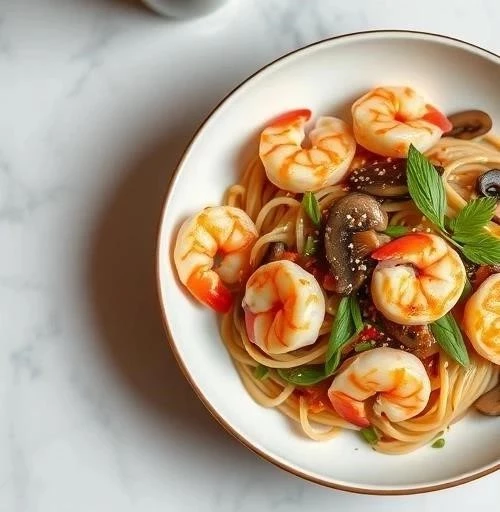
Shrimp noodles unite seafood pasta’s appeal with bold Asian flavors, making dinner more distinctive than a standard pasta.
Argue that shrimp noodles bring together the appeal of seafood pasta and the bold, balanced flavors of Asian cuisine, making the dish more distinctive than a standard pasta dinner.
Shrimp noodles bring the familiar pleasure of seafood pasta into a livelier Asian-inspired meal. Its appeal is not simply that seafood meets noodles; the contrast gives the dish a clear identity. Asian cuisine is valued for harmony as well as boldness, so its sweet, savory, tangy, and gently hot notes can make familiar seafood pasta feel more complete and memorable. Rather than tasting like a routine Western-style supper, it offers a thoughtful meeting of culinary traditions, with enough contrast to hold attention and enough familiarity to remain welcoming. That balance gives this pairing its distinctive place beyond the usual pasta.
Choose rice noodles for a lighter, more delicate texture or egg noodles for a heartier quick dinner; both work well in a wok with Asian-style vegetables.
Choose rice noodles when a lighter, more delicate bite suits the meal: they let the shrimp and vegetables remain the focus. Egg noodles make a heartier quick dinner, adding substance that feels satisfying without requiring a longer preparation. Both choices work well in a wok, where brief, lively cooking helps Asian-style vegetables stay colorful and pleasantly crisp. This flexibility is practical, not merely a matter of preference: match the noodle’s weight to your appetite, so every component retains its character. Either option creates a balanced base for a convenient meal, while giving the cook control over texture and fullness.
Build savory depth with shiitake mushrooms or button mushrooms, soy sauce, oyster sauce, sesame oil, ginger, and garlic, then add green onion, chili pepper, and sesame for contrast.
Shiitake mushrooms give this dish a deeper, woodsy savor, while button mushrooms offer a milder option; either choice supports the shrimp without overpowering it. Soy sauce and oyster sauce add complementary salty, rounded notes, and a little sesame oil brings fragrant richness. Ginger and garlic deserve a brief sizzle first, because warming them releases aroma and builds a fuller foundation. Finish with green onion, chili pepper, and sesame: their freshness, heat, and gentle crunch create contrast, so each bite feels balanced rather than heavy. This method works because each seasoning has a clear purpose.
Finish with coconut milk for a creamy shrimp pasta variation, and explain how this mushroom recipe can adapt to different tastes without losing its Asian-inspired character.
For a creamy shrimp pasta variation, stir in coconut milk near the end and warm it gently; boiling hard can dull its smooth texture. This addition softens the sauce while letting the mushrooms remain central, so the result feels richer without losing its Asian-inspired character. Adapt the recipe to different tastes by adjusting the coconut milk for a lighter or fuller finish, or balancing its mellow sweetness with a sharper, more savory seasoning. The key is restraint: change one element at a time and taste as you go. That way, personal choices shape the dish, while its distinctive character stays clear and remains distinctly yours.



7 Comments. Оставить новый
The practical emphasis on quick wok cooking adds value to the flavor discussion. Keeping vegetables colorful and crisp is a useful reminder that texture matters just as much as seasoning in a noodle dish.
The comparison between rice noodles and egg noodles is useful because it connects texture to the kind of meal a reader wants. That practical guidance makes the discussion more helpful than a simple list of ingredients.
This is an engaging introduction to shrimp noodles because it explains both the culinary appeal and the practical choices involved. The emphasis on balancing bold flavors with familiar ingredients gives readers a clear reason to try the dish.
The article’s strongest point is that the ingredients can be adjusted to suit different preferences without changing the dish’s overall character. That flexibility makes the idea accessible to cooks with different tastes and appetites.
The article presents the dish as both distinctive and approachable, which is a persuasive combination. It explains how Asian-style flavors can refresh a familiar pasta-night idea while still leaving room for flexible noodle choices.
The article makes a convincing case for shrimp noodles by explaining how familiar seafood and noodles can take on a more distinctive character through Asian-inspired flavors. Its focus on balance helps clarify why the pairing works rather than treating it as a novelty.
I appreciate the attention to contrast: the proposed seasonings and garnishes offer different savory, aromatic, and spicy notes. This gives readers a clear sense of how the dish can develop depth without losing the shrimp as a central ingredient.