
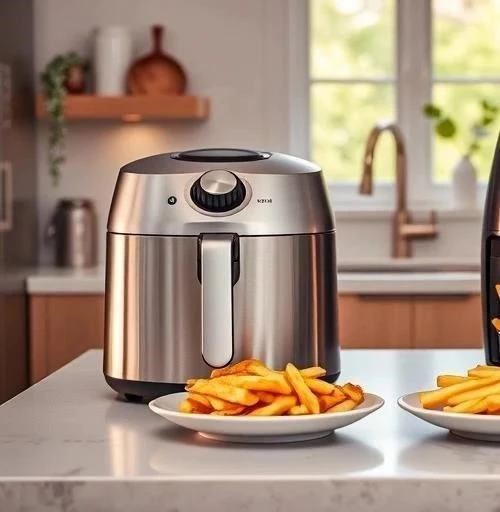
Imagine two cooks competing for the same potato. One lowers it into a bubbling, golden bath of oil; the other sends a whirlwind of hot air spinning around it. Both promise crunch. But they are not quite the same appliance wearing different hats. A traditional deep fryer and an air fryer—often called an air-fryer oven or convection air fryer—make food crisp in different ways, and the better choice depends on what you want to eat, how you like to cook, and how much cleanup you can tolerate.
How each machine creates crunch
A deep fryer cooks food by surrounding it with hot oil. Because oil transfers heat quickly and evenly, the outside can become crisp while the inside stays moist. The food is genuinely fried, with that familiar rich flavor and delicate, bubbly crust. The trade-off is that the food absorbs some oil, and the fryer needs enough oil to safely cover or immerse the ingredients.
An air fryer works more like a compact, powerful convection oven. A heating element warms the air while a fan circulates it rapidly around the food. A thin coating of oil can help browning, but the food is not submerged. The result can be satisfyingly crisp, especially on the outside, although it may not perfectly reproduce the texture of classic deep-fried food. Think of it as a fast-moving hot-air dance, not an oil bath.
The taste test: what are you hoping to bite into?
If your heart belongs to restaurant-style fries, tempura, doughnuts, or battered fish, a deep fryer has the advantage. It can produce an even, rich crust that is difficult to duplicate with circulating air. It is also well suited to foods whose coating needs to set quickly in hot oil. For a special treat, that unmistakable fried taste may be exactly the point.
An air fryer shines with foods that benefit from dry heat: roast vegetables, chicken pieces, frozen snacks, tofu, and reheated pizza. It can crisp the surface without leaving food as oily. Results depend on the recipe and the model, however. A crowded basket blocks airflow, and a wet batter may drip through rather than turn into a tidy, crunchy shell. For best results, arrange food in a single layer, shake or turn it when needed, and use a little oil where appropriate.
Health: less oil is useful, not magical
Because air frying usually requires much less added oil, it can reduce the fat and calories that come from frying—particularly when you are comparing similar foods. That can be a practical advantage if you cook crispy meals often. Yet an air fryer does not make every ingredient nutritious by decree: a heavily breaded frozen snack is still a heavily breaded snack, whether it meets a fan or a fryer.
Deep-fried food generally absorbs some cooking oil, though the amount varies with the food, coating, temperature, and cooking time. Oil choice and maintenance matter, too: overheated or repeatedly degraded oil is not ideal. Whichever appliance you choose, balance crispy favorites with vegetables, whole foods, and sensible portions.
Convenience, cleanup, and the kitchen aftermath
- Air fryer: Usually quick to preheat, easy to use for small portions, and simpler to clean. Many baskets or trays can be washed separately, but always check the manufacturer’s instructions. The appliance can still take up counter space, and its fan may be noisy.
- Deep fryer: Often best when you are cooking a larger batch of foods that need immersion. But you must handle hot oil carefully, allow it to cool before disposal or storage, and clean the pot and parts. Oil can smell, splash, and linger in the kitchen.
- Batch size: Air-fryer baskets vary, and filling one too tightly can make food steam instead of crisp. A deep fryer can handle a steady flow of batches, but its oil capacity and safe fill line limit how much you can cook at once.
Neither appliance guarantees a faster meal in every situation. An air fryer often wins for a quick weeknight portion because it heats a small space and needs little setup. A deep fryer can cook some foods very rapidly once the oil is at temperature, especially when making several servings. Include preheating, cooking in batches, and cleanup in your mental stopwatch—not just the minutes printed in a recipe;
Safety is part of the recipe
Hot oil can cause serious burns. Keep a deep fryer stable, follow its fill limits, dry food before lowering it into oil, and never leave it unattended. Do not add water to hot oil or try to move a fryer while it is hot. With an air fryer, leave room for ventilation, use the recommended accessories, and avoid loose parchment or foil that could touch the heating element. The appliance’s manual is the final authority for temperatures, cleaning, and safe use.
So, which one should you buy?
Choose a deep fryer if you regularly make classic battered or deep-fried foods, prize that unmistakable crust, and are comfortable managing hot oil and cleanup. It is a specialist: wonderful at its signature act, less convenient for everyday roasting.
Choose an air fryer if you want a versatile, lower-oil way to crisp weeknight meals, reheat leftovers, or roast small portions. It is the more flexible everyday performer, though it cannot make every food taste exactly as if it came from a deep fryer.
The short verdict: for traditional fried flavor, pick the deep fryer; for convenience and less added oil, pick the air fryer. If you mostly want fries now and then, an air fryer is likely the easier roommate. If you dream in tempura, a deep fryer may be worth the extra care. The best machine is not the one with the grandest promise—it is the one you will actually use, clean, and enjoy eating from.


7 Comments. Оставить новый
There’s a lovely honesty here: air-fried food can be crisp and satisfying, but it isn’t a deep-fried twin in disguise. That small distinction saves readers from mismatched expectations—and might save a few potatoes from disappointment.
This comparison makes kitchen technology feel less like a spec sheet and more like a choice between two kinds of magic: oil’s rich, enveloping heat and air’s speedy little whirlwind. I especially appreciate that it doesn’t pretend one can perfectly impersonate the other.
A crisp, balanced read—appropriately enough. I like how it gives deep frying its moment of glory while showing where circulating hot air can be the more appealing everyday choice. Now I’m hungry, and suspicious of every potato in the room.
I came for a fryer comparison and left thinking about texture as a tiny engineering miracle. The article explains the difference without declaring a universal winner, which is exactly right: the best machine depends on what you want your fork to discover.
The “hot-air dance” image is delightful—and useful. It captures why an air fryer can make a crisp snack without quite delivering the golden, bubbly coat of a deep fryer. A clear, appetizing guide for anyone weighing crunch against cleanup.
A refreshingly grounded guide in a world where every appliance claims to do everything. The distinction between food that loves an oil bath and food that thrives in dry heat gives readers a practical way to choose before the countertop real estate disappears.
The article treats cleanup and cooking style as part of the decision, not boring afterthoughts. That’s smart advice. A fryer isn’t just a machine for making crunch; it’s a new roommate with particular habits and a claim on your kitchen.