
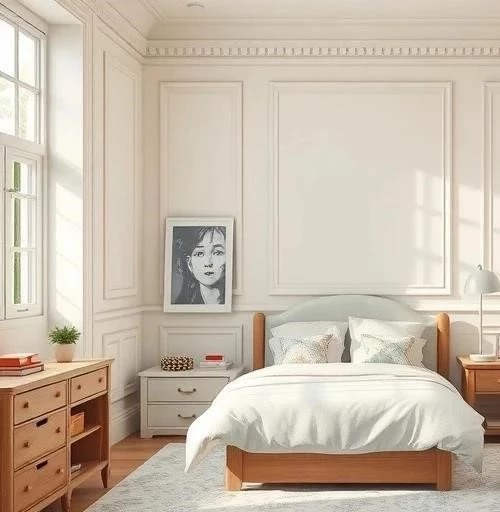
A child’s room can be both a kingdom of make-believe and a calm, beautifully ordered space․ Gypsum 3D panels make that balance tangible: their sculpted surfaces catch the light, frame everyday rituals and bring neoclassical style down to a child-friendly scale․ Rather than covering every wall, use them as punctuation—a quiet rhythm of texture amid soft color․
Give each activity its own landscape
Thoughtful zoning in a child’s room begins with observation: where does your child build, read, sleep and concentrate? Define functional zones with changes in wall finish, lighting and furniture, not with hard boundaries that make a small room feel smaller․
- Play zone: Set a durable, wipeable decorative wall panel behind a low shelf or toy chest․ A playful relief motif—clouds, leaves or geometric arches—can turn the accent wall into a backdrop for imaginative stories․
- Sleep zone: Place a simple panel composition behind the bed․ Pastel shades, a gentle symmetrical layout and warm, dimmable lighting create a cocoon without overwhelming the room․
- Study zone: Keep the desk wall visually quieter․ A slim moulding frame or shallow decorative panel adds structure, while a focused lamp supports the work area without competing with it․
Classic detail, child-sized
Neoclassical interiors often rely on symmetry, mouldings and classical elements․ In a child’s room, these need not feel grand or formal․ Use narrow mouldings to outline a panel, then leave generous areas of plain wall around it․ The contrast between smooth paint and tactile relief creates a considered mix of textures, while preserving room for drawings, shelves and changing interests․
A decorative wall panel can also mark a reading nook or a small alcove in the wall․ If the room needs a clearer divide, a low partition wall with a gypsum-panel finish can separate the sleeping area from play while keeping sightlines open․ Choose rounded edges and stable construction; the partition should feel like architecture, not an obstacle course․
Make light part of the design
Lighting transforms three-dimensional décor․ A soft wash from above reveals the relief; a bedside sconce makes a panel’s pattern glow in the evening․ Avoid sharp glare and place lights so that children can use switches safely․ One framed decorative mural can become the room’s focal point: a moonlit landscape, a botanical pattern or an abstract map that invites a story before bedtime․
Beauty that can grow
Choose safe materials and an eco-conscious finish, checking product specifications and coatings for the intended room․ Gypsum is a beautiful option, but panels should be installed securely, away from rough impacts and areas exposed to moisture․ Professional installation of gypsum panels helps create even joints and a reliable surface․ Keep the palette adaptable: pastel shades and replaceable accessories can evolve as tastes change․
The best interior design for a child is not a miniature adult room․ It is a flexible setting where decoration supports real life․ Used selectively, gypsum panels bring depth, gentle grandeur and practicality and durability to the walls—leaving plenty of space for play, study, rest and the next bright idea․


6 Comments. Оставить новый
There’s a lovely balance here between classical order and childhood spontaneity. The mouldings provide a quiet frame, while the blank wall remains an open page for tomorrow’s drawings.
I like the idea of treating texture as punctuation rather than wallpaper’s full stop. It gives a child room to grow without asking the walls to keep up with every passing fascination.
The emphasis on soft light and rounded edges is practical without sounding clinical. It reminds us that a beautiful room should feel safe to bump into, not merely beautiful to photograph.
A low partition as a gentle boundary is a clever image: more like a bookmark than a locked door. It can separate activities while keeping the room connected and full of possibility.
This makes design feel less like decorating and more like listening—to light, play, rest and changing interests. The result is a room with structure, but still plenty of room for wonder.
The zoning advice feels refreshingly humane: watch how a child actually uses the room before drawing imaginary borders. A reading nook can be a little planet, even without a wall around it.