
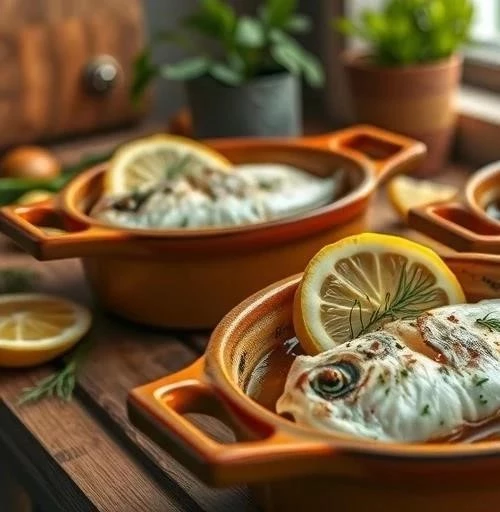
Covered pots retain moisture, keeping hake juicy, so novices can cook it with ease!
Explain why this simple recipe is a practical choice: hake in the oven becomes a healthy dinner or fish lunch with minimal effort.
Because hake cooks in the oven with minimal help, this pot-based meal fits busy days and new cooks. It offers a practical way to serve a nourishing fish lunch or healthy dinner without demanding lengthy preparation or complicated techniques. The gentle, contained cooking helps preserve the fish’s tender texture, making a dependable result far more attainable. For these reasons, it is an easy, balanced choice when time and confidence are limited.
Present the ingredients and their roles: hake fillet, vegetables, onion, sour cream, vegetable oil, lemon juice, fresh herbs such as parsley and dill, salt and pepper, and fish seasoning.
Hake fillet provides a tender base; vegetables add color and substance, while onion deepens flavor. Sour cream contributes tang, and vegetable oil helps prevent sticking. Lemon juice brightens the fish; fresh parsley and dill add aroma. Salt and pepper balance the taste, while fish seasoning adds savory depth. Each ingredient has a purpose, so measured amounts create a harmonious combination without masking the hake.
Give the step-by-step preparation: season the fish, add the vegetables and herbs, and arrange everything in ceramic pots for baked fish with lemon.
- Pat the hake dry, then season evenly with salt, pepper, and fish seasoning for balanced flavor.
- Cut vegetables and onion into even pieces for neat layering
- Add lemon juice, parsley, and dill; mix gently to spread their flavor without breaking the fish.
- Arrange vegetables and hake in ceramic pots in even layers, so each serving includes both. This sequence keeps prep organized and portions consistent for all.
Specify the oven temperature and baking time, explaining why covered ceramic pots help keep the fish juicy.
Preheat the oven to 180°C (350°F) and bake the covered ceramic pots for 25–30 minutes; this moderate temperature cooks hake gently without drying it. Exact timing depends on fillet thickness and pot size, so check that the fish turns opaque and flakes easily. Keeping lids on traps steam and moisture, preventing the delicate flesh from losing its juices; Avoid extending the bake once it is done, because residual heat continues cooking the fish overall.
Finish with serving advice: individual portions make this fish-in-a-pot dish easy to serve, and the method shows beginners how to cook hake reliably.
Serve each ceramic pot as one portion, which makes the meal easy to present and avoids transferring delicate hake onto plates. Set the pots on heatproof dishes and remind guests that they retain warmth. This practical presentation also helps beginners judge portions and repeat a reliable method: use the same arrangement each time, then check the fish gently before serving. A calm, consistent routine makes success less dependent on experience.


8 Comments. Оставить новый
This is a thoughtful introduction to a straightforward way of preparing hake, especially for someone new to cooking fish. The stated oven temperature is helpful, but the article needs a cooking duration before it can serve as a complete recipe.
The ingredient explanations help readers understand the purpose of each component rather than treating the recipe as a bare list. Since no amounts are provided, though, it is difficult to judge proportions or reproduce the intended balance of flavors.
I appreciate the clear explanation of how the lemon, herbs, and seasoning contribute to the dish. The instructions would be more reliable if they also gave a baking time and guidance on how to tell when the hake is cooked.
The article makes a convincing case for a simple fish dinner and explains why covered ceramic pots can help retain moisture. Its practical focus is useful for beginners, though specific ingredient quantities would make the recipe easier to follow.
The emphasis on even pieces and balanced portions is sensible because those details can make the result more consistent. I would also like to see the instructions specify whether the vegetables need any initial cooking before they go into the pots.
The article’s practical tone and explanation of the covered pots make the method feel approachable. A little more precision about the pot size and the amount of sour cream would help readers get a dependable result.
The article presents this as an accessible meal for busy days, and the pot-based method supports that idea. However, the preparation steps run together in places, so clearer formatting would help readers follow them while cooking.
The combination of fish, vegetables, herbs, and lemon sounds balanced, and the article explains the appeal of the dish well. Its main weakness is that key recipe details—especially quantities and baking time—are missing, limiting its usefulness as a standalone guide.