
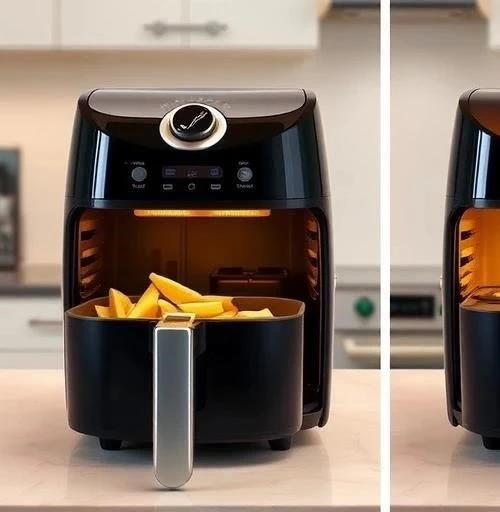
Air fryers use a fan to move hot air around food, but the heat can come from different sources. Two common designs use a conventional electric heating element, often called a tubular or metal element, or a halogen lamp. Neither type is universally better: the right choice depends on cooking habits, appliance design, and priorities such as speed, durability, and ease of cleaning.
How the two types work
In a heating-element model, an electric element heats the air inside the cooking chamber. A fan circulates that air around the food; The element is usually located above the basket or tray, and may glow red while operating. This is a familiar, relatively simple way to produce heat.
A halogen model uses a lamp that emits heat, including infrared radiation, while a fan circulates air through the chamber. The lamp often produces a bright visible glow. The food is still cooked through a combination of radiant heat and moving hot air; the fan and the appliance’s interior design remain important to the result.
Main differences
- Heating speed: Halogen appliances can begin radiating heat quickly, so some models need little preheating. A conventional element may take longer to reach its operating temperature. Actual cooking time varies by wattage, capacity, temperature settings, and food quantity.
- Cooking results: Both designs can brown and crisp food when airflow is effective and the basket is not overcrowded. A halogen lamp provides direct radiant heat, which may brown exposed surfaces quickly. An element-based model can also cook evenly, but performance depends on the fan, chamber shape, and placement of food.
- Durability: A metal heating element is generally a sturdy component. A halogen bulb is a replaceable part and may be more vulnerable to damage from impact or unsuitable handling. Check whether replacement bulbs are readily available and whether the manufacturer provides clear instructions.
- Visibility: The bright lamp in a halogen model can make food easier to observe without opening the appliance. The glow is normal, but it can be distracting in a dim kitchen. An element-based unit may offer less visual feedback during cooking.
- Cleaning: Cleaning is determined more by the basket, tray, and access to the chamber than by the heat source alone. Grease or food residue on either type of heater can cause smoke or odors. Follow the manual, allow the appliance to cool, and avoid wetting electrical components.
Energy use and practical considerations
It is not possible to say that one technology always uses less electricity. Consumption depends on the appliance’s rated power, cooking duration, temperature, preheating needs, and the amount of food. A fast-heating model may shorten a particular cooking cycle, but this does not guarantee lower energy use overall. Compare wattage and realistic cooking times rather than relying on the name of the heater.
Capacity and controls can matter more than the heating technology. A small basket may require cooking in several batches, while a larger unit can take more counter space and may need more energy to heat. Look for adjustable temperature and timer settings, a stable basket, clear safety instructions, and parts that are easy to clean. Independent reviews can help assess noise, browning consistency, and long-term reliability.
Which one should you choose?
Choose a halogen air fryer if rapid radiant heating, visible cooking, or minimal preheating is especially appealing, and you are comfortable checking bulb availability and handling the lamp carefully. Consider a heating-element model if you prefer a conventional, sturdy heat source and want to avoid a lamp that may need replacement. In either case, compare specific models: construction and airflow can outweigh the difference between heater types.
Bottom line: A well-designed air fryer with either a halogen lamp or a metal heating element can produce crisp food. For most buyers, capacity, airflow, controls, cleaning, warranty, and replacement-part access are more useful decision criteria than the heater label alone.


7 Comments. Оставить новый
The durability and maintenance considerations are presented in an accessible way. Checking parts availability and manufacturer guidance is a sensible point for prospective buyers.
The article gives a clear, balanced overview of how heating-element and halogen air fryers work. It appropriately notes that overall appliance design affects cooking results.
The discussion of airflow and overcrowding is relevant for readers comparing models. It also makes clear that a heating method alone does not determine how evenly food cooks.
The article clearly distinguishes radiant heat from circulating hot air while explaining that both contribute to cooking. Its neutral tone suits a practical comparison.
A concise and balanced introduction to the two designs. The article provides useful factors to consider without making unsupported claims about which option is best.
The comparison of heating speed, cooking performance, durability, and visibility makes the key differences easy to follow. The practical points about replacement bulbs are useful.
This is a straightforward explanation that avoids presenting either heating type as universally better. The emphasis on capacity, wattage, and food quantity adds helpful context.