
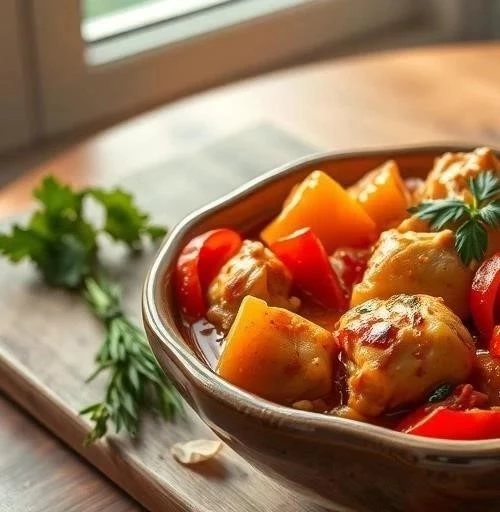
This 30-minute stew works because a covered simmer blends chicken and pepper juices into a hearty, balanced meal in just 30 minutes—on purpose.
Choose simple ingredients—chicken fillet, sweet pepper, potatoes, carrots, onions, tomatoes, and garlic—for a quick dinner that balances speed, flavor, and nourishment.
Simple ingredients make this homemade chicken stew with bell pepper a sensible quick dinner: chicken fillet supplies lean protein, while sweet pepper, potatoes, carrots, onion, tomatoes, and garlic bring color, fiber, and varied flavor. Together, they create a vegetable stew with chicken that feels nourishing without relying on costly extras. The mix also makes chicken with vegetables appealing to different tastes, since the mild potatoes balance the bright pepper and tomato, and garlic adds depth. These familiar staples are easy to find, so a recipe in 30 minutes can still feel generous and satisfying. This balance makes dinner flavorful, filling, and affordable. This is why a home-style stew can be both practical and comforting indeed.
Prepare the chicken with spices first: this helps the braised chicken develop a savory base before the vegetables release their juices.
Season the chicken fillet before it meets the vegetables: salt, black pepper, paprika, and a modest pinch of dried thyme cling to the surface and give each bite a rounded, savory character. This matters because seasoning the meat early lets its flavor form the foundation of the stew, rather than leaving the chicken bland beneath the sauce. Pat the pieces dry first, then coat them evenly; a light film of oil helps the spices adhere without making the dish greasy. Use spices for chicken with restraint, since the sweet pepper and tomato have distinct flavors of their own. The result is braised chicken with depth and balance, not heat for its own sake. Taste is built deliberately, and every measured pinch earns its place. Good seasoning matters here.
Follow the step-by-step recipe: brown the chicken, add the vegetables in stages, then simmer until tender; this keeps the vegetable stew with chicken hearty rather than watery.
For a hearty, not watery, stew, give each stage a purpose. First, brown the seasoned chicken in a little hot oil, turning it so the pieces gain color; this adds savory depth and keeps the meat from tasting boiled. Set it aside. Add firm vegetables to the pan and stir for a few minutes, allowing their surfaces to warm before adding juicier ones. Return the chicken, pour in only enough stock or water to partly cover the mixture, and bring it to a gentle simmer. Keep the lid slightly ajar: excess steam can escape, while the ingredients cook evenly. Check tenderness near the end and avoid prolonged boiling, which can break down vegetables and thin the texture. This sequence concentrates flavor and produces a substantial sauce in about 30 minutes.
Compare a skillet stew with a pot stew, then serve the chicken with vegetables as a satisfying family dinner—and explain how to make chicken stew with bell pepper your own.
A skillet stew suits cooks who want a little reduction: its broad surface lets moisture escape, so the sauce tastes concentrated. A pot stew, by contrast, holds heat and moisture more evenly; choose it when a gentler, hands-off finish matters. Either vessel can make a satisfying family dinner, because tender chicken and vegetables need no elaborate sides. Serve it warm with a loaf or rice to catch the pepper-rich sauce. To make chicken stew with bell pepper your own, adjust the pepper’s sweetness with a squeeze of lemon, add herbs for freshness, or finish with chili for warmth. These small choices change the character without hiding the main ingredients, so everyone can tailor a bowl while keeping the meal familiar, generous, and practical too.




3 Comments. Оставить новый
The article does a good job of connecting convenience with flavor and nourishment. Its strongest point is the reminder to build flavor by seasoning the chicken early, which is a helpful detail for less experienced cooks. The repeated emphasis on the dish being quick and satisfying is somewhat redundant, but the overall guidance remains accessible and reassuring.
This is a clear and appealing introduction to a simple home-style dish. The discussion of how the vegetables balance one another helps explain the stew’s flavor, while the seasoning advice is specific enough to be useful without making the recipe seem complicated. The writing could be more concise in places, but the practical guidance is sound.
The article makes a convincing case for this stew as a practical weeknight meal. I especially appreciate the explanation of why seasoning the chicken beforehand matters; it gives readers a useful cooking principle, not just a list of steps. The emphasis on familiar, affordable ingredients also makes the recipe feel accessible.