
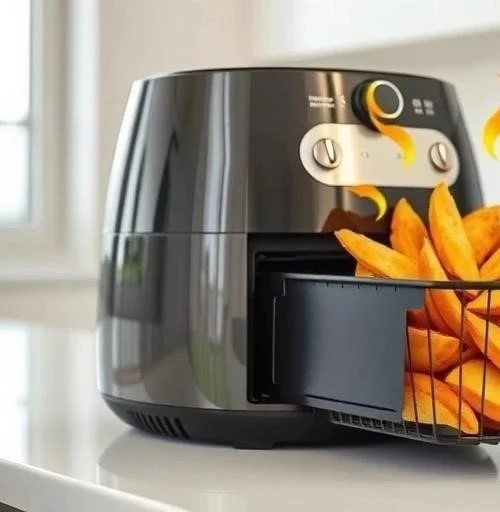
An air fryer does not fry food by dunking it in a bubbling bath of oil. It works more like a compact, powerful convection oven: a heating element makes the air hot, and a fan sends that air racing around the food. The result is a miniature weather system in which a hot gust visits every exposed surface—ideally leaving dinner crisp outside and tender within.
The journey from plug to crunch
When you set a temperature, the appliance heats its element to the chosen level. The fan then circulates hot air through the cooking chamber, often around and beneath a perforated basket. Those holes matter: they let air reach the underside instead of trapping it against a solid tray. Heat moves into the food, while moisture at the surface evaporates. As the outside dries and browns, it develops that familiar roasted, crisp texture.
For a golden finish, surface moisture is the key character. A damp potato slice must first lose water before it can brown well, so crowded or wet food may steam instead of crisp. A thin coating of oil helps heat spread over the surface and encourages browning; it does not need to form a deep pool. The fan is not magic, either: it cannot make every ingredient crisp, and it will not turn a watery batter into a perfect deep-fried shell.
Why food browns—and why shaking helps
As the food’s surface gets hot and dry, browning reactions create deeper color and savory aromas. The same process gives roast vegetables their toasted edges and helps breaded bites develop a crunchy coat. Since airflow is strongest where air can pass freely, pieces piled on top of one another cook unevenly. A single layer gives the hot current room to work. Turning or shaking the basket halfway through moves hidden sides into the breeze, like rotating sunbathers to prevent one-sided tanning.
What changes the result?
- Size: Small, evenly cut pieces cook more consistently than a jumble of thick and thin chunks.
- Space: A loosely filled basket lets hot air circulate; overloading can soften the food and slow cooking.
- Starting temperature: Frozen food takes longer because the appliance must warm it before browning begins.
- Oil and seasoning: A light coating can improve color. Loose herbs or very light ingredients may blow around, so press them onto the food.
- Appliance design: Basket size, fan strength, and heating-element position differ, so timings are useful estimates, not laws.
Air fryer versus deep fryer
A deep fryer transfers heat through hot oil, which surrounds food and produces a characteristic fried texture. An air fryer uses moving hot air instead, so its results are closer to roasting or convection baking, with much less added oil. “Air-fried” is therefore a cooking style, not a promise that every recipe will taste exactly like its deep-fried twin. A light oil mist can help, but soaking food in oil defeats the point and may create smoke.
Small habits, better results
Preheating can help when a recipe needs a fast, confident start, though some models heat quickly enough that it is optional. Arrange food in one layer, leave breathing room, and check it before the suggested finish time the first few times you cook. Use a food thermometer for meat rather than trusting a browned exterior: color tells you about the surface, not the center. Clean the basket and remove grease after cooling; old residue can smoke and lend new meals yesterday’s aroma.
The simple picture: an air fryer is a hot-air engine for food. It heats, circulates, dries, and browns—turning a small basket into a brisk little oven. Give the air a clear path, and it can make everyday ingredients crisp at the edges without a deep bath of oil.
1 Comment. Оставить новый
I love the miniature-weather-system image—it makes the science feel instantly vivid. The reminder that an air fryer needs space, dry surfaces, and a little patience is especially useful; apparently, even dinner cooks better when it can catch a breeze.